标准化护理急救流程在脑疝患者抢救中的应用研究
2016-02-27 13:22:52吴群华黄国萍封亚萍等
中国现代医生
2015年26期
吴群华+黄国萍+封亚萍+等
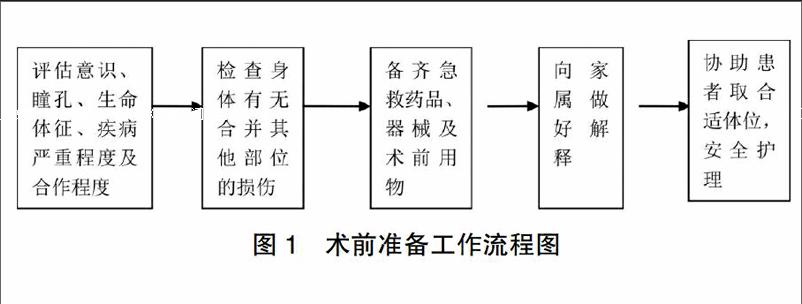
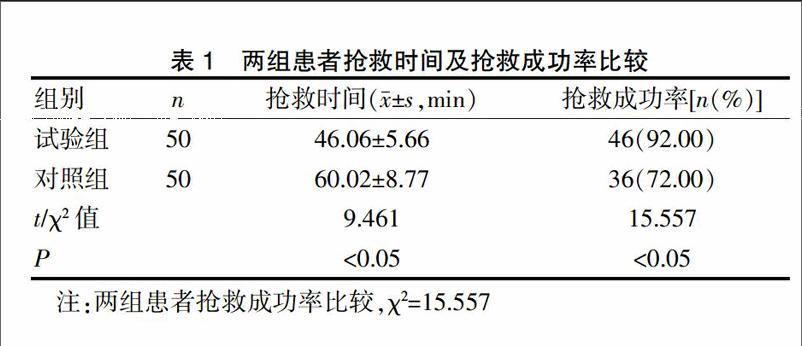
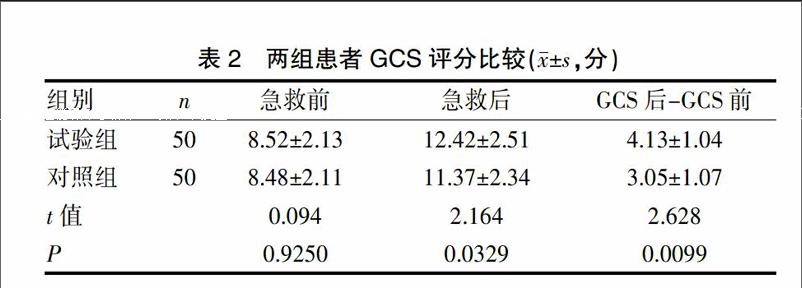
[摘要] 目的 研究标准化护理急救流程在脑疝患者抢救中的应用效果。 方法 选择2013年1月~ 2014年12月急诊抢救的脑疝患者100例作为研究对象,按照门急诊单双号分为试验组和对照组各50例,对照组给予常规抢救护理,试验组则按照标准化护理急救流程实施抢救护理,对两组患者干预后抢救成功率、抢救时间及抢救后GCS评分进行比较。 结果 两组患者干预后的抢救成功率、抢救时间及抢救前后GCS评分差值比较差异均有统计学意义(P<0.05),试验组患者干预后的抢救成功率显著高于对照组,试验组患者的抢救时间显著低于对照组(P<0.05)。 结论 按照标准化护理急救流程实施对脑疝患者的抢救,可以有效提高抢救成功率,缩短抢救时间,提高患方对护理服务的满意度和改善急救效果,具有重要临床推广意义。
[关键词] 标准化;流程;脑疝;应用
[中图分类号] R473 [文献标识码] B [文章编号] 1673-9701(2015)26-0144-03
Emergency care applied research standardization processes in hernia patients in an emergency
WU Qunhua1 HUANG Guoping2 FENG Yaping3 YAO Dan1 ZHANG Yulin1 YU Jiaai1 XIAO Yahong1
1.Emergency Department, Hangzhou Xiaoshan Third People's Hospital, Hangzhou 311251, China; 2.Department of Health Cadres, the First Affiliated Hospital to Zhejiang University School of Medicine, Hangzhou 310000, China; 3.Nursing Department, the Affiliated Hospital to Hangzhou Normal University, Hangzhou 310015, China
[Abstract] Objective To investigate the effect of standardize rescue process in hernia patients with emergency care. Methods A total of 100 cases of hernia patients treated in the hospital from January 2013 to December 2014 were chose for study, and divided into test group and control group according to hospital odd and even numbers each group had 50 cases, control group was treated with routine care, the test group was treated with standardization process in accordance with the implementation of the emergency rescue nursing care, patient satisfaction after the intervention groups success rate, rescue time and GCS score after the rescue were compared. Results The survival rate, rescue time and difference of GCS score in two groups after the intervention and before the rescue were statistically significant(P<0.05), and the survival rate in test group after the intervention of nursing services satisfaction were significantly higher than that in the control group, the rescue time was significantly lower than the control group(P<0.05). Conclusion Emergency nursing process in accordance with standardized implementation of hernia patients in an emergency, can effectively improve the success rate, shorten the rescue time, increase the rate of side satisfaction with care and aid effectiveness, has important clinical significance.
[Key words] Standardization; Process; Hernia; Application
脑疝是颅脑损伤患者的一种常见并发症,是源于颅内压的增高导致脑组织通过某些间隙转移向压力较低部位的临床结果,这种转移会使患者的神经血管受压从而出现一系列的严重临床表现[1]。根据相关统计,外伤性颅脑损伤发生脑疝并发症的比率高达70%,且病死率极高[2],严重的颅脑损伤包括硬膜外血肿、硬膜下血肿和脑内血肿,一般成人幕上血肿大于20 cm起,幕下血肿大于10 mL,即可引起颅内压增高症状,诱发脑疝形成,幕上血肿大多先经历小脑幕切迹疝,然后合并枕骨大孔疝而出现严重的呼吸循环障碍、意识障碍和瞳孔改变。幕下血肿者直接发生枕骨大孔疝,较早出现呼吸暂停。脑内血肿以进行性加重的意识障碍为主,当血肿累及重要的脑功能区时,可以出现偏瘫、失语、癫痫等症状,直接危及患者生命。如果对脑疝实施早期的合理迅速抢救,则脑疝是可逆的[3],脑疝的抢救关键在于迅速采取措施降低患者的颅内压以及积极对并发症进行预防[4]。……
登录APP查看全文
猜你喜欢
口腔护理用品工业(2021年4期)2021-11-02 08:22:56
机械工业标准化与质量(2018年5期)2018-05-30 09:48:17
中国公路(2017年9期)2017-07-25 13:26:38
考试周刊(2016年76期)2016-10-09 08:45:44
科技视界(2016年20期)2016-09-29 14:22:00
科技视界(2016年20期)2016-09-29 12:03:12
科技视界(2016年20期)2016-09-29 11:47:01
科技视界(2016年20期)2016-09-29 11:02:20
大众理财顾问(2016年8期)2016-09-28 13:45:18
质量与标准化(2015年7期)2015-07-12 12:21:02