不同地理来源的甘蔗梢腐病菌营养体亲和性研究
2016-05-30 07:42:03郭强崔一平徐世强张木清
热带作物学报
2016年10期
郭强 崔一平 徐世强 张木清
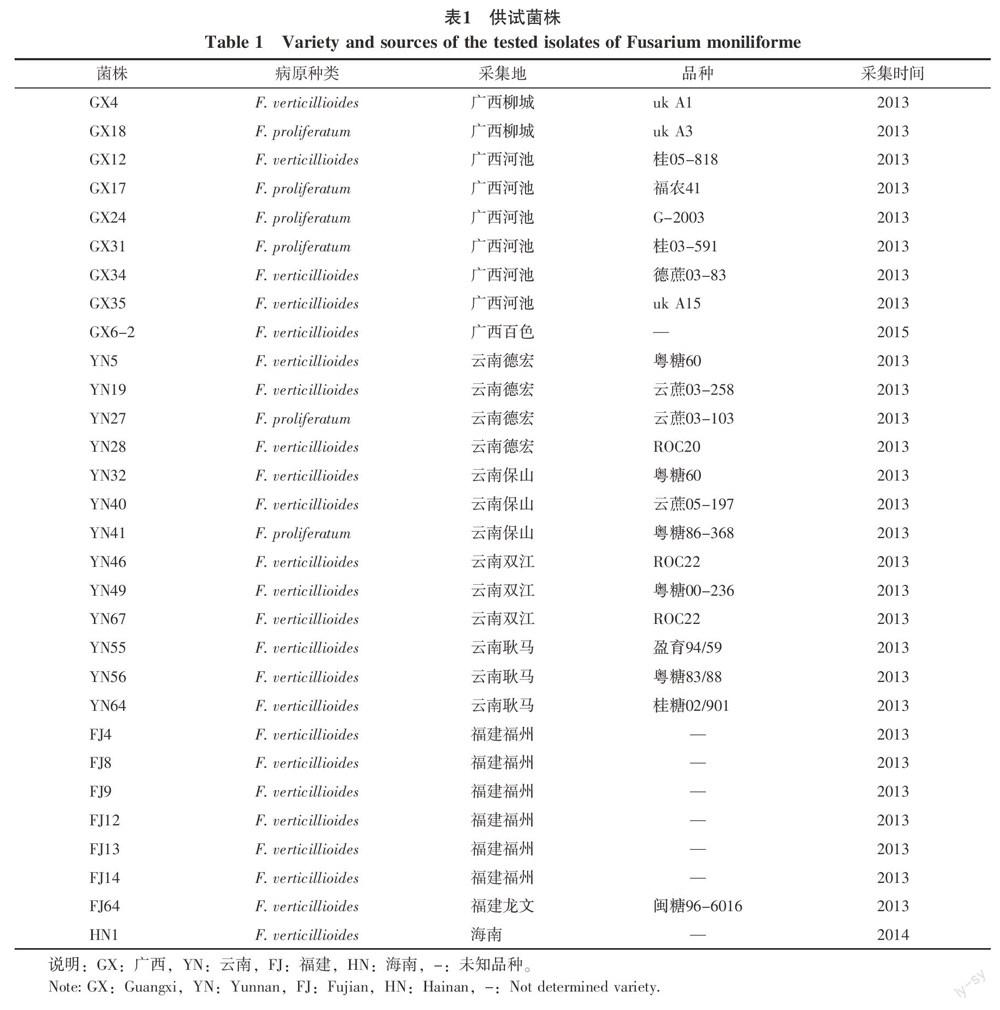
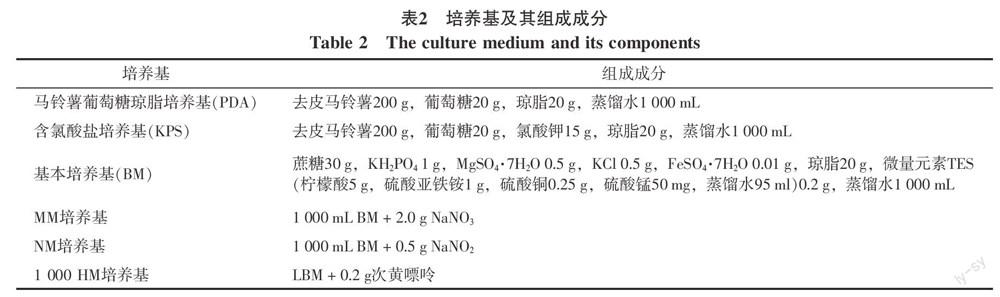
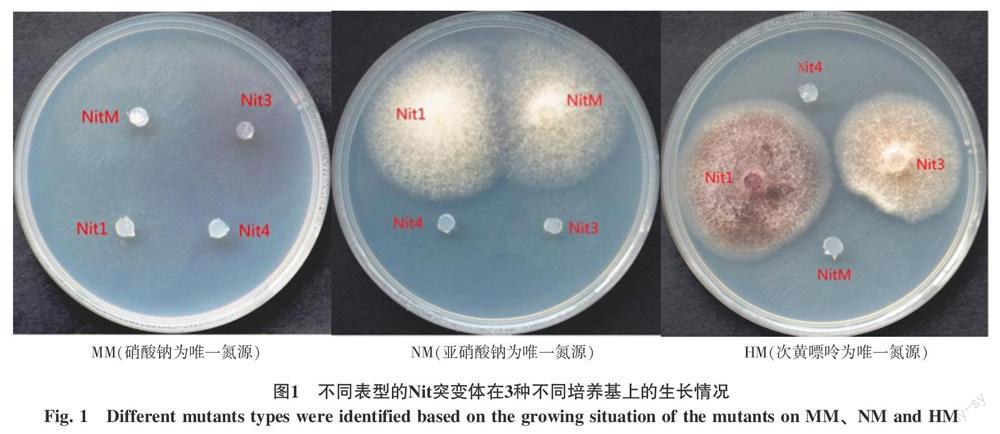
摘 要 为探讨甘蔗梢腐病病原菌菌株的群体结构及种内的分化,以采自广西、云南、福建和海南等不同地区的30个甘蔗梢腐病菌株为材料,通过初步的分子生物学鉴定,发现30个甘蔗梢腐病菌株分属于2个不同的病原种。利用KClO3培养基诱导筛选获得Nit突变体,其中1个菌株没有产生Nit突变体,剩下的29个菌株共产生266个Nit突变体。营养体亲和群的测定结果表明:9个菌株的VCG没有同一性,1个菌株组成1个VCG;不同地理来源的甘蔗梢腐病菌株间互不亲和,分属于不同的VCG;同一地理来源的甘蔗梢腐病菌株间亦不亲和;暗示引起甘蔗梢腐病的串珠镰刀菌属群体内存在丰富的VCG多样性,在不同的栽种地区群体结构变化很大,并且营养体亲和性与菌株的地理来源及寄主品种都没有明显的相关性。
关键词 甘蔗梢腐病;串珠镰刀菌;Nit突变体;营养体亲和群
中图分类号 S432.44 文献标识码 A
Abstract Sugarcane pokkah boeng disease has become an important disease in china. In order to analysis the population structure and the genetic differentiation in species of the pathogen. The 30 strains of Fusarium moniliforme were collected individually from the pokkah boeng samples in Guangxi, Yunan, Fujian and Hainan provinces in China. Based on the molecular biology analysis, 30 isolateds divide into two species. After single spore isolation, 266 nitrate-nonutilizing(Nit)mutants were got from 29 strains after these colony transplanted on potato sucrose agar medium with 1.5% KClO3(KPS); 1 strains can't produce nit mutant. Furthermore, vegetative compatibility of these strains were analyzed on MM plates. In this study, the results show that all of the 9 isolates don't have VCG with each other,or 1 strains correspond to 1 VCG. This phenomenon occur not only in the strains from different geographic origins but also in the strains from the different host varieties in the same geographic origins. All these results indicate there was abundant diversity of VCG in the population of F. moniliforme, and there was no obvious correlation between the vegetative compatibility and geographic origins or host varieties.
Key words Sugarcane Pokkah Boeng Disease; Fusarium moniliforme; Nit mutant; Vegetative compatibility groups
doi 10.3969/j.issn.1000-2561.2016.10.017
真菌营养体亲和性(Vegetative compatibility)又称体细胞亲和性(Somatic compatibility),是指真菌菌株间菌丝能融合并交换细胞质或核物质的特性;根据营养体亲和性划分的群体称为营养体亲和群(Vegetative compatibility group, VCG)[1-2]。自1923年Cayley等[3]首次报道发现了植物病原真菌营养体亲和与不亲和现象。目前,VCG已经逐渐成为研究病原真菌遗传变异、种群地理分布、生理小种鉴定等重要手段[4-5]。在中国,VCG方法已经广泛应用在栗疫病、黄瓜枯萎病、向日葵黄萎病和水稻纹枯病等病原菌的分类上[6-9]。而涉及串珠镰刀菌属真菌的研究则较少,有关甘蔗梢腐病病原菌的营养体亲和性研究尚未见报道。……
登录APP查看全文