
大黄素对人肝癌HepG2细胞迁移侵袭能力及E—钙黏蛋白、Slug蛋白表达的影响
2016-05-30 12:11:50高俊霞吕强
中国中医药信息杂志
2016年6期
高俊霞 吕强
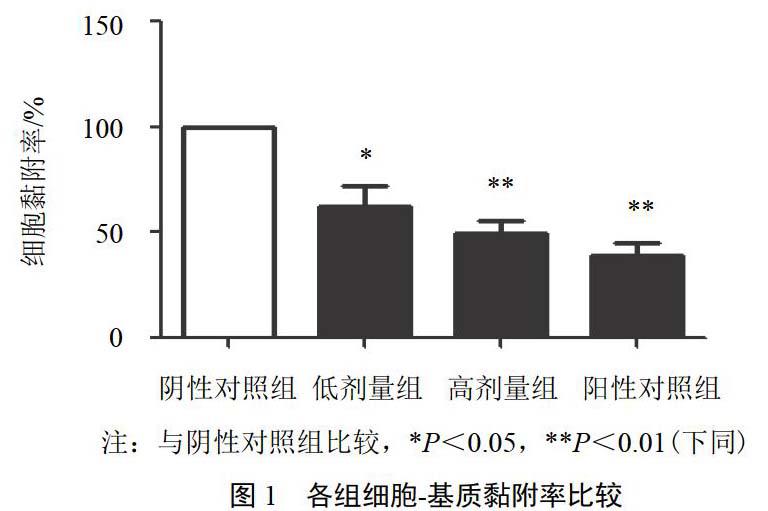
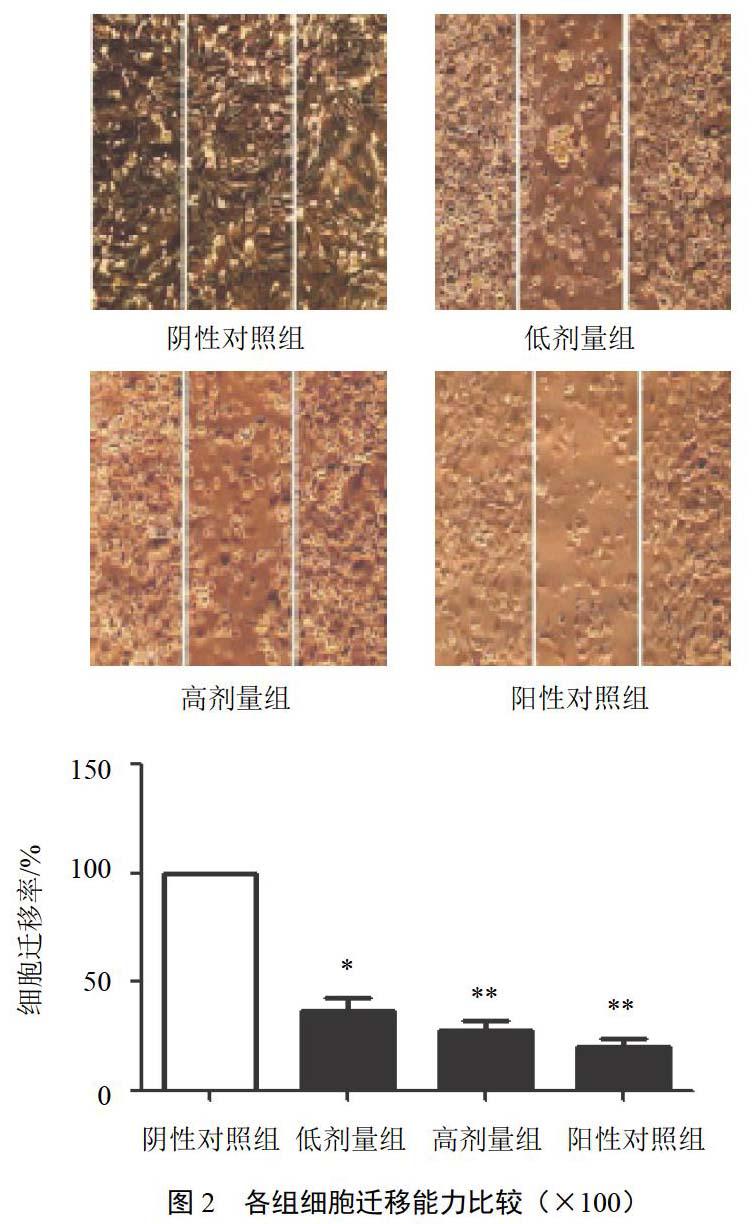
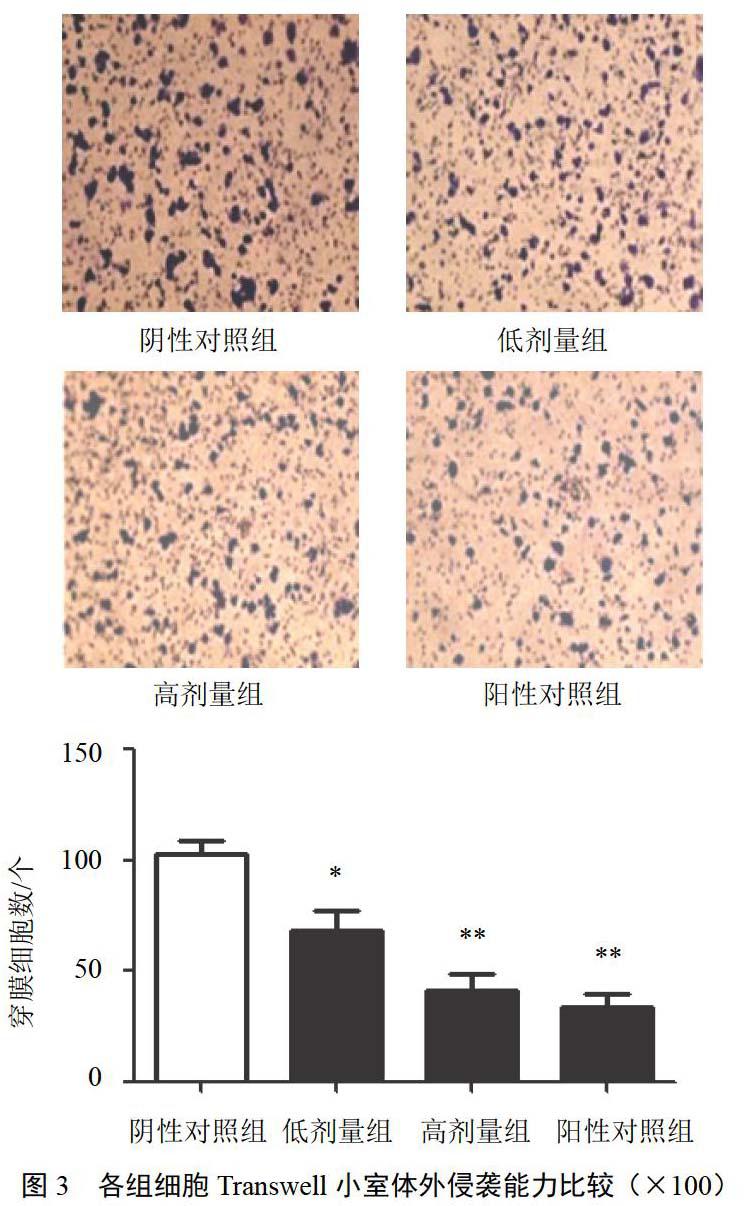
摘要:目的 观察大黄素对人肝癌HepG2细胞迁移侵袭能力及E-钙黏蛋白(E-cadherin)、Slug蛋白表达的影响,探讨其相关作用机制。方法 体外培养HepG2细胞,大黄素低、高剂量组分别加入10、20 μmol/L大黄素,阴性对照组加入等体积RPMI-1640培养液,阳性对照组加入10 μmol/L 5-氟尿嘧啶。分别采用细胞-基质黏附实验、划痕修复实验、Transwell小室体外侵袭实验观察HepG2细胞黏附率、迁移、侵袭能力;Western blot检测E-cadherin和Slug蛋白表达。结果 与阴性对照组比较,大黄素低、高剂量组显著抑制HepG2细胞黏附率、迁移、侵袭能力,E-cadherin蛋白表达水平显著升高,Slug蛋白表达水平显著降低(P<0.05,P<0.01),并呈浓度依赖性。结论 大黄素能明显抑制HepG2细胞迁移和侵袭能力,其机制可能与增强E-cadherin及抑制Slug蛋白表达有关。 关键词:大黄素;肝细胞癌;迁移;侵袭;E-钙黏蛋白;Slug蛋白
DOI:10.3969/j.issn.1005-5304.2016.06.017
中图分类号:R285.5 文献标识码:A 文章编号:1005-5304(2016)06-0064-04
Abstract: Objective To investigate the effects of emodin on the migration and invasion ability and expressions of E-cadherin and Slug of human hepatoma cell lines HepG2; To discuss the possible mechanisms of anti-hepatocellular carcinoma. Methods HepG2 cells were cultured in vitro. The experimental group was treated with emodin at concentrations of 10 μmol/L and 20 μmol/L as. The negative control group was treated with the same volume of RPMI-1640 medium, while the positive control group was treated with 10 μmol/L floxuridine. The cell matrix adhesion assay, wound healing and transwell chamber in vitro invasion assay were used to observe the effects of emodin on HepG2 cell adhesion rate and migration and invasion ability. Western blot analysis was used to observe the changes of expressions of E-cadherin and Slug. Results Compared with the negative control group, emodin inhibited significantly HepG2 cell adhesion rate and migration and invasion ability were in a dose-dependent manner (P<0.05, P<0.01); Western blot analysis showed that the protein expression of E-cadherin increased significantly, and the level of Slug decreased significantly in a dose-dependent manner (P<0.05, P<0.01). Conclusion Emodin can significantly inhibit migration and invasion of HepG2 cells, which mechanism may up-regulate expressions of E-cadherin and down-regulate Slug.
Key words: emodin; hepatocellular carcinoma; migration; invasion; E-cadherin; Slug protein
大黄素是从大黄中提取的有效单体,具有抗肿瘤、抗病毒、免疫调节等功效功效[1-2]。近年研究发现,大黄素抗肿瘤作用明显,对宫颈癌、大肠癌、肝癌细胞等肿瘤细胞具有杀伤和抑制作用[3-5],大黄素还可通过促进人肝癌HepG2细胞的凋亡而发挥抗肿瘤作用[6]。肝细胞癌(hepatocellular carcinoma,HCC)是我国目前十分常见的消化道恶性肿瘤之一,具有起病隐匿、早期症状不典型、恶性程度高、临床治疗困难、预后不良、病死率高等特点,迁移和侵袭是患者死亡和治疗效果不理想的主要原因[7]。目前放疗、化疗等治疗HCC的手段已经进入平台期,然而其分子机制尚未明了。虽然大黄素具有促进HepG2细胞凋亡作用,但是有关其对HepG2细胞迁移和侵袭的影响国内鲜见报道。另外,E-钙黏蛋白(E-cadherin)和Slug蛋白被证实是与多种恶性肿瘤迁移和侵袭相关的蛋白。因此,本研究采用体外培养HepG2细胞,观察大黄素对HepG2细胞迁移侵袭能力及E-cadherin、Slug蛋白表达的影响,探讨其相关作用机制。……
登录APP查看全文
