颗粒级配对边坡填筑料力学参数的影响研究
2016-08-13 10:43:59彭远新
中华建设科技
2016年6期
彭远新

【摘要】普通现有填筑料提供的边坡填筑体的力学强度,难以满足高边坡工程的需求。本文探讨颗粒级配对边坡填筑料的影响,并利用三轴试验确定其力学参数。结果表明:颗粒级配会影响填筑料的力学参数;利用缩尺的方法可以确定颗粒级配,最终确定的煤矸石室内试验控制密度为1.87 g/cm3;同时三轴试验结果得出煤矸石填料本身的强度值。
【关键词】颗粒级配;边坡;缩尺
【Abstract】The mechanical strength of slope filling existing body of common filling material provided, it is difficult to meet the demand for high-Slope. This paper discusses the influence of particle size matching the slope of the filling material, and the use of triaxial tests to determine the mechanical parameters. The results show that: the particle size distribution can affect the mechanical parameters of filling materials; reduced scale use of methods to determine particle size distribution, definitive laboratory test control gangue density of 1.87 g / cm3; simultaneous triaxial test results obtained gangue filler itself intensity values.
【Key words】Particle size distribution;Slope;Reduced scale
1. 引言
(1)挡墙实际施工中填筑料主要有三种,即:煤矸石、灰岩和风化土。而煤矸石用量最大,是主要填土,属于粗粒土范畴。煤矸石层分布广泛,储量较大,岩层破碎严重,岩石强度低,软化系数较小,遇水和在碾压过程中极易破碎,用挖掘机即可进行料场开挖。
(2)但对于粗粒土填筑材料而言,颗粒的级配组成对其填筑密度、强度与变形特性有较大的影响,是进行试验的基本参数,必须首先选择[1~5]。同时粗粒土三轴试验中,试样的直径为300 mm,而施工中粗粒土最大粒径一般超过了300 mm,因此需要探索级配等效缩减的方法。本文以具体工程需要的填筑料力学参数为研究内容,探讨级配等因素的影响。
2. 原始级配的影响
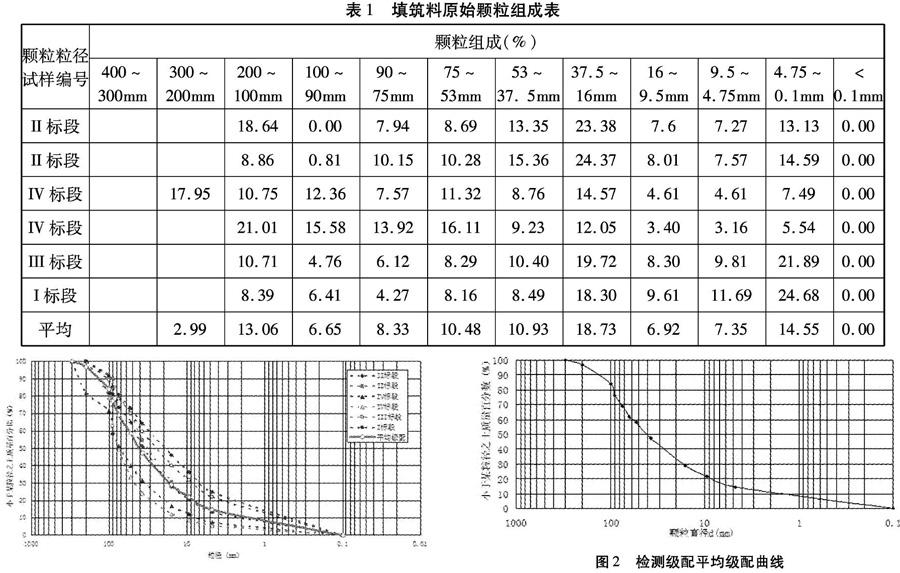
(1)实际填筑过程中填料级配检测曲线见图1所示,将该族曲线的平均线作为填筑料试样的原始级配曲线,见图2。相应的颗粒分布见表1所示。
(2)从表1中可以看出,煤矸石的原始级配最大粒径为300 mm,小于4.75 mm的颗粒粒径为14.55%。而三轴试验仪器直径为300 mm,一般允许土料的最大粒径应该小于试样直径的1/5~1/6,也就是说,试验级配最大粒径不能大于60 mm,因此需要按照规范的要求对原始级配进行缩尺得到试验级配。……
登录APP查看全文