密度与整枝互作对鲁棉研28号棉铃时空分布的影响
2016-10-14 12:46:44李海涛杨中旭李秋芝
山东农业科学
2016年9期
李海涛 杨中旭 李秋芝
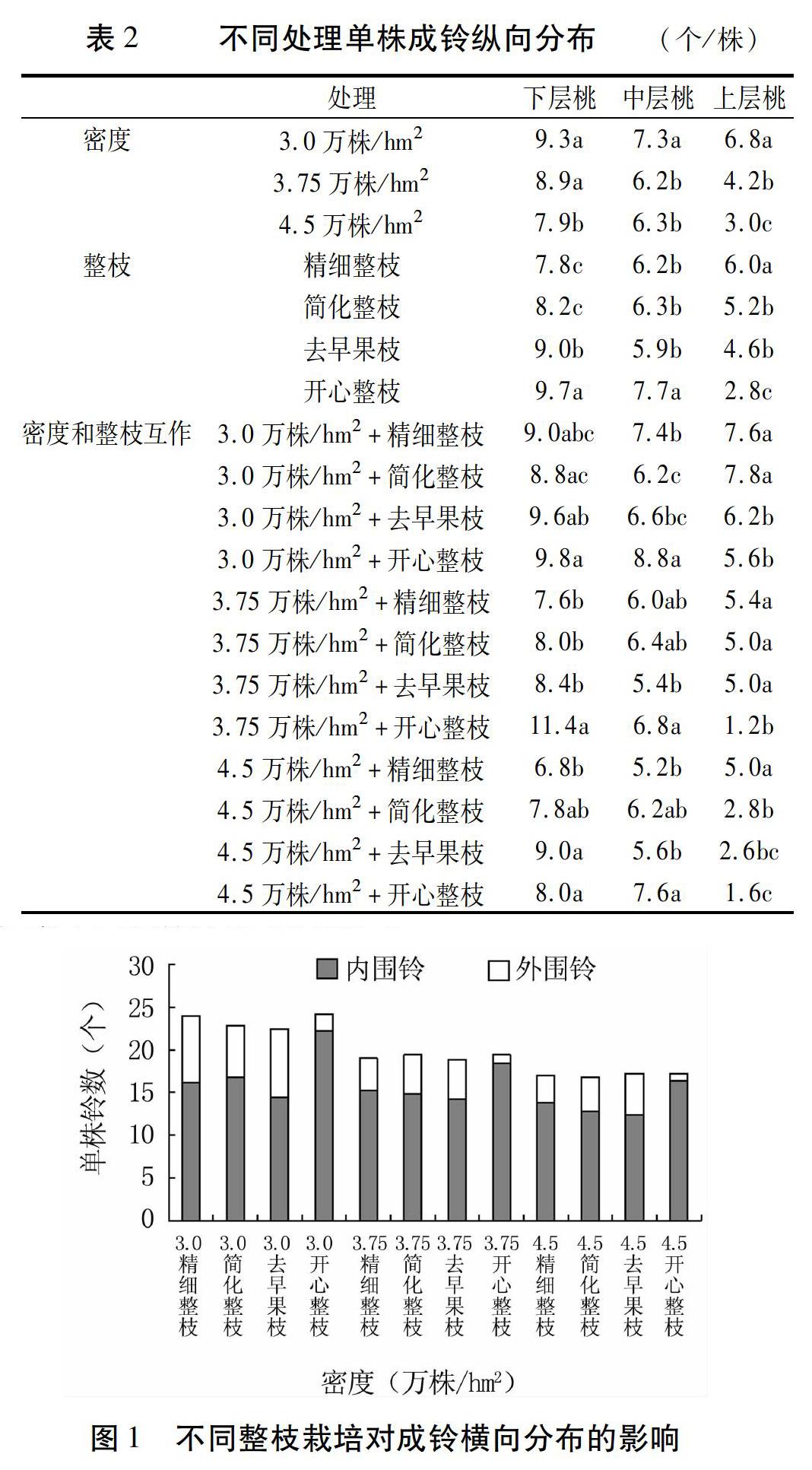

摘要:抗虫棉常规精细整枝,早衰严重,劳动效率低。低密度下棉花整枝高大松散,单株成铃多,单位面积成铃少;高密度棉花整枝紧凑矮小,底部烂铃多。对此,通过裂区试验研究鲁棉研28号不同密度不同整枝条件对其成铃时空分布的影响。结果表明:低密度条件下“四桃”铃数明显高于高密度,差异显著;不同整枝栽培成铃主要集中在伏桃和早秋桃,简化整枝处理的伏桃和早秋桃数略少于其它整枝处理;随密度增加,单株棉花的下、中、上层棉铃数均出现不同程度的减少,密度和整枝互作对棉铃纵向分布影响更大,密度越高精细整枝、简化整枝处理的下层棉铃越少,在(3.0~4.5)万株/hm2密度范围内开心整枝处理的下层棉铃出现先增加后减少趋势;密度的变化对不同整枝处理的横向成铃影响不大。鲁棉研28号3.0万株/hm2开心整枝种植,其成铃在时间与空间分布上更加合理,更易结成优质棉铃,提高棉花等级。
关键词:棉花;密度;整枝;时空分布
中图分类号:S562.04文献标识号:A文章编号:1001-4942(2016)09-0045-04
Abstract Insect-resistant cotton general fine pruning usually results in serious premature aging and low labor efficiency. Under the condition of low density, the cotton plant is tall and loose, the boll number per plant was high and that per unit area was low. The cotton plant is short and tight under the condition of high density, and there are many rotten bolls at the bottom. In this study, the effects of different densities and pruning methods on spatial and temporal distribution of bolls of SCRC 28 were researched by split plot experiment design. The results showed that under the condition of low density, the total number of pre-summer bolls, summer bolls, early autumn bolls and late autumn bolls was obviously higher than that under the high density condition, and the difference was significant. For different pruning methods, the bolls mainly formed in summer and early autumn. The number of summer bolls and early autumn bolls of simplified pruning treatment was slightly less than that of other treatments. With the increase of density, the roll number on the lower, middle and upper layers of cotton plant decreased on different levels. The interaction of density and pruning had bigger influences on the longitudinal distribution of bolls. The higher the density, the less boll number on the lower layer of cotton plant under fine pruning and simplified pruning treatment. In the density range of (30 000~45 000) plants/hm2, the boll number on the lower layer of cotton plant under open-centered pruning treatment showed the trend of firstly increased and then decreased. The change of density had little influence on the horizontal roll forming under different pruning treatments. When SCRC 28 was cultivated in density of 30 000 plants/hm2 with open-centered pruning method, the boll distribution on time and space was more reasonable, and it was more likely to form high quality bolls and improve the level of cotton.
KeywordsCotton; Density; Pruning; Spatial and temporal distribution
棉花生產受到气候、土壤、品种、栽培技术等因素的影响[1,2]。其种植密度,不同地区有不同结论。在现有栽培技术条件下,棉花产量构成因素(单位面积株数、单株铃数和铃重)间存在着一定矛盾,即群体与单株之间的矛盾。有关研究认为,增加棉花群体总铃数是提高棉花产量的关键因素,在一定范围内,棉花产量的高低,主要决定于单位面积总铃数。
棉铃中,伏桃、早秋桃占有果节量最多,多结伏桃、早秋桃可使棉花稳产有保障、高产有基础;……
登录APP查看全文