
生物质气化系统的烔用值分析
2017-08-13 20:39:42张晓燕杨晴李佳硕魏智宇杨海平陈汉平
安徽农业科学
2017年17期
关键词:可持续发展
张晓燕 杨晴 李佳硕 魏智宇 杨海平 陈汉平


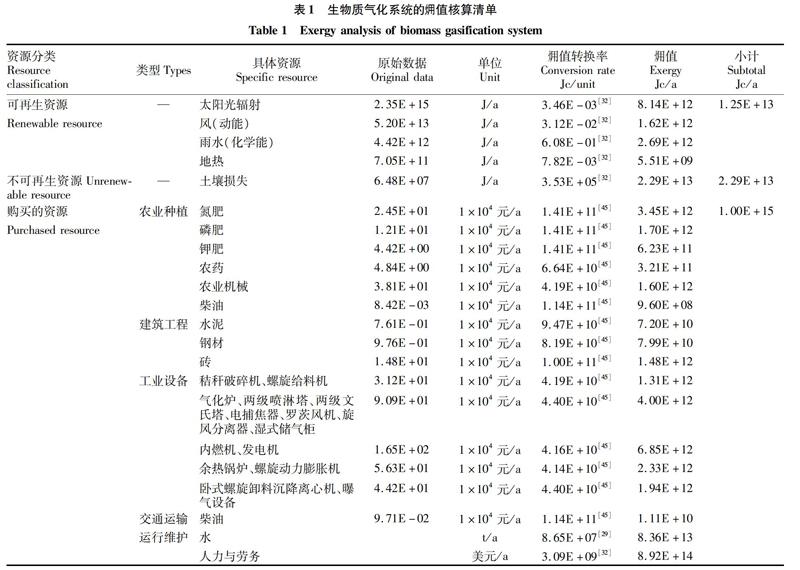
摘要基于生态热力学的最新进展,首次采用烔用值理论方法研究生物质气化系统。以江苏盐城某20 MW生物质气化燃气-蒸汽联合循环发电工程为研究案例,采用烔用值分析理论对其生态环境效益进行综合评价,并计算了系统的烔用值评价指标,与风力发电系统、太阳能热力发电系统、玉米酒精生产系统和沼气综合利用系统这几个典型的可再生能源转化利用系统进行对比分析。结果表明,生物质气化系统的烔用值总输入为1.04E+15 Jc/a,烔用值转换率为2.64 Jc/J。人力劳务是生物质气化系统烔用值投入的主要部分,占总烔用值投入的8604%。生物质气化系统与其他可再生能源系统类似,都主要依赖于外购的资源,但对可再生资源的利用较高,具有较好的发展持续性和生态环境效益。
关键词生物质气化;烔用值分析;生态环境效益;可持续发展
中图分类号S216文献标识码A文章编号0517-6611(2017)17-0184-06
AbstractBased on the latest progress of ecological thermodynamics, the exergy theory was firstly used to study biomass gasification system. With a 20 MW biomass gasification gas steam combined cycle power generation project in Yancheng City, Jiangsu Province as study case, the ecological environment benefits was comprehensively analyzed. The exergybased indicators of the biomass gasification system was calculated and compared with other renewable exergy conversion systems including wind power generation system, solar thermal power generation system, cornethanol production system and biogas system. The results showed that the total exergy inputs of the biomass gasification system is calculated to be 1.04E+15 Jc/a, and exergy conversion rate is 2.64 Jc/J. Labor inputs are the main contributor to total exergy inputs, taking up 8604%. Similar to other renewable exergy conversion systems, biomass gasification system is mainly supported by exergy purchased from outside. But it has advantages in sustainable development and ecoenvironmental benefits.
Key wordsBiomass gasification;Exergy analysis;Ecoenvironmental benefits;Sustainable development
基金项目国家自然科学基金项目(51576087,51376076)。
作者简介张晓燕(1992—),女,山东邹城人,硕士研究生,研究方向:生物质热化学转化系统的生态热力学。*通讯作者,副教授,博士,从事可再生能源系统评价与优化研究。
收稿日期2017-03-17
我国作为一个农业大国,生物质资源丰富,大力发展清洁、高效的生物质能转化技术对于我国应对气候变化和实现低碳化能源发展道路具有重要意义[1]。作为一种重要的生物质能热转化利用方式,生物质气化是在气化剂存在的条件下,将组成生物质的碳氢化合物转化为可燃气体的过程[2-4],生成的可燃气既可进一步加工合成一些基础的化工原料,还可以直接作為燃料进行燃烧或发电[5-7]。……
登录APP查看全文
猜你喜欢
中国科技博览(2016年19期)2016-10-19 14:16:24
中国科技博览(2016年18期)2016-10-19 10:08:18
中国科技博览(2016年18期)2016-10-19 09:21:19
中国市场(2016年35期)2016-10-19 03:25:13
中国市场(2016年33期)2016-10-18 12:40:58
商(2016年27期)2016-10-17 05:27:50
商(2016年27期)2016-10-17 05:22:30
商(2016年27期)2016-10-17 04:12:24
科学与财富(2016年28期)2016-10-14 19:39:49
人民论坛(2016年27期)2016-10-14 13:24:43
