怀旧如何让美国再次伟大
2017-08-16 16:46:59ByMikeMariani
英语学习
2017年8期
By+Mike+Mariani
Make America great again. Clearly the message resonated. In 2016 the Public Religion Research Institute, a nonpartisan2 group, published its annual American Values Survey. It revealed 51% of the population felt the American way of life had changed for the worse since the 1950s. Further, 70% said American society has gotten worse since that romanticized decade.
Of course America today has its problems, but many indices3 of standards of living show the general population is better off now than it was 60 years ago. We live on average 10 years longer, the education rate is higher, as is homeownership. When it comes to crime, The Atlantic reported last year, “By virtually any metric4, Americans now live in one of the least violent times in the nations history.”
So why do so many people see the past as better than today? For many of them, it may well have been. Middleand working-class Americans seduced by appeals to earlier eras may have had higher-paying jobs with better benefits, greater financial security, and a more defined place in the community. Perhaps they were happier. For some, cultural changes since the Saturday night sock-hop may have only strengthened their beliefs that American values have frayed.5 But an innate psychological trait may also explain why people tend to view the past as better than today: nostalgia.
Most everybody knows the term nostalgia, if not its origin. It was coined by Swiss physician Johannes Hofer in 1688: a portmanteau6 of nostos and algos, Greek words for homecoming and pain or distress, respectively. And most have an understanding that nostalgia means finding pleasure in remembering or reliving a past experience—hearing a favorite old song, for instance, or remembering a stirring love affair.
Recent science, though, makes good on the etymology of the term.7 It reveals nostalgia is not just a wistful glow associated with pleasurable events and experiences.8 It is an innate response to pain or distress, and, in some sense, a coming home. Whats more, cognitive scientists say, a defining trait of nostalgia is its capacity to distort the past.
In the process of looking back, people tend to filter out negative or painful experiences. Memories themselves are often not what they seem. They are not hardwired in our brains, a factual representation of our autobiographical pasts.9 Rather, memory is fluid, and were constantly reframing our personal histories to fit into a greater life arc. In many cases, the past looks as halcyon as it does because rosy hindsight molds it to appear that way to help us maintain mental health.10 Our past is constantly shifting to accommodate our present.
When Clay Routledge, the author of Nostalgia: a Psychological Resource, began researching nostalgia, he was interested in how this universally shared feeling might help us better deal with the future. “I started out with this very specific hypothesis of nostalgia as a coping resource,” he says.“We can reflect back in time on experiences that we find personally meaningful. Might we use such past-oriented experiences as a way to cope with future-oriented anxieties?”
Pursuing this hunch, Routledge and a team of researchers began looking at the potential benefits of “nostalgizing,” as they termed it: How it might help us maintain equilibrium11 in times of crisis, recall loving relationships, and generally lean on the bright spots in our pasts. Their studies contextualized nostalgias utility, showing that its frequently triggered by low moods, loneliness, and even a sense of meaninglessness. These triggers suggested that nostalgia might be a kind of defense mechanism, a way to maintain resiliency during periods of anxiety, despair, and existential distress.12 “What seems to be the case is that nostalgia can be an adaptive tool to deal with a lot of psychological threats,” he says.
Nostalgia, it turns out, helps cultivate what psychologists call “self-continuity.”The concept refers to our ability to maintain our identity and sense of self through the vicissitudes13 of our life spans, from the death of a loved one to a career change to devastating illness.“Self-continuity means the sense that I have this stable, continuous sense of self,” Routledge says. Self-continuity gives coherence to our lives, the impression that there is a permanent, unchanging self underneath the random events and crises that transform our circumstances over the years.
Past research has found self-discontinuity—this sense of estrangement from past selves—to be a maladaptive trait,14 something that causes psychological distress. But a strong sense of self-continuity can help combat those episodes of disjuncture15 in our lives. So how does nostalgia enhance ones self-continuity?
Routledge and his co-authors rated participants on two scales. The first, the Social Readjustment Rating Scale, looks at major life events that may disrupt self-continuity and elicit16 self-discontinuity. The second was the Southampton Nostalgia Scale, a rating system for nostalgia-proneness17. They found a positive correlation18 between experiences that induce self-discontinuity and an individuals nostalgia proneness.
These findings indicate that nostalgia is a natural response to self-discontinuity, a psychological tool that mitigates19 damage to our sense of self. Routledge explains that the various phenomena associated with autobiographical memory—chiefly psychological biases called fading affect and rosy retrospection—are ideally suited to induce nostalgia.20 “The way these memories work, works perfectly for nostalgia,” he says. In other words, the memories inducing nostalgia have been burnished and idealized over time, shorn of their negative aspects.21 But these recollections serve an important adaptive purpose. When people are experiencing situations that challenge that sense of self and make them feel uncertain about life, they naturally recruit nostalgia as a way to restore that self-continuity.
Nostalgia was used to counteract episodes of selfdiscontinuity, and it also strengthens our sense of an overarching22 self over a lifetime. Routledge gives the example of long-term relationships. “When you say ‘I love you, the assumption underlying that very statement is that theres something unchanging about the essence of who we are,” he says. “If you didnt have those unchanging aspects, it would be extremely difficult to have serious long-lasting human relationships.”
But self-continuity still doesnt fully explain how nostalgia casts its spell23. What enables us to focus only on certain events and episodes, or cut through ambivalence and zero in on the happier aspects of our relationships?24 As it turns out, our memories are partial. Biased. They are not objective representations of our pasts. Instead, they often magnify our positive experiences, while gradually diminishing negative ones. This is referred to as the fading affect bias.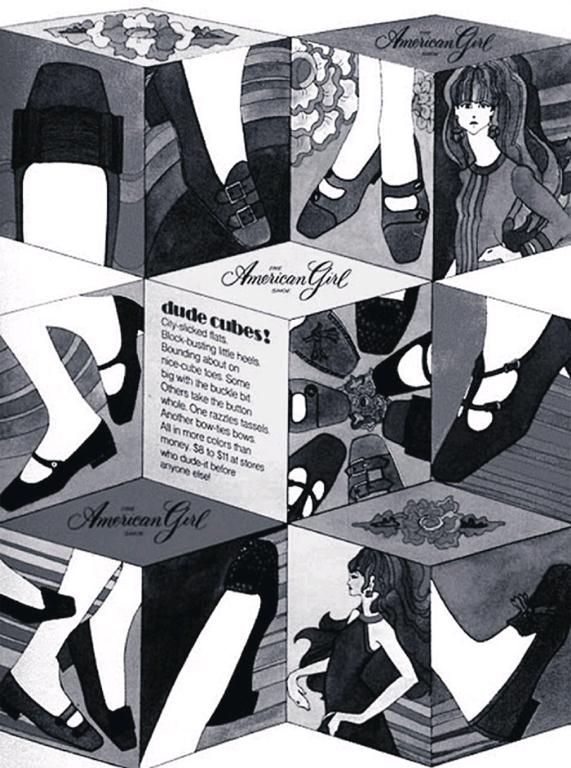
To delve25 further into memory, Routledge is working on a study in which Britons who were children during World War II put together narratives of their experiences. While most of the narratives include many painful and even traumatic26 episodes—children being estranged from their parents or hiding underground during the Nazi bombing of Britain—their accounts of the war also invoke dimensions that may have taken decades to fully reveal themselves. Despite all the fear and upheaval, survivors recall spending time with extended family,27 reaching an intimacy with their cousins, aunts, and uncles that wouldnt have been possible outside of those extraordinary circumstances. “Theyve been able to re-construe28, or learn some sort of life lesson from that experience, which at the time must have been terrifying.”Routledge says.
“There is a real concern about the potential dark side of nostalgia,” Routledge says. “What I think people are doing is imagining the positive. Theyre plucking29 features that they think are better, like ‘Oh, maybe life was simpler, or people could get better jobs. I dont know what theyre holding onto but it doesnt necessarily mean that it was true, first of all. And theyre probably not thinking about who it negatively affected.”
Still, the point remains that nostalgia, an innate, adaptive trait, is a necessary guide through the thickets30 of memory and experience. In the end, says Routledge, “Our brains are just trying to make sense of life.”
让美国再次伟大。显然这一信息引起了共鸣。2016年大众宗教研究所(一个无党派组织)发布了其年度《美国价值观调查》。这份调查显示51%的民众认为美国生活方式自20世纪50年代以来每况愈下,而且70%的民众表示美国社会自那个被人们赋予浪漫情怀的十年以来变得更糟了。
当然,今时今日美国是存在问题的,但是多项反映生活水平的指标都表明大众如今的生活要比60年前好。我们平均多活10年,受教育比率更高,而且自有住房率也更高。而谈到犯罪问题,《大西洋月刊》去年报道称,“无论以什么标准来衡量,美国人如今身处本国历史上暴力问题最不严重的时代。”
那么为何有如此多的人认为过去比现在要好?对于其中不少人而言,实际情况确实如此。那些被诉诸早年时光的说辞所打动的美国中产阶级与工薪阶级也许当年工作收入更高、福利更好、财产状况更加稳定,而且在群体中有更明确的位置。也许他们过去更幸福。对于一些人来说,自周六之夜跳sock-hop舞以来的文化变迁或许只是让他们更加坚信美国价值观在每况愈下。但一种天生的心理特质也许可以解释为何人们倾向于认为过去比现在要好:怀旧心理。
几乎所有人都知道nostalgia(怀旧)这个词,即使不知其来源的话。这个词由瑞士医生约翰内斯·霍弗于1688年创造:一个由nostos与algos构成的混成词。在希腊语中nostos意思是回家,而algos的意思是痛苦或者悲傷。按照大部分人的理解,怀旧指的是在回忆或者重历过去中寻找愉悦——听一首心爱的老歌,比方说,或者回忆一段刻骨铭心的爱情往事。……
登录APP查看全文
猜你喜欢
光明少年(2024年5期)2024-05-31 10:25:59
当代陕西(2022年4期)2022-04-19 12:08:54
International Journal of Nursing Sciences(2022年1期)2022-02-08 03:23:58
学苑创造·A版(2020年10期)2020-11-06 05:21:26
娃娃画报(2019年11期)2019-12-20 08:39:45
作文周刊·小学一年级版(2016年27期)2017-06-03 23:21:17
丝绸之路(2016年9期)2016-05-14 14:36:33
新湘评论·下半月(2016年4期)2016-05-05 22:12:41
新湘评论·下半月(2016年4期)2016-05-05 22:12:41
海外文摘(2016年4期)2016-04-15 22:28:55