基于FPGA的图像超分辨率的硬件化实现
2017-09-08 04:31:06钟雪燕夏前亮陈智军
现代电子技术
2017年17期
钟雪燕+夏前亮+陈智军
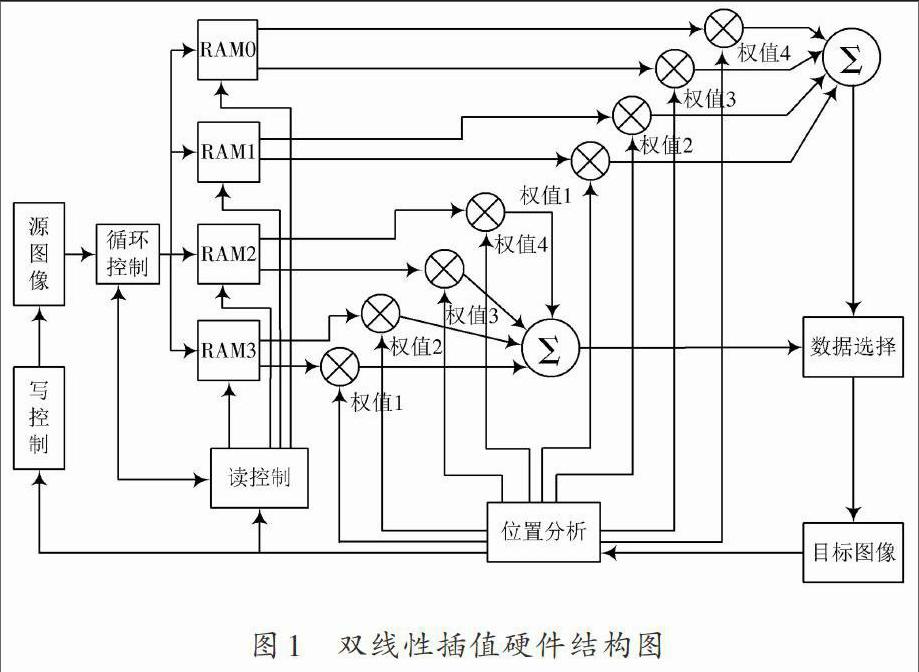
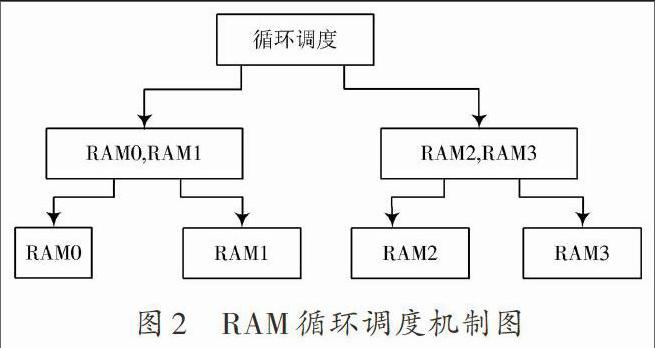
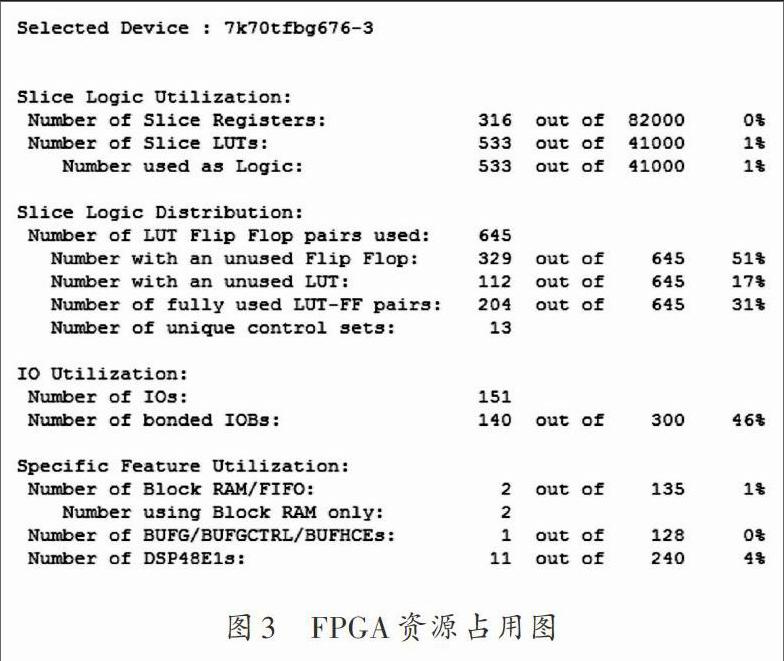
摘 要: 设计基于FPGA的图像超分辨率双线性插值实现方式,提出基于单输入双输出端口RAM缓冲的二级循环调度机制,用以实现共享资源分配和并行流水处理。单输入双输出端口的RAM实现读取相邻地址的两个数据,RAM的深度为源图像一行的像素点数,宽度为像素数据宽度,实现源数据相邻两行像素的存储。根据位置分析模块得到源图像的位置,将源图像的数据写入相应RAM中进行加权运算。为了提高效率使用乒乓算法,设计了4个RAM,2个RAM为一组,一组RAM在加权运算时,另一组RAM写入数据。该设计在Kintex?7开发板上得到验证,实现图像处理速度达到25~30 f/s,同时图像插值后不仅细节更加清晰,从直方图中可以看到图像得到了均衡化。
关键词: FPGA; 超分辨率; 双线性插值; 循环调度
中图分类号: TN911.73?34; TP391 文献标识码: A 文章编号: 1004?373X(2017)17?0044?03
FPGA?based hardware implementation of image super?resolution
ZHONG Xueyan1, XIA Qianliang2, CHEN Zhijun3
(1. Nanjing Institute of Railway Technology, Nanjing 210031, China; 2. CETC Deqing Huaying Electronics Co., Ltd., Huzhou 313200, China;
3. Nanjing University of Aeronautics and Astronautics, Nanjing 211106, China)
Abstract: An FPGA?based implementation mode of image super?resolution bilinear interpolation was designed. A two?stage round?robin scheduling mechanism based on RAM with single?input and dual?output port is proposed to realize the shared resource allocation and parallel pipeline processing. RAM with single?input and dual?output port can read two data whose address are adjacent. The quantity of pixels within a row in source image is deemed as the depth of RAM, and the width of pixel data is deemed as that of RAM to store the two rows of pixels adjacent to the source data. The position of source image is gotten according to the position analysis module. The data of source image is written into the corresponding RAM for weighting operation. In order to improve the efficiency, the ping?pong algorithm is adopted to design four RAMs which are divided into two groups (each one includes two RAMs). If one group of RAMs is performed with weighting calculation, another group of RAMs is performed with data write?in. The design was verified on Kintex?7 development board, which can process the image with the speed of 25~30 f/s. The interpolated image has clear detail. The image is equalized, which is shown in histogram.
Keywords: FPGA; super?resolution; bilinear interpolation; round?robin scheduling
0 引 言
通常的图像显示设备具有固定的分辨率,低分辨率的图像数据需要进行超分辨率处理,获得与显示设备相匹配的分辨率才能正常显示,如High?Definition TV,HDTV,这一过程本质上就是一种图像超分辨处理。
图像超分辨率技术在各个领域中得到了广泛应用,如公共安全、医学成像、军事、地质、工业及消费电子等产业。通过该技术尽可能提高图像的分辨率,达到更好的图像识别能力和识别精度。
随着图像数据量的增大,对图像处理速度提出了更高的要求,利用硬件实现图像处理已经逐渐成为图形处理领域研究的重要课题。
FPGA由于强悍的数据处理能力得到广泛关注,其对数据采用并行流水式处理方式,加快了数据处理速度。……
登录APP查看全文