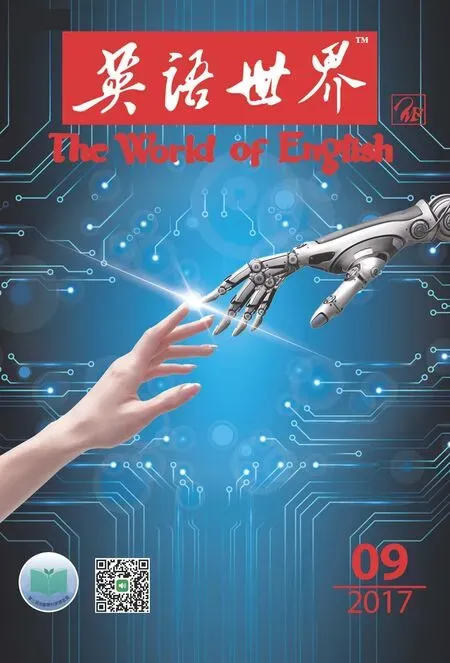
Artificial Intelligence—Can We Keep It in the Box?我们能管控人工智能之威胁吗?
2018-01-08 05:48:56杜焱
英语世界
2017年9期
译/杜焱
我们都知道如何处理可疑包裹——那就是要多小心就有多小心!现在我们让机器人替我们去冒险。但是,如果机器人本身就是危险呢?一些评论员指出:我们应该像对待可疑包裹一样去看待人工智能,因为可能有一天它会给我们造成威胁。我们真该为此担忧吗?
爆发的智能?
[2]当被问及未来是否会和人一样聪明时,美国数学家、科幻小说作家瓦尔·温格回答道:“会的,可是这样的计算机只会短暂地出现一段时间。”
[3]他的意思是:一旦计算机发展到这个水平,势将在短时间内取得飞速发展。温格将智能这一井喷式的发展势头命名为“技术奇点”,同时他认为,从人类的角度来看,这可能不是一个好消息。
We know how to deal with suspicious packages—as carefully as possible!These days, we let robots take the risk.But what if the robots are the risk? Some commentators argue we should be treating AI (artificial intelligence) as a suspicious package, because it might eventually blow up in our faces. Should we be worried?
Exploding intelligence?
[2] Asked whether there will ever be computers as smart as people, the US mathematician and sci-f i author Vernor Vinge replied: “Yes, but only brief l y.”
[3] He meant that once computers get to this level, there’s nothing to prevent them getting a lot further very rapidly.Vinge christened this sudden explosion of intelligence the “technological singularity”, and thought that it was unlikely to be good news, from a human point of view.

[4] Was Vinge right, and if so what should we do about it? Unlike typical suspicious parcels, after all, what the future of AI holds is up to us, at least to some extent. Are there things we can do now to make sure it’s not a bomb (or a good bomb rather than a bad bomb,perhaps)?
AI as a low achiever
[5] Optimists sometimes take comfort from the fact the field of AI has very chequered past. Periods of exuberance and hype have been mixed with socalled “AI winters”—times of reduced funding and interest, after promised capabilities fail to materialise.
[6] Some people point to this as evidence machines are never likely to reach human levels of intelligence,let alone to exceed them. Others point out that the same could have been said about heavier-than-air flight.
[7] The history of that technology,too, is littered with naysayers (some of whom refused to believe reports of the Wright brothers’ success, apparently).
[4]温格的观点是否正确?如果正确,我们该如何应对?毕竟,人工智能产品不同于一般的可疑包裹,至少从某种程度上来说,人工智能的未来是由我们决定的。现在,我们能做点什么来确保人工智能产品不是一个“炸弹”(或者,如果可能的话,是一个杀伤力较小的炸弹,而不是一个危害性极强的炸弹。)?
人工智能成就平平
[5]人工智能的发展历经曲折,乐观主义者有时可从中得到安慰。人工智能的发展有过繁荣期和炒作大热期,但在这过程中,也曾多次遭遇所谓的“人工智能的冬天”,即由于预先承诺实现的功能无法兑现,导致投入资金削减,研究热度降低的阶段。
[6]有人以此为证据,指出机器永远不可能达到人类同等的智力水平,更不用说超越。……
登录APP查看全文
猜你喜欢
大科技·百科新说(2021年6期)2021-09-12 02:37:27
小学科学(学生版)(2021年7期)2021-07-28 06:44:42
好孩子画报(2020年5期)2020-06-27 14:08:05
科技传播(2019年22期)2020-01-14 03:06:34
意林·全彩Color(2019年6期)2019-07-24 08:13:50
IT经理世界(2018年20期)2018-10-24 02:38:24
消费导刊(2017年20期)2018-01-03 06:26:40
小康(2017年16期)2017-06-07 09:00:59
南风窗(2016年19期)2016-09-21 16:51:29
奥秘(2015年2期)2015-09-10 07:22:44