
单唾液酸四己糖神经节苷脂治疗脑血管病认知 功能障碍的疗效观察
2019-01-09 07:05:19李恒
中国现代医生
2019年33期
李恒
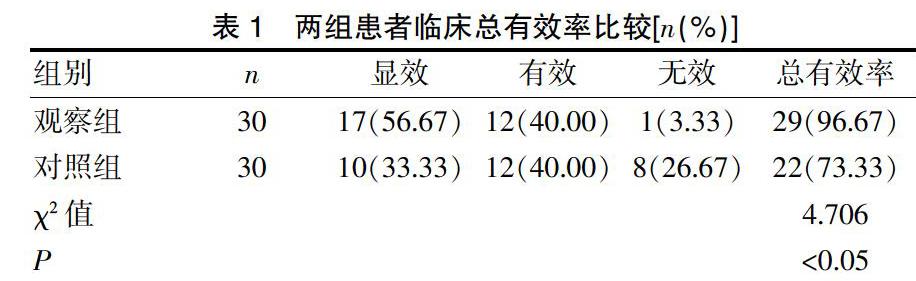
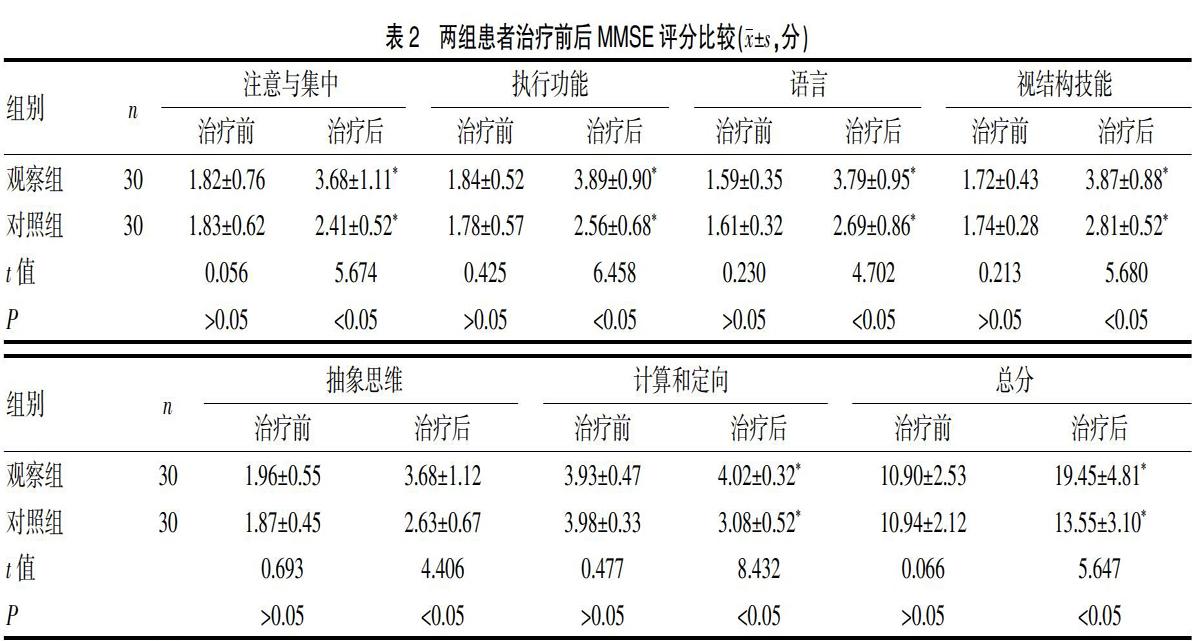
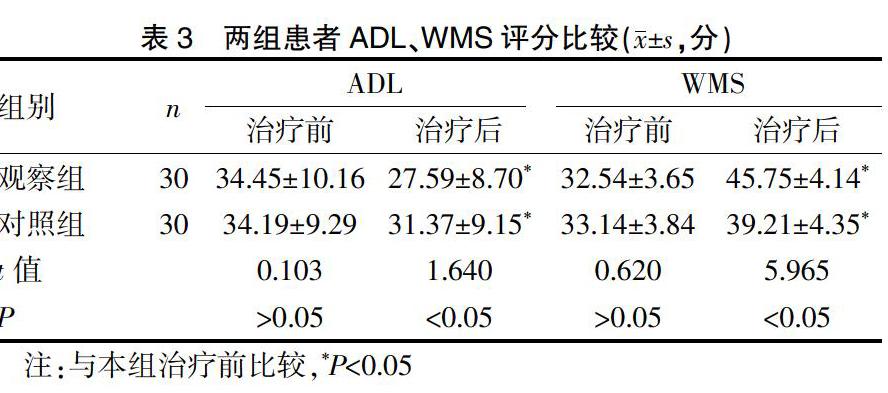
[摘要] 目的 探討脑血管病认知功能障碍患者应用单唾液酸四己糖神经节苷脂治疗的效果。 方法 选取2017年9月~2018年9月期间我院收治的60例脑血管病认知功能障碍患者,按照患者入院先后顺序将60例患者分为对照组(n=30)和观察组(n=30),对照组采取尼莫地平进行治疗,观察组采取静脉滴注方式给予单唾液酸四己糖神经节苷脂治疗,观察两组患者临床有效率、治疗前后MMSE评分、ADL与WMS评分。 结果 观察组临床总有效率(96.67%)明显高于对照组(73.33%),差异具有统计学意义(P<0.05);治疗前,两组患者ADL、WMS、MMSE各项评分无显著差异(P>0.05);治疗后,观察组ADL评分低于对照组,WMS评分高于对照组,组内比较治疗后ADL评分均低于治疗前,WMS评分较治疗前更高,差异具有统计学意义(P<0.05);观察组MMSE各项评分明显高于对照组,组内比较治疗后各项评分均高于治疗前,差异均有统计学意义(P<0.05)。 结论 脑血管病认知功能障碍患者中应用单唾液酸四己糖神经节苷脂治疗临床效果显著,可改善患者认知功能和精神状态,提高记忆力和生活能力,临床中可广泛应用。
[关键词] 脑血管病;认知功能障碍;单唾液酸四己糖神经节苷脂
[中图分类号] R743.3 [文献标识码] B [文章编号] 1673-9701(2019)33-0100-04
[Abstract] Objective To investigate the effect of monosialotetrahexosylganglioside therapy in cerebrovascular disease patients with cognitive impairment. Methods Sixty cerebrovascular disease patients with cognitive impairment of admitted to our hospital from September 2017 to September 2018 were enrolled. According to the order of admission, 60 patients were divided into control group(n=30) and observation group(n=30). The control group was treated with nimodipine, and the observation group was treated with monosialotetrahexosylganglioside by intravenous drip. The clinical effective rate, MMSE score before and after treatment, ADL and WMS were observed in the two groups. Results The clinical total effective rate of the observation group(96.67%) was significantly higher than that of the control group(73.33%), and the difference was statistically significant(P<0.05). Before treatment, there was no significant difference in the scores of ADL, WMS and MMSE between the two groups(P>0.05). After treatment, the ADL score of the observation group was lower than that of the control group, and the WMS score in the observation group was higher than that of the control group. In the two groups, the ADL score after treatment was lower than that before treatment, and the WMS score after treatment was higher than that before treatment, with statistical significance(P<0.05). MMSE scores in the observation group were significantly higher than those in the control group, and the scores in the two groups were higher than those before treatment, and the differences were statistically significant(P<0.05). Conclusion The application of monosialotetrahexosylganglioside in the treatment of cerebrovascular disease cognitive dysfunction has a significant clinical effect, which improves cognitive function and mental state, improves memory and life ability, and can be widely used in clinical practice.
[Key words] Cerebrovascular disease; Cognitive dysfunction; Monosialotetrahexosylganglioside
近年来,随着社会经济不断发展,人们生活水平显著提升,不良饮食结构导致高血脂、高血压患病率逐年上升,心脑血管疾病患病率也随之攀升,发病率达到50%以上,且农村患病率远高于城市[1]。脑血管疾病患病率、致残、致死率较高,是威胁人类身体健康的主要疾病之一。认知也常被称之为认识,主要是指人通过感觉器官感知外界事物,再由大脑对感知的信息进行加工的过程[1]。而许多中老年群体因高血脂、高血压、糖尿病、心脏病等因素,易患脑血管疾病,如脑梗死、脑出血、慢性脑缺血、白质疏松等,患病后患者均会出现不同程度认知功能障碍,导致记忆力、生活能力、运动功能减退,严重影响中老年生活质量,因此,探寻安全、有效的脑血管病患者治疗方式成为临床研究重要课题,近年来单唾液酸四己糖神经节苷脂在脑血管病患者治療中取得良好成效[2-3]。……
登录APP查看全文
