
渴望分享生活点滴?这不新鲜,也不自恋
2019-01-31 17:46:30ByLeeHumphreys
英语学习
2019年1期
关键词:生活
By Lee Humphreys
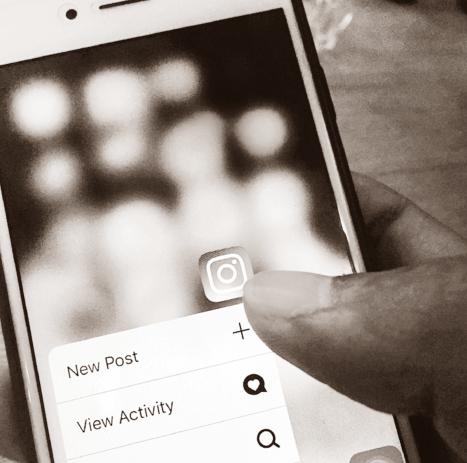
Narcissism is defined as excessive self-love or self-centredness. In Greek mythology, Narcissus1 fell in love when he saw his reflection in water: He gazed so long, and he eventually died. Today, the quintessential2 image is not someone staring at his reflection but into his mobile phone. While we pine away for that perfect Snapchat filter or track our likes on Instagram, the mobile phone has become a vortex of social media that sucks us in and feeds our narcissistic tendencies.3 Or so it would seem.
But people have long used media to see reflections of themselves. Long before mobile phones or even photography, diaries were kept as a way to understand oneself and the world one inhabits. In the 18th and 19th centuries, as secular4 diaries became more popular,middle-class New Englanders, particularly white women, wrote about their everyday lives and the world around them. These diaries were not a place into which they poured their innermost thoughts and desires, but rather a place to chronicle the social world around them—whats going on around the house, what they did today, who came to visit, who was born or who died. The diaries captured the everyday routines of mid-19thcentury life, with women diarists in particular focused not on themselves but on their families and their communities.
在手機的社交媒体上分享生活点滴,或许是近几年才出现的新生事物。但在智能手机出现以前,人们便已热衷于此。那个时代的人会写日记、拍照片,还会把这些东西拿出来与朋友分享,一切都那么相似。唯一不同的是,今天,我们的每一条动态,都成了平台提供者的大数据之一。在看似免费的服务背后,却有着一条价值上亿的利益链。
Diaries today are, for the most part, private. These New England diaries, in contrast, were commonly shared. Young women who were married would send their diaries home to their parents as a way of maintaining kin relations. When family or friends came to visit, it was not uncommon to sit down and go through ones journal together. Late 19th-century Victorian parents would often read aloud their childrens diaries at the end of the day. These were not journals with locks on them, meant only for the eyes of the diarist, but a means of sharing experiences with others.
Diaries are not the only media that people have used to document lives and share them with others. Scrapbooks5, photo albums, baby books and even slide shows are all ways in which we have done this in the past, to various audiences. Together, they suggest that we have long used media as a means of creating traces of our lives. We do this to understand ourselves, to see trends in our behaviour that we cant in lived experiences. We create traces as part of our identity work and as part of our memory work. Sharing mundane6 and everyday life events can reinforce social connection and intimacy. For example, you take a picture of your childs first birthday. It is not only a developmental milestone: The photo also reinforces the identity of the family unit itself. The act of taking the photo and proudly sharing it further reaffirms one as a good and attentive parent. In other words, the media traces of others figure in our own identities.
By comparing old technologies with new technologies that enable us to document ourselves and the world around us, we can begin to identify what is really different about the contemporary networked environment. Building on a 20th-century broadcast model of media, todays social media platforms are, by and large7, free to use, unlike historical diaries, scrapbooks and photo albums, which people had to buy. Today, advertising subsidises8 our use of networked platforms. Therefore these platforms are incentivised9 to encourage use of their networks to build larger audiences and to better target them. Our pictures, our posts and our likes are commodified10—that is, they are used to create value through increasingly targeted advertising.
I dont want to suggest that, historically, using media to create traces of ourselves occurred outside of a commercial system. We have long used commercial products to document our lives and to share them with others. Sometimes even the content was commercialised. Early 19th-century scrapbooks were full of commercial material that people would use to document their lives and the world around them. Its easy to think that once you buy a journal or scrapbook, you own it. But,of course, the examples of sending diaries back and forth, or of Victorian parents reading their childrens diaries aloud, complicate notions of singular ownership.

Commercial access to our media traces is also historically complex. For example, people used to buy their cameras and film from Kodak, and then send film back to Kodak to be developed. In these cases, Kodak had access to all of the traces, or memories, of its customers but the company didnt commodify these traces in the ways that social media platforms do today. Kodak sold customers its technology and its service. The company didnt give it away in exchange for mining their customers traces to sell ads targeted at them in the way that social media platforms use our traces to target us today.11
Instead of social media merely connecting us, it has become a cult12 of notifications, continually trying to draw us in with the promise of social connectivity—its someones birthday, someone liked your picture, etc. Im not arguing that such social connectivity isnt meaningful or real, but I believe its unfair to presume that people are increasingly narcissistic for using these platforms. Theres a multibillion-dollar industry pulling us into our smartphones, relying on a longstanding human need for communication. We share our everyday experiences because it helps us to feel connected to others, and it always has. The urge to be present on social media is much more complex than simply narcissism. Social media of all kinds not only enable people to see their reflections, but to feel their connections as well.
自恋意即過分自爱或者以自我为中心。在希腊神话中,那喀索斯爱上了他在水中的倒影,长久地凝视,最终死去。而在今天,这个典型的形象不再是凝视着自己的倒影,而是盯着自己的手机。当我们为了在色拉布上寻找完美的滤镜而费尽心思,或者不停地在照片墙上查看谁给我们点了赞时,手机上的社交软件就像旋涡一样把我们吸入,滋养着我们的自恋之情。起码,看上去是这么回事。
其实,人们通过媒介来反观自己的行为早已有之。早在智能手机甚至摄影术发明之前,人们就通过日记来了解自己和周围的这个世界了。在18和19世纪,随着普通大众写日记日益流行,新英格兰的中产阶级,尤其是白人女性,也把她们的日常生活和周围的事都一一写了下来。她们并没有在日记中倾诉自己内心深处的想法和欲求,而是单纯地记录下自己的社交生活——家里发生什么啦,今天干什么啦,谁来做客啦,有没有人出生或者死亡啦,等等。这些日记捕捉了19世纪中期的生活日常。尤其是女性的日记,因为她们的关注点不在自己,而在家庭和社会。……
登录APP查看全文
猜你喜欢
风流一代·经典文摘(2018年1期)2018-02-22 09:00:43
党的生活(黑龙江)(2017年12期)2017-12-23 17:01:20
求学·文科版(2017年10期)2017-12-21 11:55:48
求学·理科版(2017年10期)2017-12-19 13:42:05
民生周刊(2017年19期)2017-10-25 07:16:27
特别文摘(2016年19期)2016-10-24 18:38:15
爆笑show(2016年3期)2016-06-17 18:33:39
37°女人(2016年5期)2016-05-06 19:44:06
爆笑show(2016年1期)2016-03-04 18:30:28
爆笑show(2015年6期)2015-08-13 01:45:40
