TLR4和IL-5在儿童嗜酸性粒细胞性结肠炎的表达及作用机制研究 ???
2020-03-25 15:13:38谢静熊莉娅耿岚岚杨敏陈佩瑜王洪丽龚四堂
新医学
2020年3期
谢静 熊莉娅 耿岚岚 杨敏 陈佩瑜 王洪丽 龚四堂
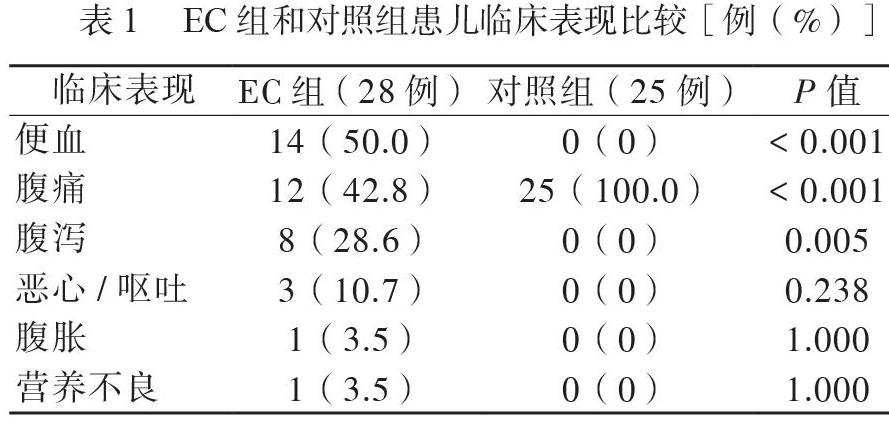

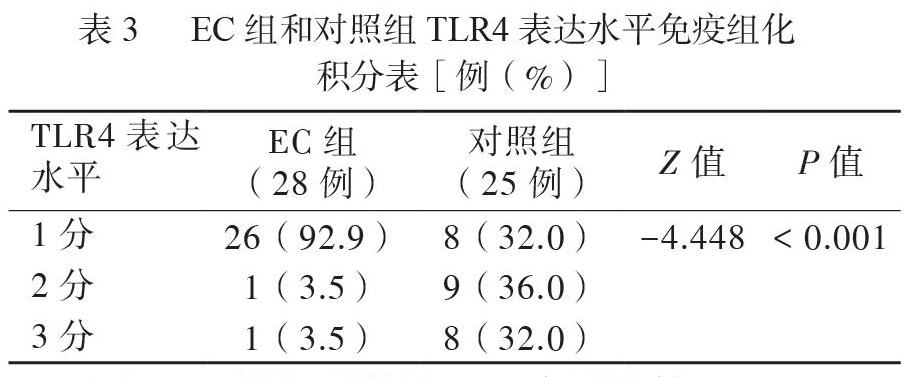
【摘要】目的 檢测Toll样受体4(TLR4)和IL-5在儿童嗜酸性粒细胞性结肠炎(EC)的表达水平及相关性,探讨TLR4在儿童EC发病过程中的作用机制。方法 收集EC患儿的结肠黏膜标本,共28例,同期收集肠黏膜正常对照组25例。分析2组患儿的临床资料,采用免疫组织化学法检测其结肠黏膜中TLR4、IL-5表达情况并对结果进行分析。结果 EC组患儿主要表现为血便、腹泻,大多患儿内镜下见结肠黏膜充血、水肿、小结节增生、糜烂和阿弗它溃疡,8例患儿内镜下结肠黏膜正常;黏膜病理提示黏膜下有大量嗜酸性粒细胞浸润,均≥20个/高倍镜视野。对照组患儿主要表现为腹痛,内镜下示全结肠黏膜正常,黏膜病理示未见明显病理改变。与对照组比较,EC组结肠黏膜TLR4水平降低(Z = -4.448,P < 0.05),结肠黏膜IL-5表达水平增高(Z = -7.015,P < 0.05)。TLR4、IL-5表达水平呈负相关(r = -0.5325,P < 0.05)。结论 机体受到过敏原、毒素等刺激时,肠道TLR4不能反应性增高可能是EC发病机制之一。EC患儿肠组织TLR4表达明显下降,而IL-5明显升高,其机制可能是通过调节辅助性T淋巴细胞(Th)1/Th2平衡,使EC患儿倾向于Th2表型应答,释放大量IL-5细胞因子,参与EC的发生。
【关键词】嗜酸性粒细胞性结肠炎; Toll样受体4; 白介素-5
【Abstract】Objective To measure the expression levels of Toll-like receptor 4 (TLR4) and interleukin 5(IL-5) in the colonic mucosa of children with eosinophilic colitis(EC) and analyze their correlation, aiming to explore the mechanism of TLR4 in the pathogenesis of pediatric EC. Methods The colonic mucosal specimens were collected from 28 children diagnosed with EC and 25 healthy controls. Clinical data of all children were retrospective analyzed. The expression levels of TLR4 and IL-5 in the colonic mucosa were detected by immunohistochemistry and the results were analyzed. Results Clinical manifestations of EC children mainly included bloody stools and diarrhea. Colonic mucosal congestion, edema, small nodular hyperplasia, patchy erosion and Aphtha ulcer were observed under endoscope in most EC children. Normal colonic mucosa was noted under endoscope in 8 EC cases. Mucosal biopsy of all cases in the EC group showed a large quantity of eosinophil infiltration (≥20/HPF). All cases in the control group had abdominal pain and the whole colon specimens were normal and no significant pathological changes were observed. Compared with the control group, the TLR4 level in the colonic mucosa was significantly down-regulated (Z = -4.448, P < 0.05), whereas the expression level of IL-5 was significantly up-regulated in the EC group (Z = -7.015, P < 0.05). The expression level of TLR4 was negatively correlated with that of IL-5 (r = -0.532, P < 0.05). Conclusions When the body is stimulated by allergens and toxins, etc., the inability of TLR4 to respond to gastrointestinal tract may be one of the pathogenesis of EC. The expression of TLR4 in the intestinal tissues of EC children is significantly down-regulated, whereas that of IL-5 is remarkably up-regulated, suggesting that the mechanism is probably that by regulating the Th1/Th2 balance, EC children tend to respond to Th2 phenotype, release a large quantity of IL-5 cytokines, and participate in the incidence of EC.
【Key words】Eosinophilic colitis;Toll-like receptor 4;Interleukin 5
嗜酸性胃肠道疾病(EGID)包括嗜酸性粒细胞性食管炎、胃肠炎、结肠炎,是胃肠道组织中嗜酸性粒细胞(EOS)异常浸润导致的消化系统疾病,临床表现多样化,儿童少见。近年来随着儿童胃肠镜的广泛开展,该病也引起了临床医师关注。目前EGID发病机制尚不明确,研究认为EGID是辅助性T淋巴细胞(Th)2介导的过敏反应,Th2的优势应答导致IL-5、Eotaxin释放增多,IL-5是EOS分化和增殖的关键细胞因子,Eotaxin促进成熟EOS向肠道聚集,这可能是EOS异常浸润和炎症发生的基础[1]。而Toll样受体4(TLR4)通过树突细胞分泌IL-12、Ⅰ型干扰素,使Th0偏向Thl细胞分化以调节Th1/Th2的平衡[2]。因此,本文通过研究嗜酸性粒细胞性结肠炎(EC)患儿结肠黏膜中TLR4和IL-5的表达,来探讨TRL4在EC发病中的作用机制。……
登录APP查看全文