
重症肺炎患者PCT、CRP、APACHEⅡ评分与病原菌及预后的关系
2020-04-17 14:44:14唐玮欣余雪涛陈兰春丘自挺李展汉
中国实用医药
2020年1期
关键词:降钙素原
唐玮欣 余雪涛 陈兰春 丘自挺 李展汉
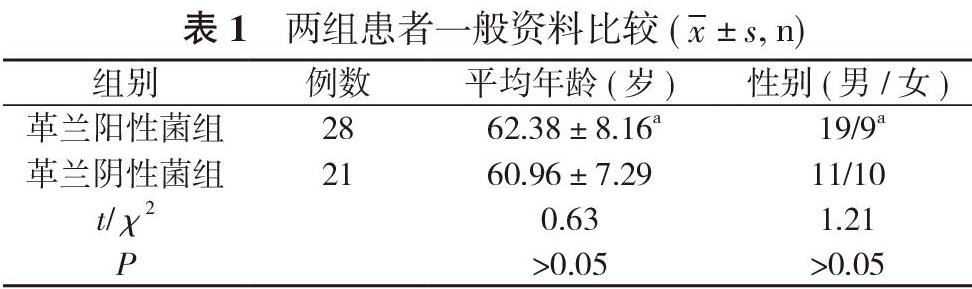
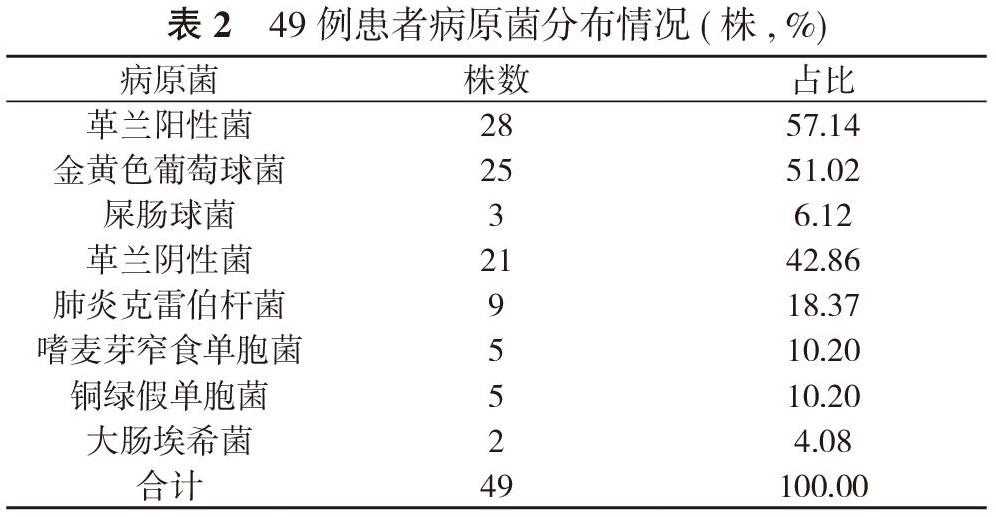
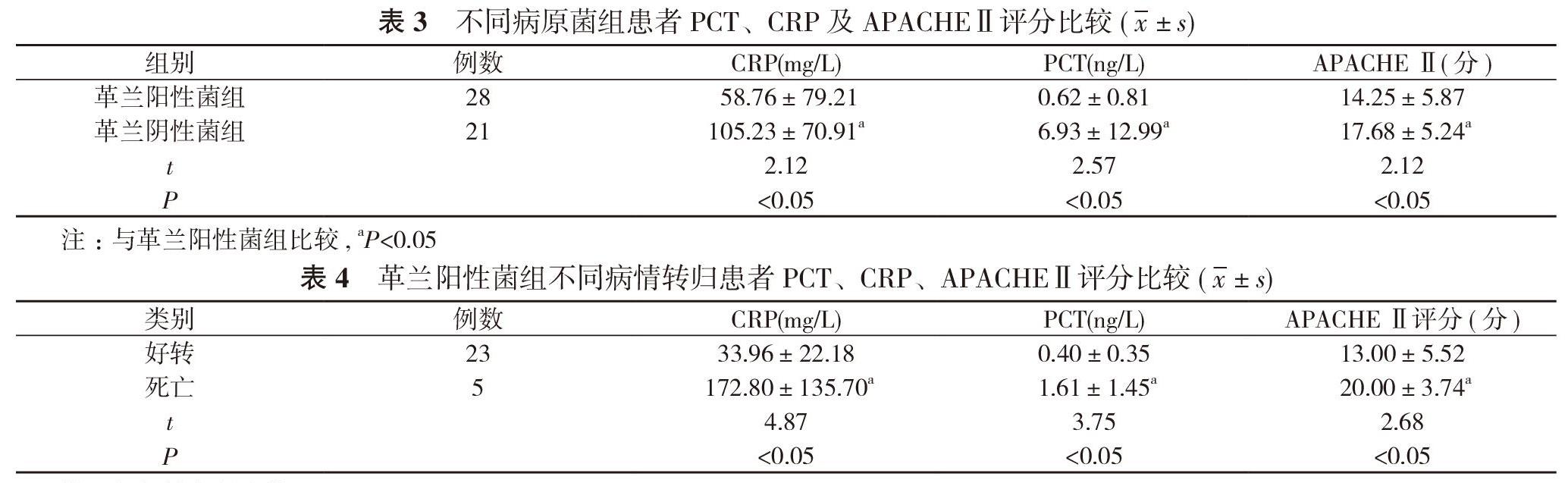
【摘要】 目的 探討不同病原菌感染的重症肺炎患者降钙素原(PCT)、C反应蛋白(CRP)、急性生理与慢性健康状况Ⅱ(APACHEⅡ)评分的差异, 以及其与预后的关系。方法 49例重症肺炎且痰培养阳性患者, 按照痰培养结果分为革兰阴性菌组(21例)及革兰阳性菌组(28例)。观察患者病原菌分布情况, 比较革兰阴性菌组、革兰阳性菌组患者PCT、CRP、APACHEⅡ评分;比较两组不同病情转归患者PCT、CRP、APACHEⅡ评分。结果 49例重症肺炎患者中, 革兰阳性菌占57.14%(28/49), 以金黄色葡萄球菌为主;革兰阴性菌阳性占42.86%(21/49), 以肺炎克雷伯杆菌、嗜麦芽窄食单胞菌、铜绿假单胞菌为主。革兰阴性菌组患者PCT(105.23±70.91)mg/L、CRP(6.93±12.99)ng/L及APACHEⅡ评分(17.68±5.24)分均高于革兰阳性菌组的(58.76±79.21)mg/L、(0.62±0.81)ng/L、(14.25±5.87)分, 差异有统计学意义(P<0.05)。革兰阳性菌组、革兰阴性菌组死亡患者的PCT、CRP及APACHEⅡ评分均高于好转患者, 差异有统计学意义(P<0.05)。结论 PCT、CRP及APACHEⅡ评分有助于区分革兰阴性菌感染与革兰阳性菌感染;PCT、CRP及APACHEⅡ评分对重症肺炎预后的判定有重要的临床价值。
【关键词】 重症肺炎;预后;C反应蛋白;降钙素原;急性生理与慢性健康状况Ⅱ评分
【Abstract】 Objective To discuss the difference of procalcitonin (PCT), C-reactive protein (CRP), acute physiological and chronic health evaluation Ⅱ (APACHEⅡ) score in patients with severe pneumonia infected by different pathogens, and their correlation to prognosis. Methods A total of 49 patients with severe pneumonia were divided into gram-negative bacteria group (21 cases) and gram-positive bacteria group (28 cases) according to the results of sputum culture. The distribution of pathogenic bacteria was observed, and PCT, CRP and APACHEⅡ score were compared between gram-negative group and gram-positive group. The PCT, CRP, APACHEⅡ scores were compared between the two groups with different outcomes. Results In 49 patients with severe pneumonia, gram-positive bacteria accounted for 57.14% (28/49), mainly Staphylococcus aureus; gram-negative bacteria accounted for 42.86% (21/49), mainly Klebsiella pneumoniae, Stenotrophomonas maltophilia and Pseudomonas aeruginosa. PCT (105.23±70.91) mg/L, CRP (6.93±12.99) ng/L and APACHEⅡ score (17.68±5.24) points in gram-negative group was higher than (58.76±79.21) mg/L, (0.62±0.81) ng/L and (14.25±5.87) points in gram-positive group. Their difference was statistically significant (P<0.05). The PCT, CRP and APACHE Ⅱ score of the dead patients in the gram-positive bacteria group and the gram-negative bacteria group were higher than those of the improved patients, their difference was statistically significant (P<0.05). Conclusion PCT, CRP and APACHE Ⅱ score are helpful to distinguish gram-negative bacterial infection from gram-positive bacterial infection, and PCT, CRP and APACHE Ⅱ scores have important clinical value in the prognosis of severe pneumonia.
【Key words】 Severe pneumonia; Prognosis; C-reactive protein; Procalcitonin; Acute physiology and chronic health evaluation Ⅱ score
重症肺炎是重症医学科临床常见的呼吸系统疾病, 有发病时间短、进展快的特点, 是常见死亡原因之一[1], 重症肺炎患者治疗的关键在于及时明确诊断、积极治疗[2]。感染的重要检测指标通常为C反应蛋白(C-reactive protein, CRP)及降钙素原(procalcitonin, PCT), 而APACHEⅡ是常用的危重病病情评价系统之一[3]。本研究探讨不同病原菌感染的重症肺炎患者PCT、CRP、APACHEⅡ评分的差异, 以及PCT、CRP、APACHEⅡ水平与预后的关系。现报告如下。
1 资料与方法
1. 1 一般资料 选取2015年10月~2016年10月医院重症加强护理病房(ICU)收治的49例重症肺炎且痰培养阳性患者, 其中男30例, 女19例;年龄41~80岁。将患者按照痰培养结果分为革兰阴性菌组(21例)及革兰阳性菌组(28例)。革兰阳性菌组患者平均年龄(62.38±8.16)岁;男19例, 女
登录APP查看全文
猜你喜欢
中国当代医药(2016年30期)2017-01-07 13:19:35
中国实用医药(2016年29期)2016-12-26 10:04:59
中国实用医药(2016年23期)2016-12-26 09:51:08
中国实用医药(2016年29期)2016-12-26 08:16:34
中国当代医药(2016年28期)2016-12-20 15:43:56
华夏医学(2016年4期)2016-12-12 00:12:41
中外医学研究(2016年26期)2016-11-30 02:44:00
中国实用医药(2016年24期)2016-10-17 04:27:23
中国实用医药(2016年24期)2016-10-17 04:15:03
中国实用医药(2016年24期)2016-10-17 03:21:57
