农家书屋政策执行的解释工具与策略选择
2020-05-13 14:31:31张龙
新世纪图书馆
2020年2期
张龙
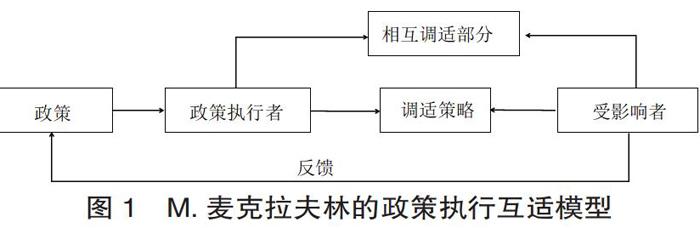
摘 要 农家书屋政策作为一项惠及广大农村社区的公共文化服务政策,在执行的过程中出现了很多的“中梗阻”问题,其发展已经受到了瓶颈制约。文章基于M.麦克拉夫林的政策执行互适模型,分析农家书屋政策执行主体之间“结构性”失衡、政策执行者与农民群体的“无博弈”状态、执行方式的“单一化”、政策执行评价的“内部化”等主要问题,以政策执行互动模型视域提出多元主体合作导向、良性博弈导向、手段多元导向、农民评价导向等主要的多维互动策略来解决农家书屋政策执行的困境。
关键词 农家书屋 政策执行 解释工具 策略选择 互动模型
分类号 G258.6
DOI 10.16810/j.cnki.1672-514X.2020.02.001
Explanatory Tools and Strategic Choices for Policy Implementation of Rural Library:An Interactive Model of Policy Implementation Based on M.McLaughlin
Zhang Long
Abstract As a public cultural service policy benefiting the vast rural community, the rural library policy has encountered many problems in the process of implementation, and its development can be said to have reached a bottleneck.Based on M.McLaughlin Interactive Model of Policy Implementation, this paper analyses the main problems of the “structural” imbalance between policy executives, the “no-game” state between policy executives and farmers, the “single” mode of implementation, and the “internalization” of policy implementation evaluation. So multi-dimensional interactive strategies such as multi-agent cooperation orientation, benign game orientation, means multi-oriented, and peasant evaluation orientation are put forward to solve the dilemma of rural library policy implementation.
Keywords Rural library. Policy implementation. Interpretation tool. Strategy choice. Interactive model.
1 对农家书屋有关政策研究文献述评
农家书屋工程是为了满足农村居民公共文化需求,在行政村建立的由农民自我管理、自我服务的、能充实农民文化生活的公益性文化服务设施。自农家书屋工程实施以来,学术界对农家书屋的研究也随之增多,大致可以分为两个层面,即农家书屋本身的层面和农民的层面。
农家书屋本身层面上,一些学者都是从农家书屋本身来探讨农家书屋可持续发展,牛振恒(2008年)认为农家书屋存在着管理人员素质低,管理制度不健全等问题,并从提高农家书屋管理人员的素质和建立完善的管理制度方面提出了促进农家书屋良性运行的对策[1]。王宗义(2010年) 认为图书馆和社会文化管理机构的参与、因地制宜地发展农家书屋,探索图书馆的传统方法与现代信息技术的有效整合是促进农家书屋持续发展的有效途径[2]。……
登录APP查看全文