基于复杂网络理论的肺癌特异性基因识别研究
2020-05-21 03:33:01于晓
软件工程
2020年5期
关键词:肺癌
于晓
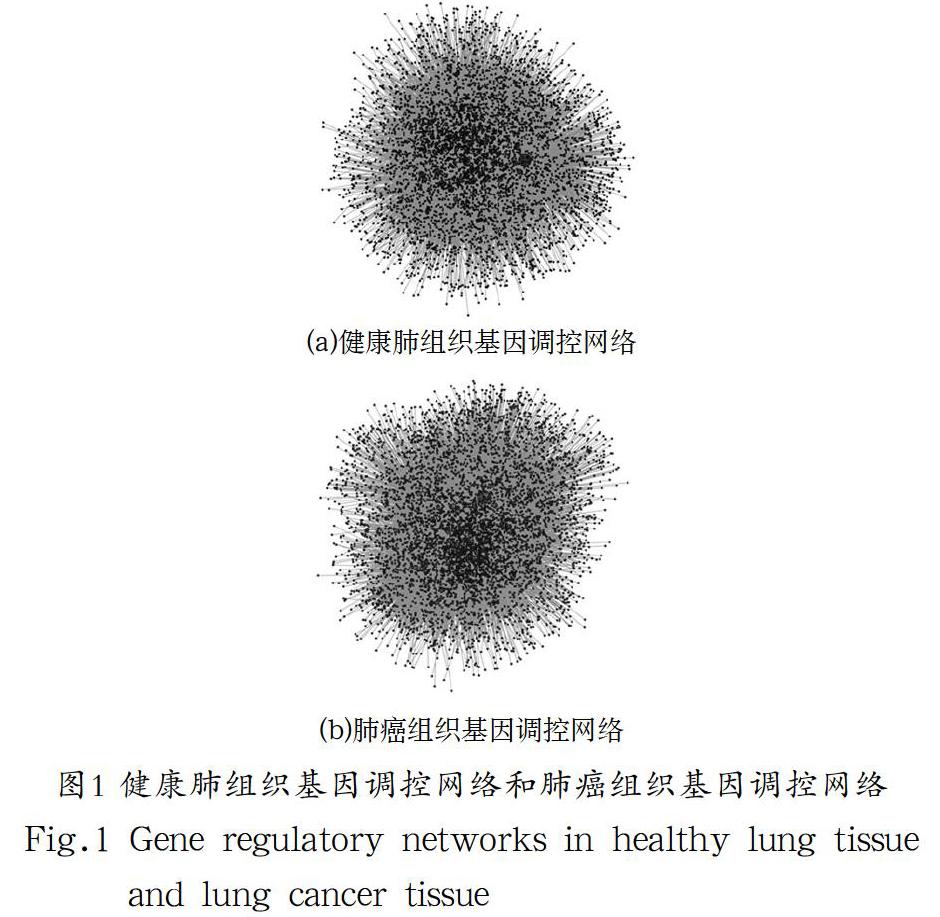
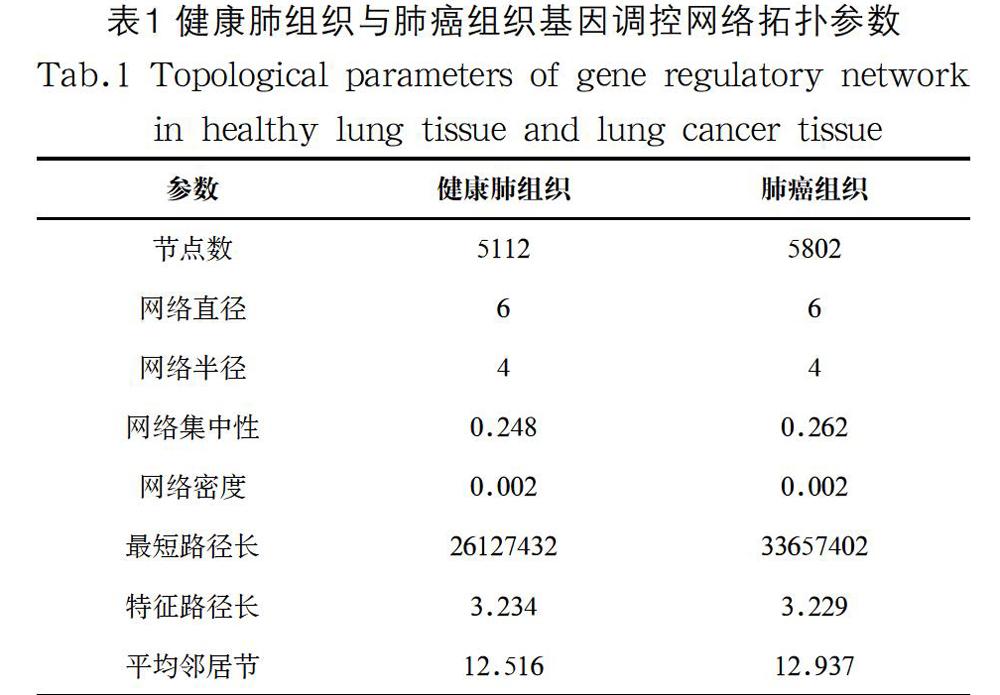

摘 要:基于复杂网络理论分别构建以肺癌组织和健康肺组织基因为节点,基因间调控关系为边的基因调控网络,并从拓扑结构、分布特征、节点中心性三方面分析网络特性,挖掘网络核心节点生物功能差异性以识别出肺癌特异性基因。结果发现,肺癌组织和健康肺组织基因调控网络拓扑参数极其相似且两者都为无标度网络,两网络核心节点集高度重叠,但非重叠部分核心节点的生物功能十分特殊,并据此识别出肺癌特异性基因。该方法识别出的肺癌特异性基因,能够成为潜在肺癌生物标记物,为肺癌的早期诊断提供帮助,同时该方法能够适用于其他疾病特异性基因的识别。
关键词:复杂网络;肺癌;中心性;HUB节点
中图分类号:TP319 文献标识码:A
Abstract: Based on complex network theory, the study constructs lung cancer tissue and healthy lung tissue gene regulatory networks with genes as nodes and inter-gene regulatory relationships as edges. The paper analyzes network characteristics from three aspects: topological structure, distribution characteristics, and node centrality. By comparing the biological function of the key nodes of networks to identify lung cancer-specific genes, it is found that the topological parameters of the two gene regulatory networks are extremely similar and they are both scale-free networks. The key nodes set of the two networks are highly overlapping, but the non-overlapping key nodes' biological functions are very special, and then the lung cancer-specific genes are identified base on this. The lung cancer-specific genes identified by this method may be potential biomarkers for lung cancer, which promotes the early diagnosis of lung cancer. The method can also be applied in the identification of other disease-specific genes.
Keywords: complex network; lung cancer; centrality; HUB node
1 引言(Introduction)
肺癌是最常見和严重的癌症之一,其发病率和死亡率在世界大多数国家都处于首位,且增长率惊人[1]。在中国,肺癌已成为致死率最高的癌症[2],根据中国卫生部于2006年进行的第三次全国性死因抽样调查,肺癌造成的死亡率自1990年以来增加了75.77%,并且在剔除年龄结构变化因素后再次增加了33.25%。尽管吸烟这一肺癌的最相关危险因素已被广泛认识,但是对肺癌发病机制和诊断治疗等一系列问题的相关研究依旧进展缓慢。其次,由于肺癌通常在早期不会引发任何症状,许多患者的相关体征和症状仅在疾病发展时发生,这让肺癌的确诊存在相当大的难度,若在肺癌早期通过检测特异性基因使其确诊并得到充分的治疗,其死亡率将会在很大程度上降低。……
登录APP查看全文
猜你喜欢
保健医苑(2023年2期)2023-03-15 09:03:04
中国临床医学影像杂志(2022年2期)2022-05-25 13:24:34
中国药学药品知识仓库(2022年1期)2022-03-23 04:16:57
昆明医科大学学报(2021年4期)2021-07-23 01:21:44
天津医科大学学报(2021年2期)2021-03-29 05:30:38
天津医科大学学报(2019年6期)2019-08-13 07:04:26
癌变·畸变·突变(2016年3期)2016-02-27 06:15:34
医学研究杂志(2015年12期)2015-06-10 06:57:46
中国当代医药(2015年7期)2015-03-01 02:01:19
郑州大学学报(医学版)(2015年1期)2015-02-27 14:50:26