基于细胞色素C氧化酶亚基Ⅰ序列位点特异性聚合酶链反应鉴别鹿茸及其伪品
2020-06-19 08:08:41杨重晖尹程程宋文博
世界中医药
2020年10期
杨重晖 尹程程 宋文博

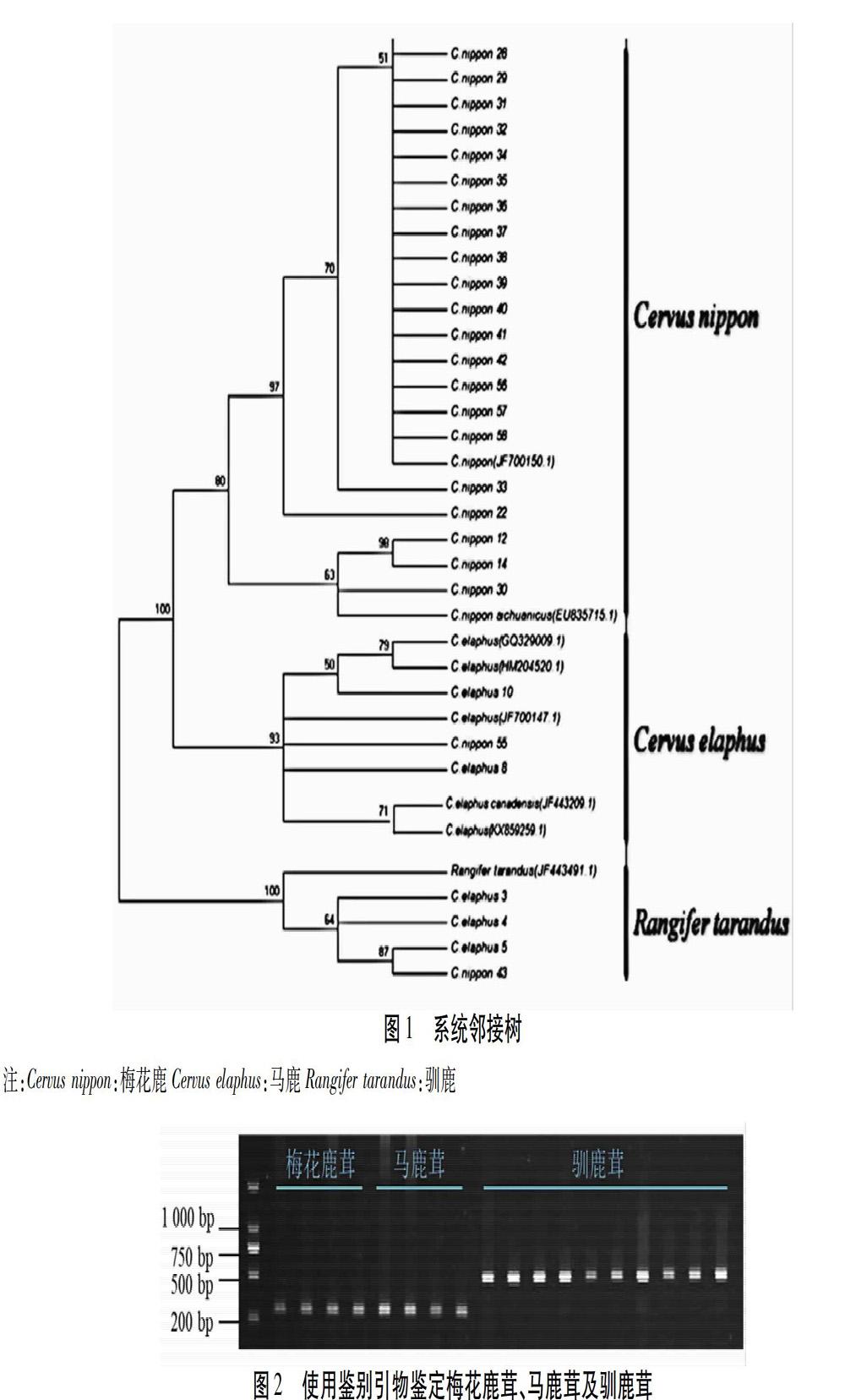
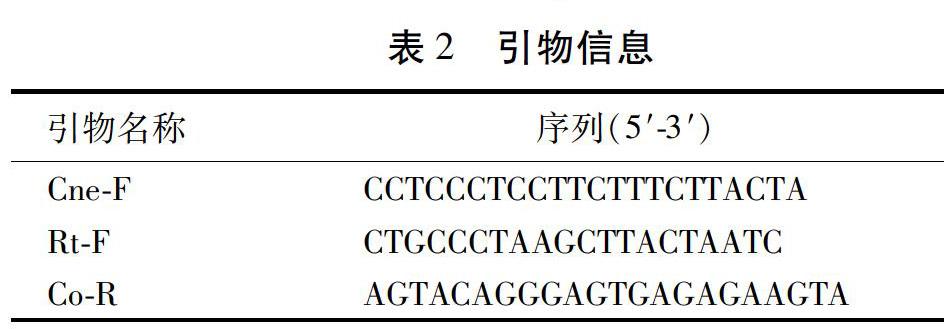
摘要 目的:基于细胞色素C氧化酶亚基Ⅰ(COⅠ)序列建立一种新的PCR鉴定方法,以快速鉴别出梅花鹿、马鹿茸片与驯鹿茸片。方法:采集不同来源的鹿茸片共60批。通过比较梅花鹿、马鹿与驯鹿等其他伪品的COⅠ基因序列差异,根据SNP鉴别位点设计梅花鹿茸、马鹿茸同驯鹿茸的鉴别引物Cne-F、Rt-F、Co-R,并对影响聚合酶链反应(PCR)结果的主要因素变性时间、退火温度、退火时间、延伸时间等进行方法学考察和优化。结果:该实验构建的双位点特异PCR鉴别体系,基于COⅠ的鉴别位点,可通过PCR扩增获得294 bp的梅花鹿、马鹿特异片段,而产生514 bp的驯鹿特异片段,伪品及阴性对照无条带。结论:该实验建立对梅花鹿、马鹿及驯鹿等其他伪品鹿茸的PCR鉴别方法简便、可靠。
关键词 鹿茸;细胞色素C氧化酶亚基Ⅰ;DNA;位点特异性;聚合酶链反应;分子鉴定
Abstract Objective:To establish a new PCR identification method based on COI sequence to quickly identify sika deer,Malurong Tablets and Xunlurong Tables.Methods:A total of 60 batches of Lurong Tablets from different sources were collected.By comparing the difference of COI gene sequences between fakes such as sika deer,red deer and reindeer,the identification primers Cne-F,Rt-F and Co-R of sika deer,red deer and reindeer velvet antler were designed according to the SNP identification location site.The main factors of polymerase chain reaction (PCR) results,such as denaturation time,annealing temperature,annealing time,and extension time,were investigated and optimized.Results:The two-site specific PCR identification system constructed in this study,based on the COI identification site,can obtain 294 bp sika deer and red deer specific fragments by PCR amplification,and produce 514 bp reindeer deer specific fragments,New Zealand red deer and other pseudo-pars and negative and control strip-free band.Conclusion:This experiment established a simple and reliable PCR identification method for other fake Cornu Cervi Pantotrichum such as sika deer,red deer and reindeer.
Keywords Cornu Cervi Pantotrichum; COⅠ; DNA; Site-specific PCR; Polymerase chain reaction; Molecular identification
鹿茸為鹿科动物梅花鹿Cervus nippon Temminck或马鹿Cervus elaphus Linnaeus的雄鹿未骨化密生鸾毛的幼角[1],是吉林省名贵道地中药材,具有壮肾阳,益精血,强筋骨,调冲任,托疮毒等功效。鹿茸含有蛋白多肽类、糖类、生物胺类、甾体类等多种活性成分,具有提高机体免疫力、提高性功能、促进骨折的愈合、抗衰老等功能[2-6]。截至2019年12月,在国家食品药品监督管理总局(http://samr.saic.gov.cn/)查询到含鹿茸的药品已有107种,含鹿茸的保健食品已有15种。鹿茸药材的供不应求导致大量伪品药材流入市场,而与之相对应的鹿茸药材鉴定与产品质量控制体系并不完善。传统鉴定鹿茸的方法存在主观性较大、特异性不强、通用性差、对观察者经验的要求高等缺陷,不利于规范化、标准化方法的建立及普及[7-8]。……
登录APP查看全文