TOPAZ-Ⅱ热管辐射器性能影响因素研究
2020-07-01 01:56:00冯潇王傲葛攀和胡古赵守智
科技创新导报
2020年13期
关键词:优化设计
冯潇 王傲 葛攀和 胡古 赵守智
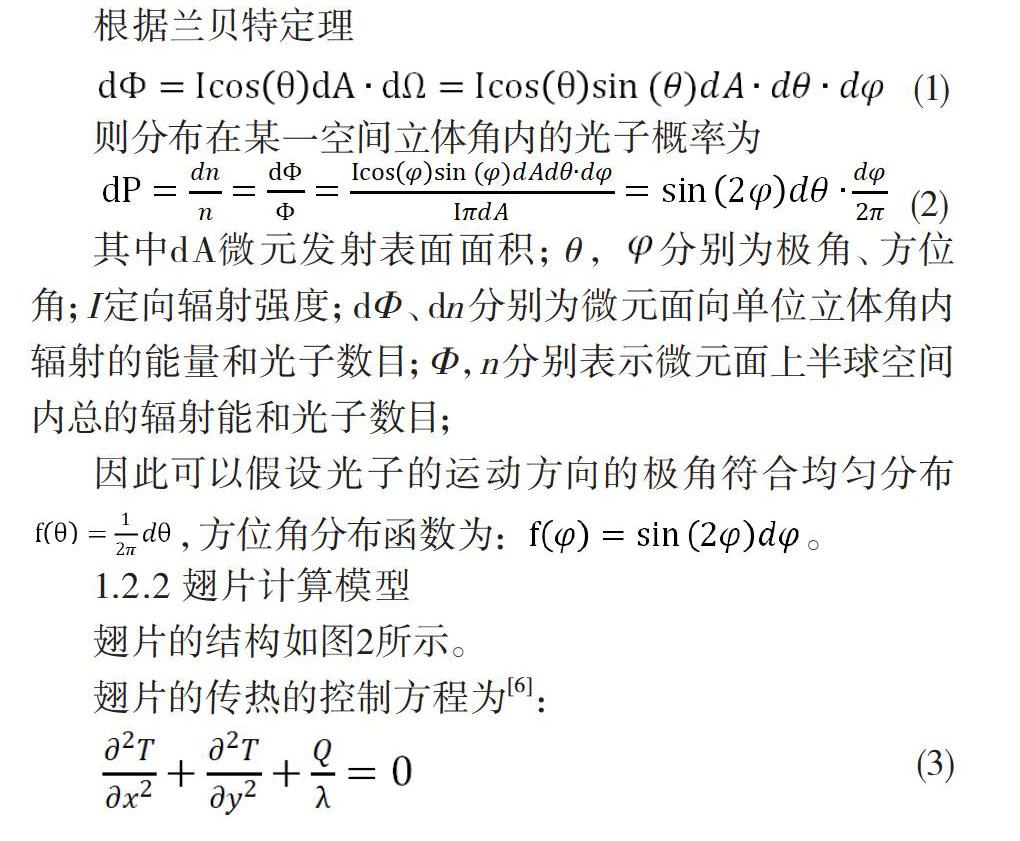
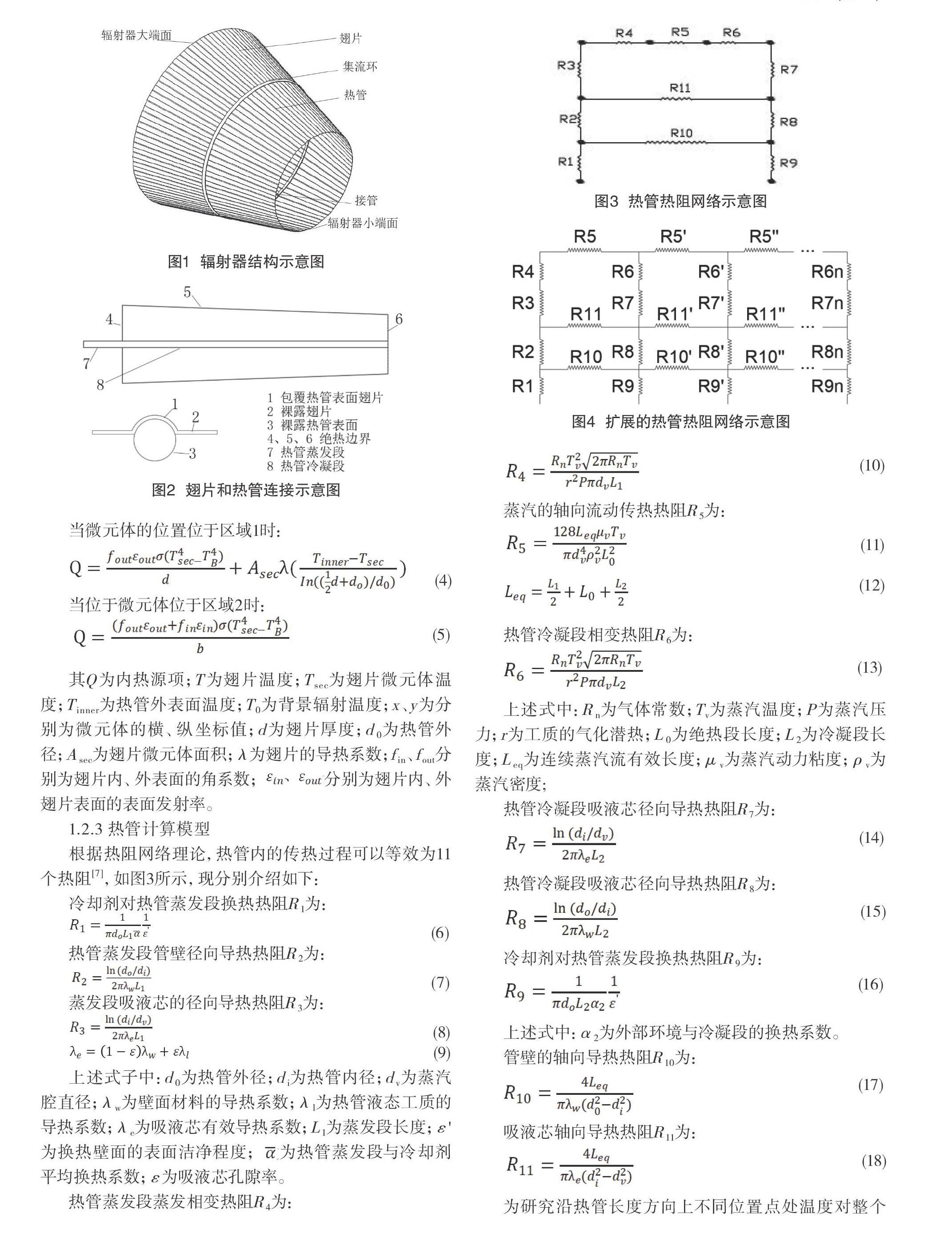

摘 要:本文对TOPAZ-Ⅱ改进型热管辐射器建立了一套整体的计算模型,包括角系数计算模型、热管传热模型、翅片导热模型以及集流环压降和传热模型。研究了角系数分布、进口温度、进出口接管对数、流量和翅片厚度对辐射器性能的影响。研究表明,横向角系数分布对辐射器性能影响明显。在600-1100K温度范围内,进口温度的升高使得温度不均匀性增加,当进口温度取820K基本满足设计要求,另外增加进出口接管数目可以显著降低流阻,但对辐射器的功率基本无影响。所研究的辐射器在流量为1.5kg/s,进出口接管对数取3,翅片厚度为0.14 mm具有较佳的性能。
关键词:TOPAZ-Ⅱ 空间堆 辐射器 优化设计 高温热管
中图分类号:TL339 文献标识码:A 文章编号:1674-098X(2020)05(a)-0063-05
Abstract:In this paper, an overall calculation model is established for the improved heat pipe radiator of TOPAZ-Ⅱ, including the angle factor calculation model, the heat transfer model in the heat pipe, the heat conduction model of the fins, the pressure drop and heat transfer model in the collector ring. The effects of angle factor distribution, inlet temperature, the number of inlet and outlet adapter, flow rate and fin thickness on the performance of the radiator were studied. It has shown that the lateral angle factor distribution has a significant impact on the performance of the radiator. With in the range from 600 to 1100 K, the higher inlet temperature increases the temperature non-uniformity. When the inlet temperature is 820K, it basically meets the design requirements. Increasing the number of inlet and outlet adapter can significantly reduce the flow resistance, but has little effect on the power of the radiator. The radiator studied has better performance when the flow rate is 1.5 kg/s, the number of the inlet and outlet nozzles is 3, and the fin thickness is 0.14 mm.
Key Words:TOPAZ-Ⅱ;Space reactor;Radiator;Heat pipe;Optimal design
熱管辐射器具有较好的抗单点失效和散热性能,因此被广泛使用在空间热管理领域,如空间核反应堆系统以及太阳探测器等[1]。TOPAZ-Ⅱ改进型辐射器[2]同样采用这种类型的辐射器,其散热性能将影响整个系统的发电效率,因此需要对整个辐射器进行较为精确的分析和计算。另外,鉴于空间发射活动的高昂成本以及空间堆复杂的管路设计,因此必须对辐射器性能影响因素进行必要的分析,来提高辐射器散热功率,同时减少辐射器质量和流阻。目前,国内已经研究热管式辐射器的稳态和瞬态行为[2-4],但是这些模型相对粗糙,因此需要建立较为精细的模型来完成上述目标。
为了精确计算热管辐射器热工性能,本文首先采用控制容积法和热阻网络法分别对翅片和热管建模,并将角系数计算的问题转换成粒子输运的计算问题。……
登录APP查看全文
猜你喜欢
航空兵器(2016年4期)2016-11-28 21:47:29
科技资讯(2016年19期)2016-11-15 08:34:13
电脑知识与技术(2016年24期)2016-11-14 00:09:15
文理导航(2016年30期)2016-11-12 14:56:57
中国科技博览(2016年22期)2016-11-01 14:23:46
中国科技博览(2016年22期)2016-11-01 13:48:02
中国科技博览(2016年19期)2016-10-19 12:24:15
中国科技博览(2016年18期)2016-10-19 08:57:06
科技视界(2016年22期)2016-10-18 15:25:08
科技视界(2016年21期)2016-10-17 17:27:09