草海湿地湖滨带不同类型土壤甲烷产生与氧化潜力的研究
2020-08-11 07:36:11寇永珍林陶
湖北农业科学
2020年11期
寇永珍 林陶
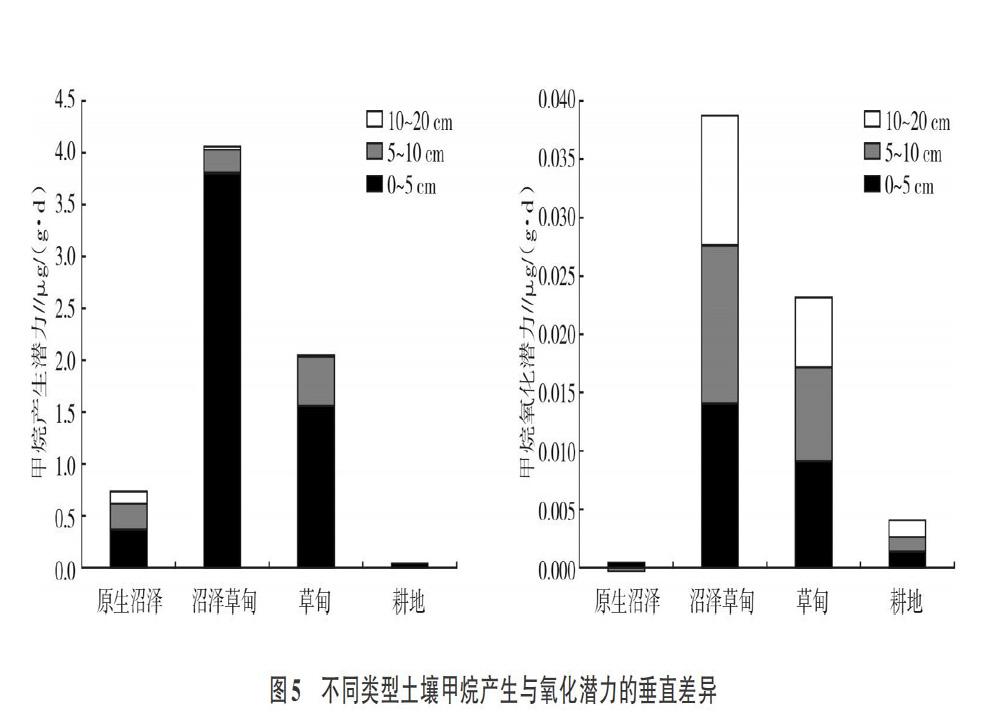
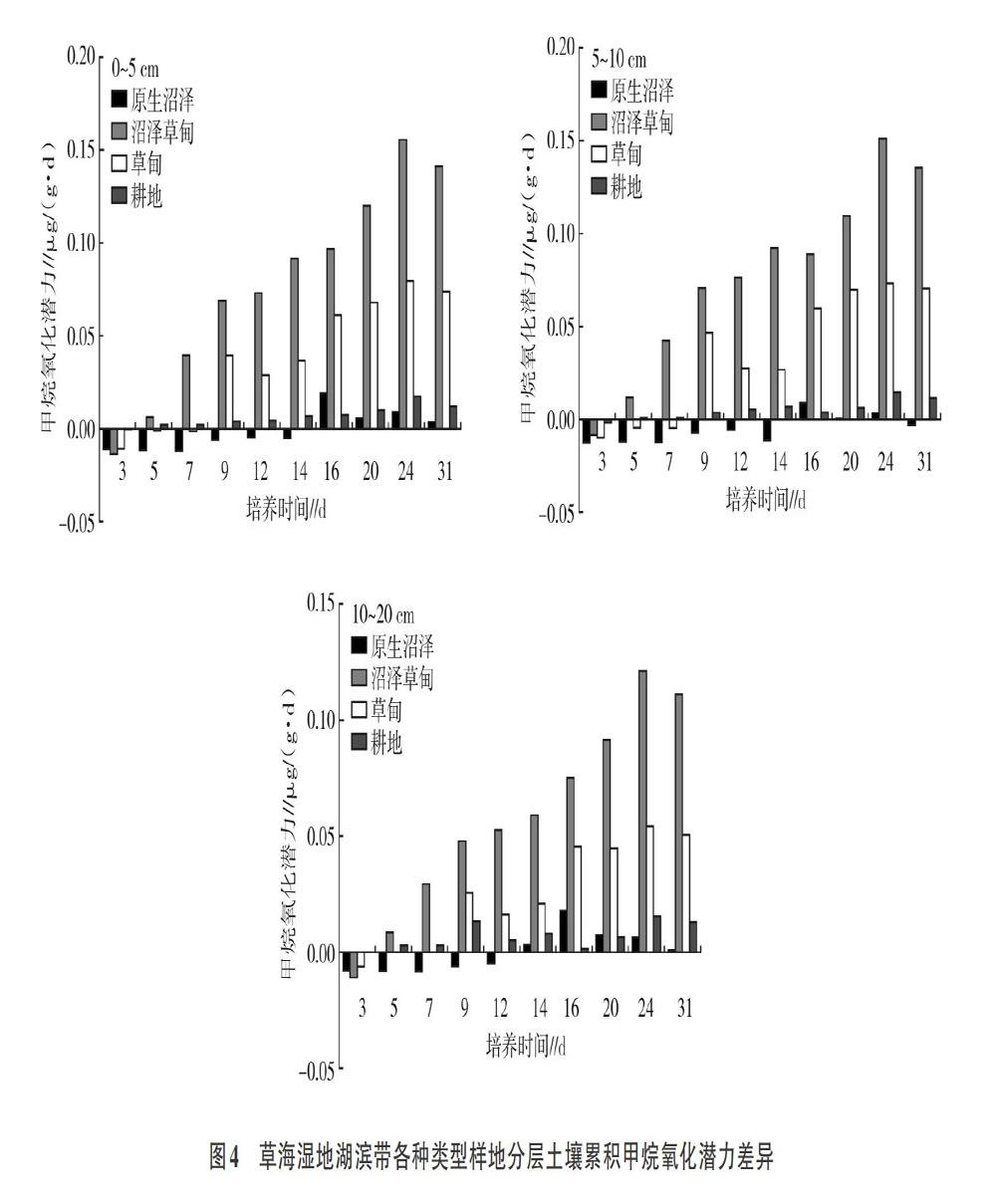
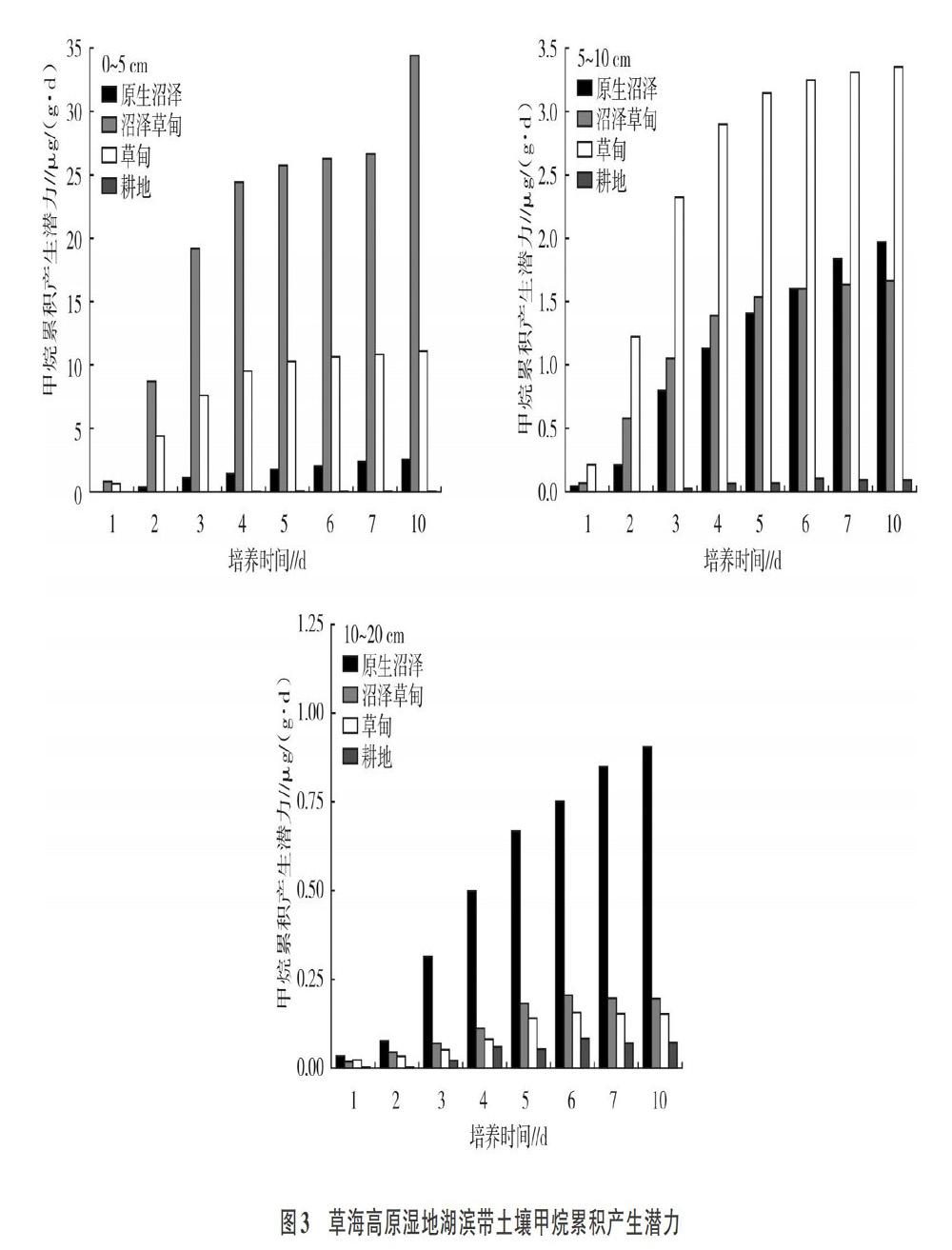
摘要:采用室内模拟培养技术,研究了草海湿地湖滨带不同类型土壤甲烷产生及氧化潜力规律。结果表明,草海湿地表层土(0~5 cm)为甲烷产生潜力最大区域。甲烷产生潜力大小排序为沼泽草甸>草甸>原生沼泽>耕地,分别为10.448、3.188、0.741、0.042 μg/(g·d)。甲烷氧化累积潜力大小排序为沼泽草甸>草甸>耕地>原生沼泽,分别为0.155 7、0.079 6、0.011 9、0.003 7 μg/(g·d)。随着土层深度的增加,各类型土地甲烷产生潜力明显下降。草海湿地各类型土壤氧化潜力均低于产生潜力,即草海高原湿地湖滨地土壤不具有从大气中吸收甲烷而使得大气中甲烷减少的潜力。
关键词:甲烷;产生潜力;氧化潜力;草海湿地
Abstract: The methane production and oxidation potential of different types of soils in the lake-shore zone of Caohai wetland were studied by means of laboratory simulation culture technique. Results showed that the potential of methane production in Caohai wetland surface soil (0~5 cm) was the largest. The order of methane production potential was 10.448 μg/(g·d) of swamp meadow, 3.188 μg/(g·d) of meadow, 0.741 μg/(g·d) of primary swamp, 0.042 μg/(g·d) of cultivated land. The cumulative potential of methane oxidation was 0.155 7 μg/(g·d) of swamp meadow soil, 0.079 6 μg/(g·d) of meadow soil, 0.011 9 μg/(g·d) of cultivated land, 0.003 7 μg/(g·d) of primary swamp soil. With the increase of soil depth, the methane production potential of various types of land decreased obviously. The oxidation potential of all types of soils in Caohai wetland is lower than that in the production potential, which meaned, the soil in the lakeside soil of the Caohai plateau wetland did not have the potential to absorb methane from the atmosphere and reduce the methane in the atmosphere.
Key words: methane; generating potential; oxidation potential; Caohai wetland
甲烷作为贡献率仅次于二氧化碳的温室气体,目前在百年尺度内的贡献潜力是二氧化碳的28~32倍[1],其温室效应贡献率占到了22%[2],并且呈现出逐年上升的趋势。大气中的甲烷主要来源为自然源和人为源,其中自然源的贡献率接近总排放量的40%[3]。湿地作为水陆交错型过渡地带,是甲烷排放的主要自然源,贡献率为50%~80%[4]。因此,开展湿地湖滨带甲烷的产生与氧化潜力研究具有重要的科学意义,也有助于深入认识全球气候变化响应。
当前,对湿地土壤甲烷的产生及其影响因子的研究较多,且这些研究主要集中在泥炭地、水田、红树林等湿地类型[5]。中国学者针对天然湿地的研究主要集中在第一阶梯东部平原及河口湿地,如三江平原、黄河口潮滩、闽江河口湿地[6-8]。草海高原湿地作为分布在云贵高原的典型湿地代表,是一个完整的典型喀斯特高原湿地生态系统,近两年来已经成为高原天然湿地研究的热点区域之一[9],但关于温室气体排放特征的研究甚少,关于甲烷产生及氧化潜力的探讨还未见报道。基于此,本研……
登录APP查看全文