
银杏叶片对血管性痴呆患者血管内皮功能的影响
2020-08-21 08:52:27卢军锋方芳张金霞
中国现代医生
2020年17期
卢军锋 方芳 张金霞
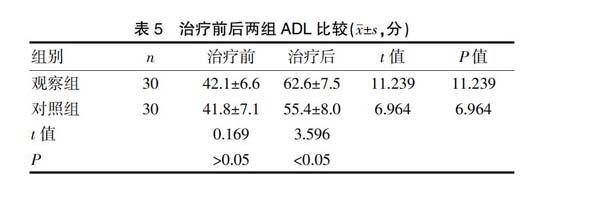
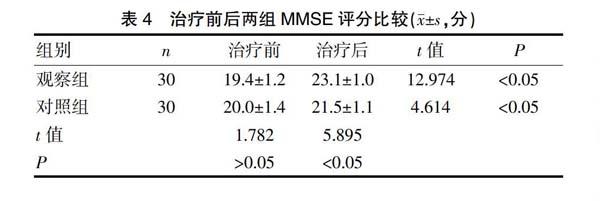
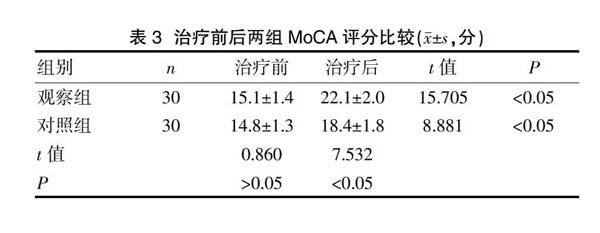
[摘要] 目的 探討银杏叶片对血管性痴呆患者血管内皮功能的影响。 方法 选择2018年12月~2019年11月在杭州市中医院诊断治疗的血管性痴呆患者60例为研究对象,随机分为观察组与对照组各30例。对照组采用常规治疗,观察组在此基础上加用银杏叶片治疗,比较两组治疗后的血清血管内皮生长因子(VEGF)、血清内皮素-1(ET-1)、一氧化氮(NO)水平,比较两组治疗后MoCA、MMSE、Barthel评分及不良反应。 结果 (1)两组VEGF水平、NO水平治疗后较治疗前升高,ET-1水平下降,差异有统计意义(P<0.05);治疗后观察组VEGF、NO水平高于对照组,ET-1低于对照组,差异有统计意义(P<0.05)。(2)治疗后两组MoCA较治疗前明显提高,差异有统计意义(P<0.05);治疗后观察组MoCA高于对照组,差异有统计意义(P<0.05)。(3)治疗后两组MMSE较治疗前提高,差异有统计意义(P<0.05);治疗后观察组MMSE高于对照组,差异有统计意义(P<0.05)。(4)治疗后两组较治疗前ADL提高,差异有统计意义(P<0.05);治疗后观察组ADL高于对照组,差异有统计意义(P<0.05)。(5)两组不良反应发生率比较,差异无统计学意义(P>0.05)。 结论 在常规治疗基础上加用银杏叶片治疗血管性痴呆,可改善血管内皮功能,改善认知功能,提高生活质量。
[关键词] 银杏叶片;血管性痴呆;血管内皮功能;MoCA;MMSE;ADL
[中图分类号] R277.7 [文献标识码] A [文章编号] 1673-9701(2020)17-0016-04
Effect of Ginkgo Biloba leaves on vascular endothelial function in the patients with vascular dementia
LU Junfeng1 FANG Fang2 ZHANG Jinxia2
1.Emergency Department, Hangzhou Hospital of TCM, Hanghzou 317000, China; 2.Department of Neurology, Hangzhou Hospital of TCM, Hanghzou 317000, China
[Abstract] Objective To investigate the effect of ginkgo biloba leaves on vascular endothelial function in the patients with vascular dementia. Methods 60 patients with vascular dementia who were diagnosed and treated in the hospital from December 2018 to November 2019 were selected as the research subjects. They were randomly divided into observation group and control group, with 30 cases in each group. The control group was given conventional treatment, and the observation group was further given ginkgo biloba leaves on this basis. The serum vascular endothelial growth factor (VEGF), serum endothelin-1(ET-1), and nitric oxide(NO) levels after treatment were compared between the two groups. The MoCA, MMSE, and Barthel scores and the adverse reactions after treatment were compared between the two groups. Results(1) After treatment, the levels of VEGF and NO in both groups were significantly higher than those before treatment, and the level of ET-1 was significantly decreased, with significant differences(P<0.05); after treatment, the levels of VEGF and NO in the observation group were significantly higher than those in the control group, and the level of ET-1 was significantly lower than those in the control group, with significant differences(P<0.05). (2) After treatment, the MoCA in both groups was significantly higher than that before treatment, and the difference was significant(P<0.05); after treatment, the MoCA in the observation group was significantly higher than that in the control group, and the difference was significant(P<0.05). (3)After treatment, the MMSE in both groups was significantly higher than that before treatment, and the difference was significant(P<0.05); after treatment, the MMSE in the observation group was significantly higher than that in the control group, and the difference was significant(P<0.05). (4) After treatment, the ADL in both groups was significantly higher than that before treatment, and the difference was significant(P<0.05); after treatment, the ADL in the observation group was significantly higher than that in the control group, and the difference was significant(P<0.05).(5) There was no statistically significant difference in the incidence rate of adverse reactions between the two groups(P>0.05). Conclusion Conventional treatment combined with ginkgo biloba leaves in the treatment of vascular dementia can significantly improve vascular endothelial function, cognitive function and quality of life.
[Key words] Ginkgo biloba leaves; Vascular dementia; Vascular endothelial function; MoCA; MMSE; ADL
血管性痴呆的发生与脑血管疾病有关,是某一区域的脑卒中暂时或者永久缺血或者出血等导致脑组织损害而引发的痴呆。病灶涉及额叶、颞叶及边缘系统,或者损害足够容量的脑组织,导致记忆、注意、执行功能和语言等高级认知功能严重受损[1-2]。既往研究显示,脑梗死患者肱动脉舒张功能下降,并且与颈动脉斑块形成有关,与患者的轻度认知功能障碍相关,血管内皮功能受损严重程度可能增加急性脑梗死患者轻度认知功能障碍的风险[3]。银杏叶片是一种中成药,具有活血化瘀通络的功效[4-5]。本研究探讨银杏叶片用于治疗血管性痴呆对患者血管内皮功能的影响,以期为临床治疗提供参考,现报道如下。……
登录APP查看全文
