一种高效旋风分离器的分离特性
2020-08-26 14:56:25孟柯含路义萍戴景禄张松松
哈尔滨理工大学学报
2020年3期
孟柯含 路义萍 戴景禄 张松松
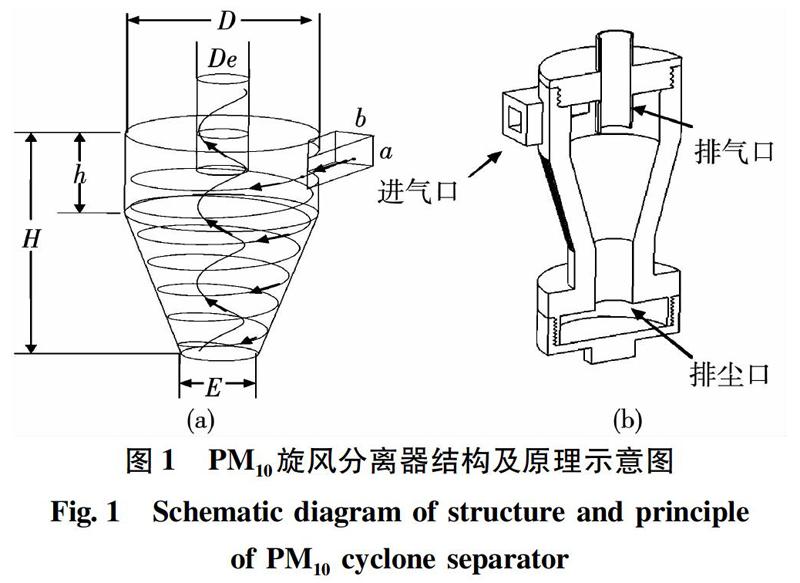
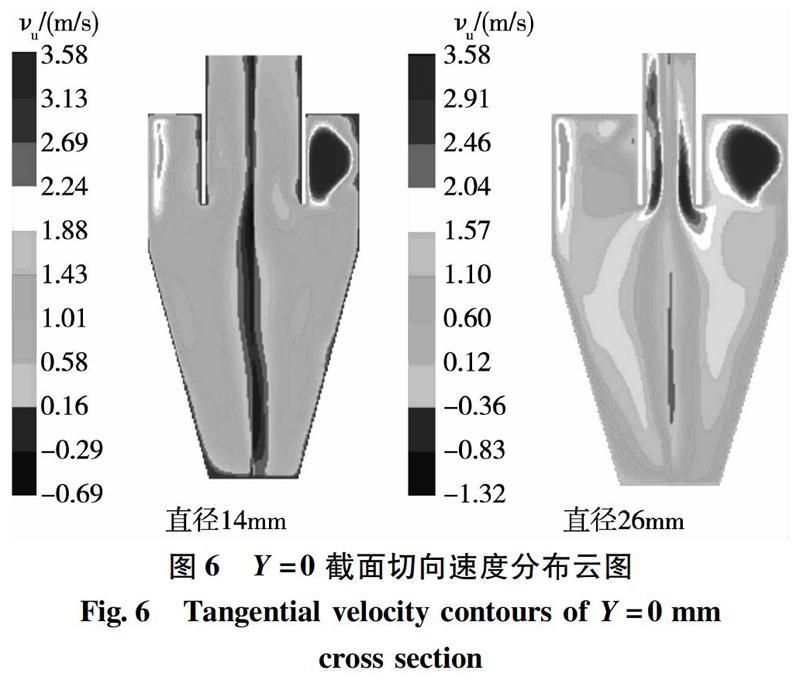
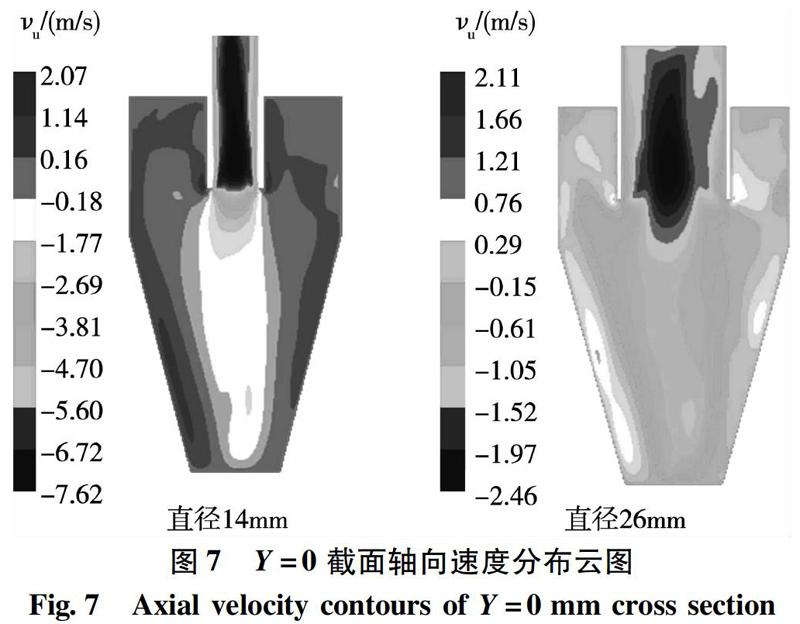
摘 要:為了研究大气监测系统中涉及的旋风分离器的分离性能及影响因素,根据旋风分离器设计准则,设计了结构尺寸,建立流场三维物理模型,应用雷诺应力模型(RSM)模拟气相速度场,然后加入颗粒相应用离散相模型进行气固两相流耦合计算,得出内外旋涡形式的流场对颗粒运动影响及颗粒的分离情况;为满足分离性能的要求,在初始结构方案基础上,依次改变排气管长度、直径等参数,计算并比较分离效率曲线的几何标准差。结果表明:较优结构排气管长度为42mm、直径为18mm,可有效抑制短路流产生,增大外部漩涡区域,保证了几何标准差为1.5±0.1,提升了分离效率。
关键词:旋风分离;数值模拟;临界粒径;分离性能
DOI:10.15938/j.jhust.2020.03.018
中图分类号: TK09
文献标志码: A
文章编号: 1007-2683(2020)03-0116-06
Abstract:In order to study the separation performance and influencing factors of cyclone separator involved in the atmospheric monitoring system, the structure size of the particle was designed and the three-dimensional physical model of the flow field was established by the design criterion of the cyclone separator. Reynolds stress model (RSM) was used to simulate gas velocity field, then the particles phase was added and the gas-solid two-phase flow was calculated by the discrete phase model. The effect of internal and external vortices on particle motion and the separation of particles is obtained. In order to satisfy the requirements of separation performance, the parameters such as the length and diameter of exhaust pipe were changed successively and the geometric standard deviation of the efficiency curve of separation was calculated and compared on the basis of the initial structure scheme. The result show that the optimal exhaust pipe length is 42mm and diameter is 18mm. It can effectively inhibit the generation of short circuit flow, increase the external vortex area, guarantee the geometric standard deviation is 1.5±0.1, improve the separation efficiency.
Keywords:cyclone separation; numerical simulation, critical particle size, separation performance
0 引 言
旋风分离器自发明投入使用以来已有百余年历史,先后经过了3个发展阶段,通过理论分析、科学实验、模拟计算等阶段对它有了更加深入的认识[1-2],用数值模拟方法对旋风分离器内部分离过程进行模拟,理论研究相对成熟。
近年来,国内外研究学者对旋风分离器进行了大量相关研究,王海刚等[3]针对标准k-ε、RNG k-ε、雷诺应力(RSM)模型分别进行了计算,通过分析三种不同湍流模型模拟结果,发现RSM模型更能准确反映分离器内部气相的真实状态;高雪琦等[4]在Fluent中应用了RSM和离散相模型(DPM)模型,分别模拟了多种尺寸的旋风分离器对细微粒的分离效果;QI Z等[5]着重分析了旋风分离器内部复杂的流场特征,在流动不同时期采用不同的模拟方法,开始以RSM模型,稳定后过度到大涡模拟,最后激活多相流模型。……
登录APP查看全文