季节性冻土区不同冻结状态下土壤水热变化特征研究
2020-12-07 08:46:56单明明李慧
现代农业科技
2020年19期
单明明 李慧
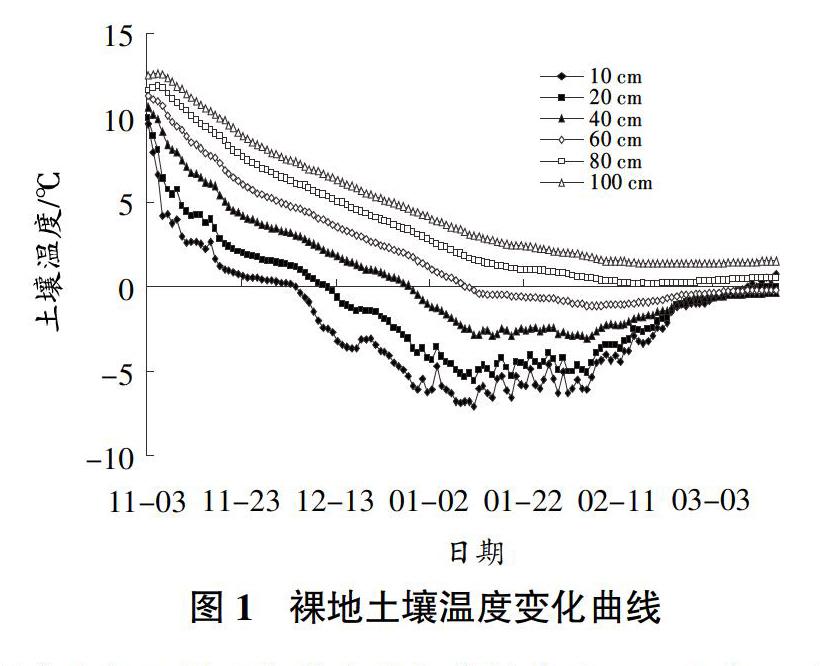

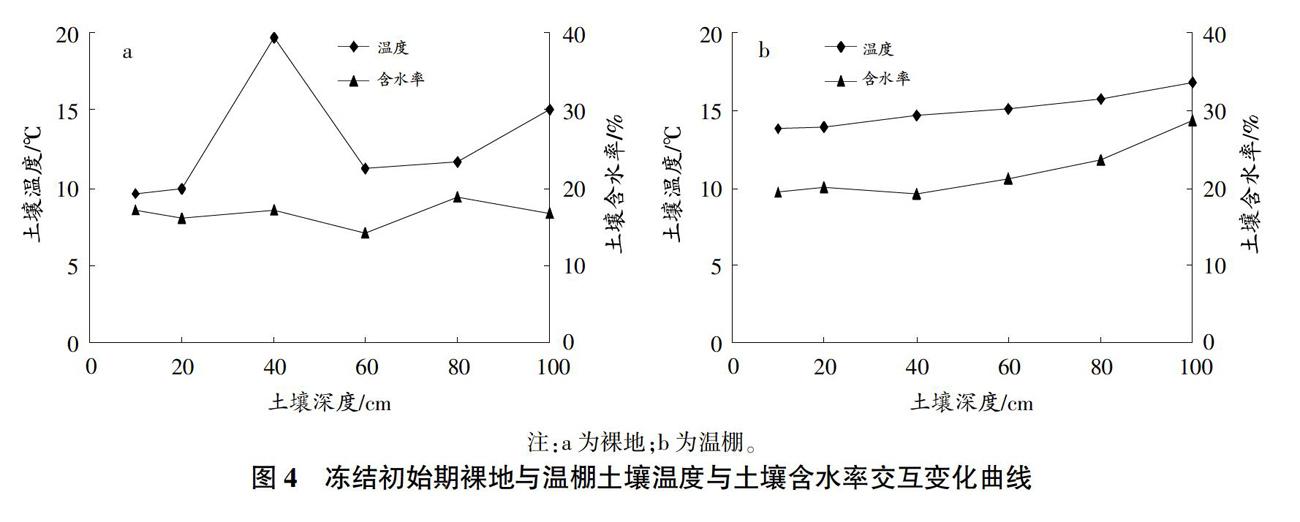
摘要 以南疆季節性冻土地区为研究背景,设置冻融期自然裸地土壤和温棚土壤2种处理,对比分析2个处理下土壤水热的监测数据。结果表明,温棚能减少热量散失,季节性影响不明显,土壤水热空间分布变化小,表层土受蒸发作用和土壤入渗影响,水热较低。自然裸地中土壤水热迁移规律受冻融条件(土壤冻结状态、气温等)影响较大,土壤水热存在影响与制约关系。冻结前浅层水热较小,随土深递增且变幅明显,深层土对太阳辐射影响明显滞后,水热波动小易保持温度且相对较高。冻结期水热均值为最低值,土壤水分高值区整体向下移动约15 cm,冻土层水分蒸发小,可积蓄水量,土壤冻结锋面随地表负温的降低向下迁移,同时水分带动下层土壤盐分向冻结层迁移。消融期土壤温度随土深减小,土壤表层水分下渗同时受蒸发作用大量散失,含水率仅为8.2%,水分高值区集中于30~70 cm且为冻融期最大。土壤含水率的增加抑制了土壤温度的提升,土壤冻结速率慢,时间长,融化速率快,融化时间短。
关键词 土壤温度;土壤水分;冻融期;土壤水热互作效应
中图分类号 S152.7 文献标识码 A
文章编号 1007-5739(2020)19-0170-05
Research on Change Characteristics of Soil Water-heat Under Different Frozen States in Seasonal Frozen Soil Region
SHAN Mingming LI Hui *
(College of Water Conservancy and Architecture Engineering, Tarim University, Alar Xinjiang 843300)
Abstract Taking the seasonal frozen soil region in South Xinjiang as research background, two soil treatments (natural bare soil and greenhouse soil) were set up during the freeze-thaw period. The monitoring data of soil water-heat under the two treatments were compared and analyzed. The results showed that the greenhouse could reduce the heat loss, the seasonal effect was not obvious, and the spatial distribution of soil water and heat changed little. Under the influence of evaporation and soil infiltration, the surface soil water-heat were lower. The law of soil water-heat transfer in the natural bare soil was greatly affected by the freezing and thawing conditions (soil frozen state, temperature, etc.), and there was the affected and restricted relationship between soil water and heat. Before freezing, the water-heat in the shallow layer was smaller, and increased with the depth of soil with the obvious change amplitude. The influence of the deep soil on the solar radiation lagged behind obviously, which showed the small water-heat fluctuation, thus easily maintaining the relatively high temperature. The average value of water-heat during freezing period was the lowest, the whole area with high value of soil moisture moved downward about 15 cm,the evaporation of water in frozen soil layer was small, and the front of soil freezing moved downward with the decrease of the negative temperature of the earth′s surface. At the same time, the water drived the salt of the subsoil to move to the freezing layer. During the ablation period, the soil temperature decreased with the depth of soil. In the process of infiltration, soil surface water was lost by evaporation, and the moisture content was only 8.2%, and the high value area of water was concentrated, which was the largest in freeze-thaw period. The high value area of water was concentrated in 30-70 cm, which was the largest during the freez-thaw period. The increase of soil moisture content restrained the increase of soil temperature. The soil freezing rate was slow, so it taken a long time, while the melting rate was fast, and the melting time was short.
Keywords soil temperature; soil moisture; freeze-thaw period; moisture thermal interaction effect in soil
新疆地处我国西北干旱地区,全年高温少雨、水资源匮乏、土壤盐渍化等严重制约着农业发展。在季节性冻融地区,土壤冻融循环会使土壤中的水、热等状况发生复杂的迁移变化,主要体现为土壤的水热传输、水分相变以及盐分积累等[1]。冻融期会使土壤形成冻土层,冻土层的储水性、弱透水性以及抑制蒸发作用使土壤水分不会过快入渗或蒸发流失,即季节性冻土区特有的“冻土保墒”。……
登录APP查看全文