基于网络药理学的血必净治疗H1N1病毒引起的肺微血管渗漏的潜在机制
2021-01-03 14:09:08韩甜甜李丹华刘小虹詹少峰江勇
世界中医药
2021年22期
关键词:数据库
韩甜甜 李丹华 刘小虹 詹少峰 江勇

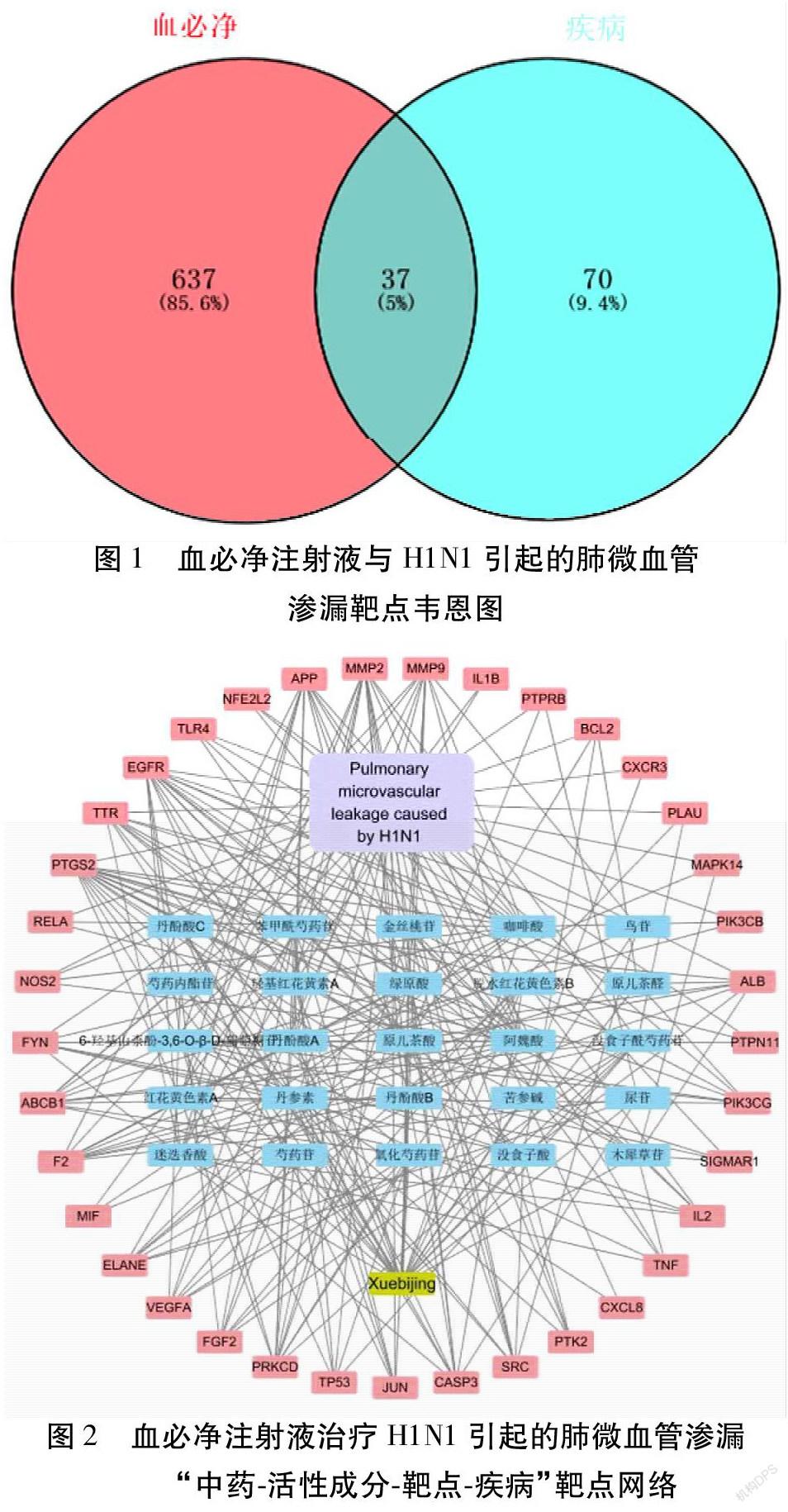
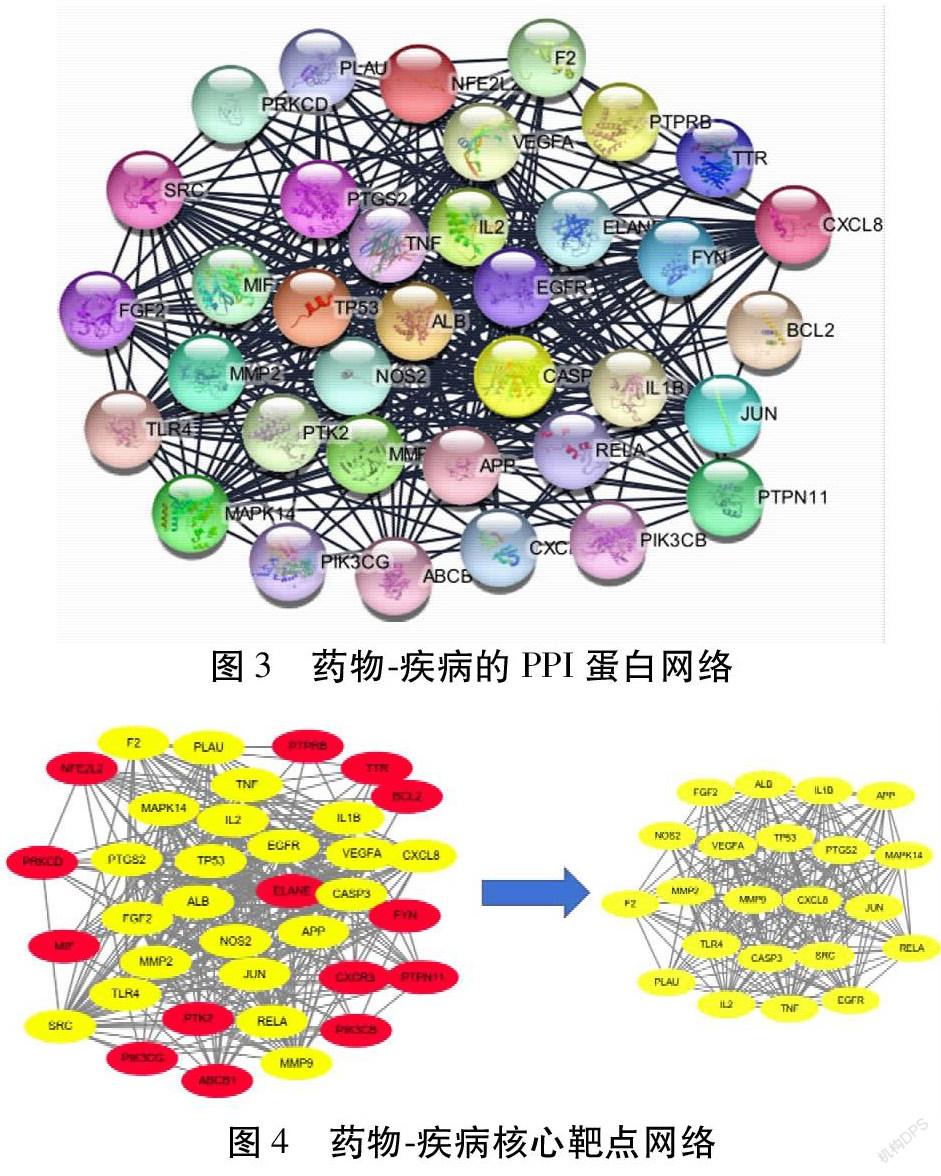
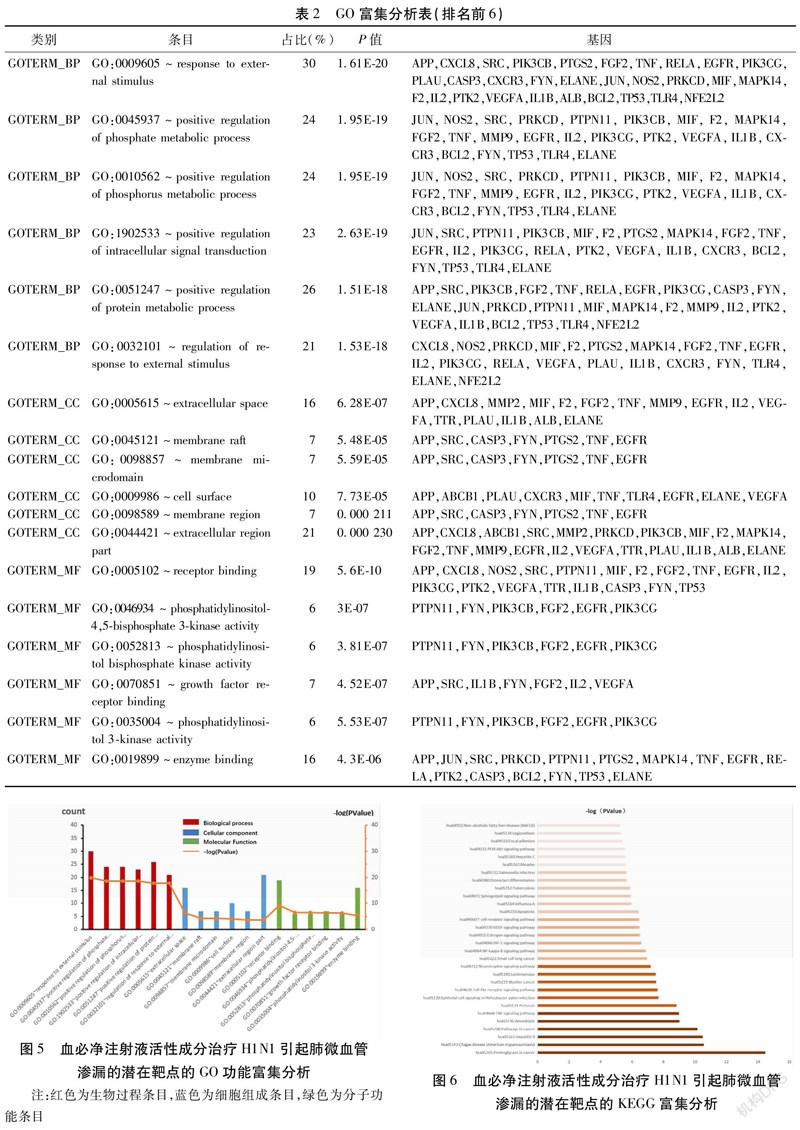
摘要 目的:探讨血必净注射液干预肺微血管渗漏辅助治疗H1N1病毒性肺炎的潜在药理作用机制。方法:收集血必净注射液中的活性成分,反向预测潜在作用靶点。从GeneCards数据库中获得疾病相关靶点。使用Venny工具对药物及疾病的潜在靶点进行交集分析,并对交集靶点进行蛋白质-蛋白质相互作用(PPI)网络的构建。利用DAVID和京都基因和基因组百科全书(KEGG)数据库进行通路注释,采用Cytoscape软件构建“中药-活性成分-靶点-疾病”网络模型。结果:共筛选出25个活性分子,通过调控TP53、VEGFA、EGFR、TNF、TLR4、CASP3、JUN等关键基因,影响核因子κB信号通路、HIF-1信号通路、T细胞受体信号通路、细胞凋亡信号转导途径、血管内皮生长因子信号通路和Toll样受体信号转导途径等91条通路发挥抗炎、调节免疫等作用。结论:本研究明确了血必净注射液抗炎和调节免疫作用的物质基础,为进一步阐释血必净注射液干预肺微血管渗漏辅助治疗H1N1病毒性肺炎相关机制提供科学依据。
关键词 血必净注射液;H1N1病毒;肺微血管渗漏;内皮细胞;潜在机制;内皮屏障;网络药理学;病毒性肺炎
Abstract Objective:To explore the potential pharmacological mechanism of Xuebijing injection in the intervention of pulmonary microvascular leakage in the adjuvant treatment of H1N1 viral pneumonia.Methods:Active ingredients in Xuebijing injection were collected,and the potential targets were prediected.Disease-related targets were obtained from the Genecards database.The Venny tool was used to analyze the intersection of potential targets of drugs and diseases,and a PPI network for the intersection targets was constructed.DAVID and KEGG databases were retrieved for pathway annotation,using Cytoscape software to construct a network model of “Chinese medicine-active ingredients-targets-disease”.Results:A total of 25 active molecules were screened out,which can regulate key genes of TP53、VEGFA、EGFR、TNF、TLR4、CASP3 and JUN to affect 91 pathways,including the NF-κB signaling pathway,HIF-1 signaling pathway,and TTR,apoptosis signaling pathway,vascular endothelial growth factor signaling pathway,and Toll-like receptor signaling pathway,with anti-inflammatory and immune regulation functions.Conclusion:This study clarifies the material basis of Xuebijing injection′s anti-inflammatory and immune regulation effects,and provides a scientific basis for further elucidating the mechanism of Xuebijing injection′s intervention in pulmonary microvascular leakage adjuvant treatment of H1N1 viral pneumonia.
Keywords Xuebijing injection; H1N1; Pulmonary microvascular leakage; Endothelial cells; Potential mechanism; Endothelial barrier; Network pharmacology; Viral pneumonia
中圖分类号:R285.5文献标识码:Adoi:10.3969/j.issn.1673-7202.2021.22.006
自1918年西班牙流感大流行以来,流感病毒感染一直是全球健康关注的问题[1]。2009年由一种新型的甲型H1N1流感病毒引起“墨西哥流感大流行”,波及全球214个国家和地区,死亡人数超过290 000人,其中201 000人死于呼吸衰竭[2]。H1N1病毒扩散到下呼吸道,则会导致病毒性肺炎,进而可发展为急性呼吸窘迫综合征(Acute Respiratory Distress Syndrome,ARDS)以及急性肺损伤(Acute Lung Injury,ALI),即肺微血管渗漏增加导致肺水肿、低氧血症和呼吸衰竭的综合征[3]。……
登录APP查看全文
猜你喜欢
财经(2017年15期)2017-07-03 22:40:49
财经(2017年2期)2017-03-10 14:35:35
财经(2016年15期)2016-06-03 07:38:02
财经(2016年3期)2016-03-07 07:44:46
财经(2016年6期)2016-02-24 07:41:51
财经(2015年3期)2015-06-09 17:41:31
财经(2014年21期)2014-08-18 01:50:18
财经(2014年6期)2014-03-12 08:28:19
财经(2013年6期)2013-04-29 17:59:30
财经(2010年20期)2010-10-19 01:48:32