虫害诱导植物信息化合物介导的植物间交流及机制
2021-01-04 01:03:39姚诚诚杜立啸李云河
植物保护
2021年6期
姚诚诚 杜立啸 李云河
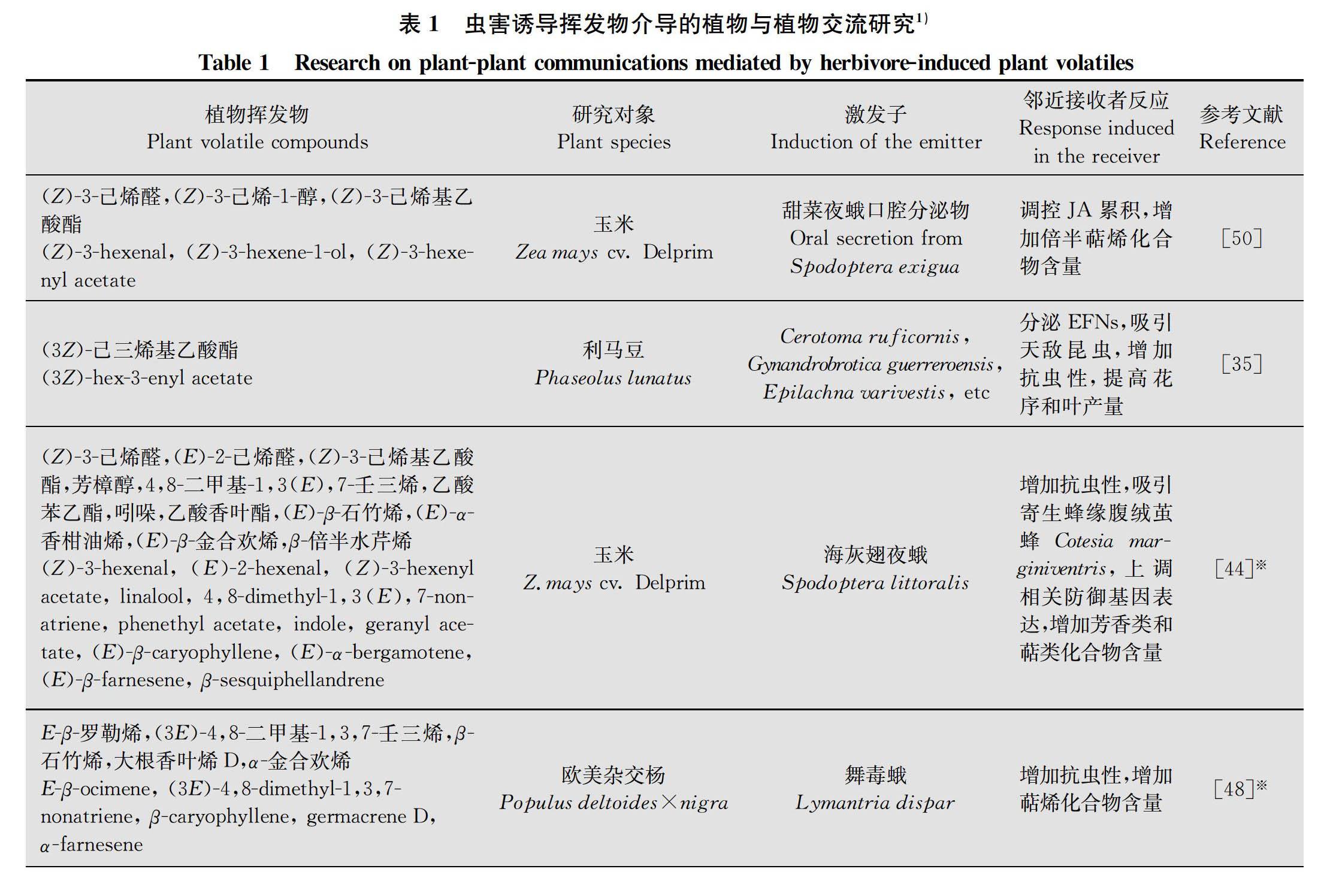
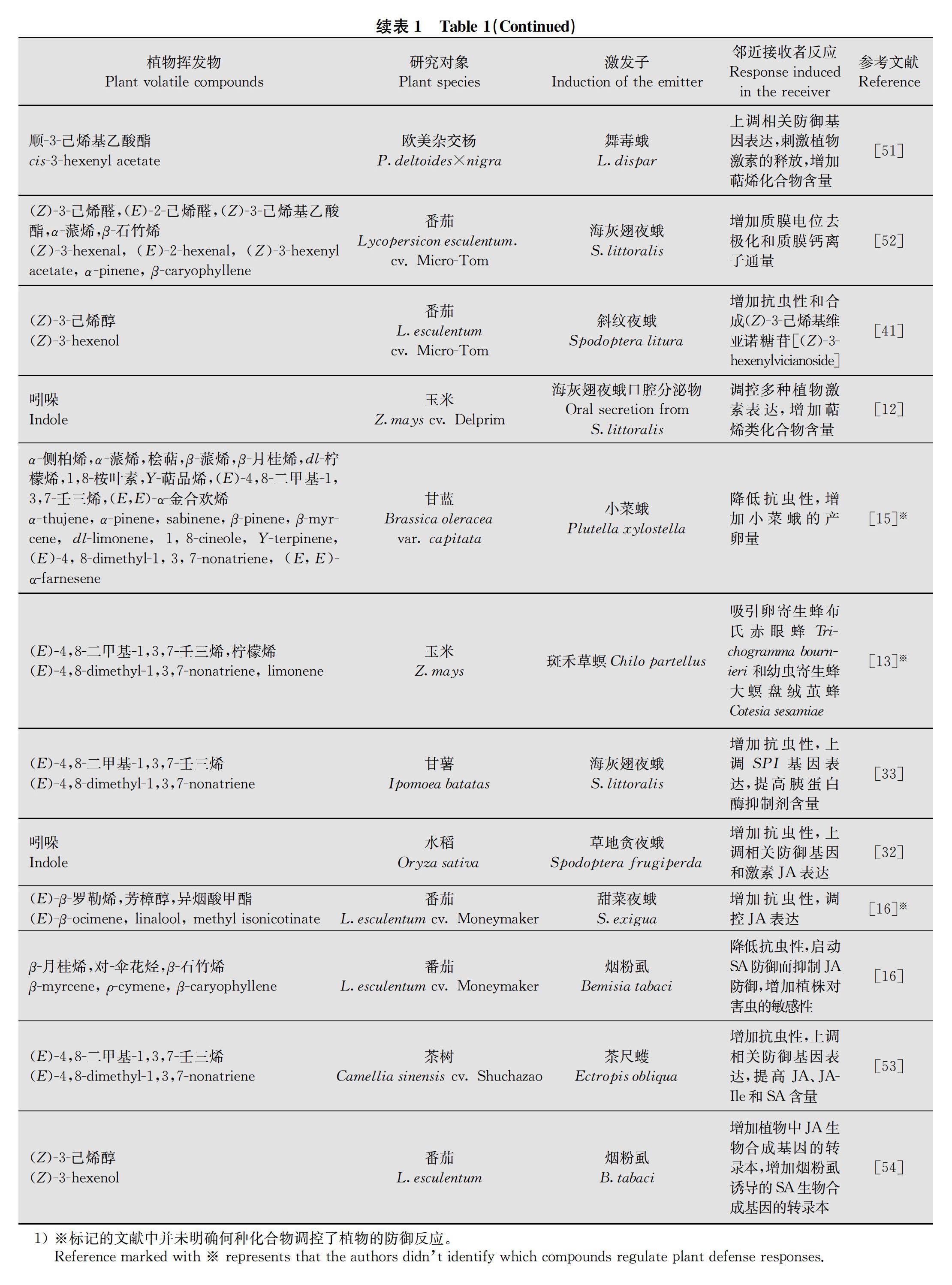
摘要 :当遭受植食性昆虫取食时,植物会释放复杂和多样的挥发性有机化合物。虫害诱导的挥发物在调控植物与不同营养层昆虫群落相互关系中发挥重要作用。同时,邻近植物也能感知这种虫害诱导挥发物,对可能即将到来的虫害威胁做出防御准备。获得防御准备的植物在受到虫害损伤时,会立即启动相应的防御反应。为了应对植物的这种害虫防御策略,某些昆虫可通过调控植物挥发物信号来传递“假信息”,从而抑制相邻植物的防御反应。这种信息交流既可发生在同种植物之间,也可发生在不同科属的植物之间。近年,植物间的信息交流现象已得到广泛研究,但相关的生化和分子机制及生态学意义尚不清楚。本文主要探讨了虫害诱导信息化合物介导的植物间交流类型、机制和生态学意义,以及影响植物间交流的生物或非生物因子,分析了利用植物间信息交流开展害虫绿色防控的前景。
关键词 :虫害诱导的植物挥发物; 植物与植物交流; 植物与昆虫互作
中图分类号:
Q948.1, S433
文献标识码: A
DOI: 10.16688/j.zwbh.2020427
Plant-to-plant communications medicated by herbivore-induced plant volatiles and the mechanisms
YAO Chengcheng, DU Lixiao*, LI Yunhe*
(State Key Laboratory for Biology of Plant Diseases and Insect Pests, Institute of Plant Protection,
Chinese Academy of Agricultural Sciences, Beijing 100193, China)
Abstract
Plants, when being attacked by herbivores, will constitutively emit a wide variety of volatile organic compounds, called herbivore-induced plant volatiles (HIPVs), which plays a key role in mediating the interactions between plants and diverse trophic levels of insects.In addition, neighboring plants can perceive these distress signals from herbivore-attacked plants and prepare well for incoming threats.Plants that have primed their defenses can immediately activate corresponding defensive responses once they were damaged by herbivorous insects.Conversely, some insects may manipulate their host plants to emit volatiles that disseminate the deceptive information to neighboring plants, which will suppress their defenses.The phenomenon of HIPVs-medicated plant-plant communication occurs among the plants of the same or different families and genera.Although the concept of this communication has been widely accepted, its biochemical and molecular mechanisms and ecological significances remain largely obscure.In this overview, we reviewed the types, mechanisms and significances of plant-plant communications mediated by HIPVs, and we focused on both ecological factors affecting plant-plant communications and the prospects for using volatiles to control pests based on plant-plant communications.
Key words
herbivore-induced plant volatiles; plant-plant communication; plant-insect interaction
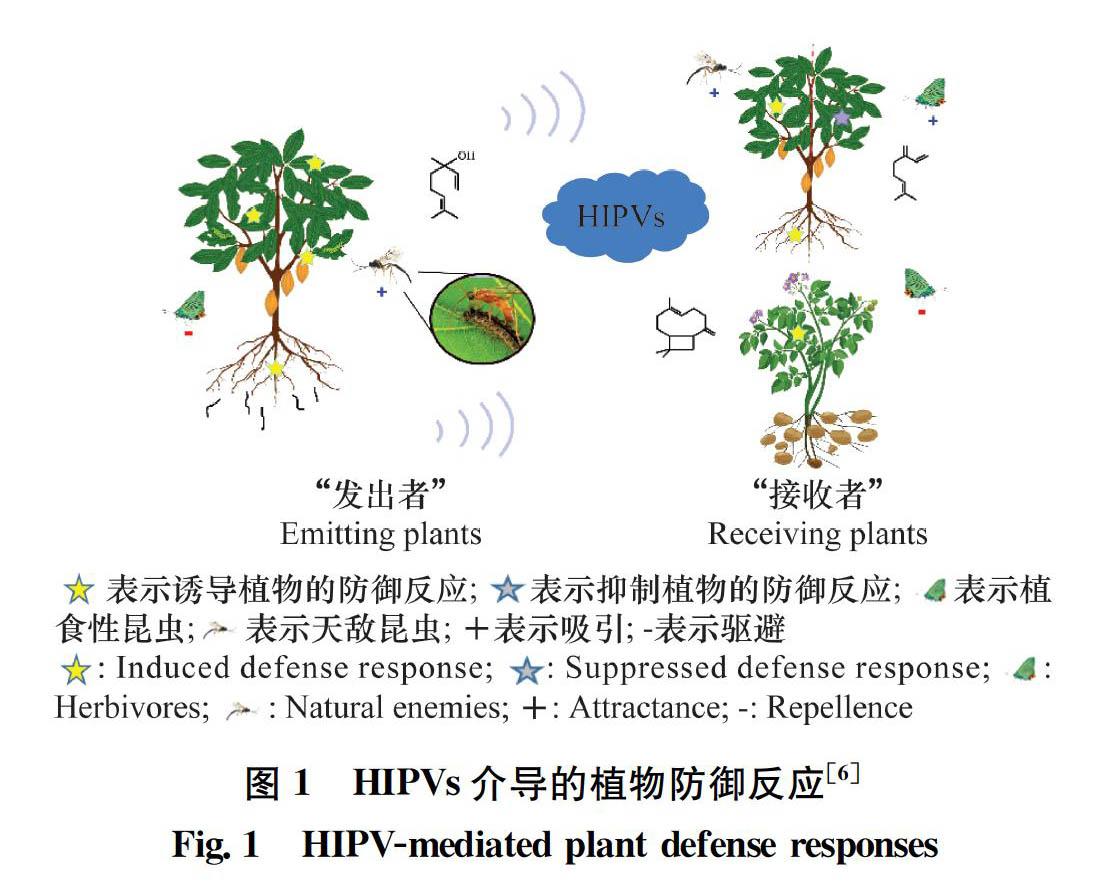
當遭受植食性昆虫取食时,植物会产生一系列防御反应。一方面,植物会产生有毒化合物、抗营养酶类和抗消化酶类等物质直接毒杀或抑制植食性昆虫生长发育;另一方面,植物会释放挥发性化合物吸引捕食性或寄生性天敌来防御害虫[12]。此外,相邻植株也能感知这种虫害诱导植物挥发物(herbivore-induced plant volatiles, HIPVs),相邻植株接收HIPVs后做出的反应主要有两类:一类是直接激活自身的防御反应[35];另一类是不启动防御反应,而是“武装”自己,在受到植食性昆虫为害时,可启动更强或更快的防御反应[2, 58]。……
登录APP查看全文