乌拉地尔联合硝苯地平治疗妊娠期高血压对母婴结局及孕妇肾功能的影响
2021-01-05 13:13:08肖晓超刘文思
中国现代医生
2021年30期
肖晓超 刘文思
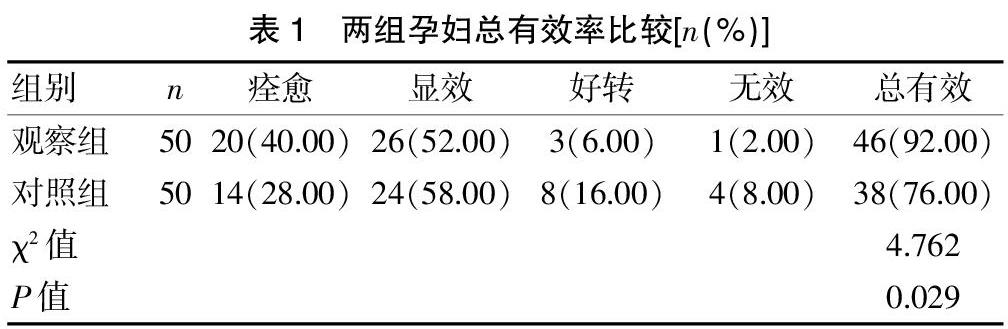


[摘要] 目的 探讨乌拉地尔联合硝苯地平治疗妊娠期高血压对母婴结局、孕妇肾功能的影响。 方法 选取我院2019年2月至2020年10月收诊的妊娠期高血压孕妇100例为对象,随机数字表法分成对照组50例(硝苯地平联合常规治疗)和观察组50例(乌拉地尔、硝苯地平联合常规治疗),比较两组的治疗总有效率、母婴结局、肾功能指标和药物不良反应发生率。 结果 观察组治疗总有效率为92.00%,高于对照组的76.00%,两组比较差异有统计学意义(P<0.05);观察组的早产率为6.00%,剖宫产率为26.00%,产后出血率为4.00%,胎儿宫内窘迫率为6.00%,新生儿窒息率为4.00%,均低于对照组的早产率22.00%、剖宫产率46.00%、产后出血率18.00%、胎儿宫内窘迫率20.00%、新生儿窒息率16.00%,两组比较差异有统计学意义(P<0.05);观察组新生儿死亡率(0)与对照组(2.00%)比较,差异无统计学意义(P>0.05);观察组孕妇治疗7 d后的24 h尿蛋白量为(0.89±0.15)g和24 h尿肌酐量為(6.87±1.24)mmol/L,均低于对照组的24 h尿蛋白量(1.56±0.23)g和24 h尿肌酐量(8.94±1.45)mmol/L,两组比较差异有统计学意义(P<0.05);观察组的药物不良反应总发生率(8.00%)与对照组(12.00%)比较,差异无统计学意义(P>0.05)。 结论 乌拉地尔联合硝苯地平治疗妊娠期高血压综合征疗效肯定,可促进孕妇肾功能改善,改善母婴结局。
[关键词] 妊娠期高血压综合征;乌拉地尔;硝苯地平;硫酸镁;肾功能;母婴结局
[中图分类号] R544.1 [文献标识码] B [文章编号] 1673-9701(2021)30-0006-04
[Abstract] Objective To explore the effect of urapidil combined with nifedipine on maternal and fetal outcomes and maternal renal function in the treatment of gestational hypertension. Methods A total of 100 pregnant women with gestational hypertension admitted to our hospital from February 2019 to October 2020 were randomly divided into the control group (n=50, nifedipine combined with routine treatment) and the observation group (n=50, urapidipine, nifedipine combined with routine treatment). The overall response rate, maternal and fetal outcomes, renal function indicators and incidence rate of adverse drug reactions were compared between the two groups. Results The total effective rate of the observation group was 92.00%, which was higher than 76.00% of the control group, and the difference was statistically significant (P<0.05). The premature delivery rate of 6.00%, cesarean section rate of 26.00%, postpartum hemorrhage rate of 4.00%, fetal distress rate of 6.00%, and neonatal asphyxia rate of 4.00% in the observation group were lower than the premature delivery rate of 22.00%, cesarean section rate of 46.00%, postpartum hemorrhage rate of 18.00%, fetal distress rate of 20.00% and neonatal asphyxia rate of 16.00% in the control group, and the difference between the two groups was significant (P<0.05). The neonatal mortality rate of 0 in the observation group was not significantly different from 2.00% in the control group (P>0.05). The 24 h urinary protein (0.89±0.15) g and 24 h urinary creatinine (6.87±1.24) mmol/L after treatment for seven days in the observation group were lower than the 24 h urinary protein (1.56±0.23) g and 24 h urinary creatinine (8.94±1.45) mmol/L in the control group, and the difference between the two groups was statistically significant (P<0.05). There was no statistical difference in the total incidence of adverse drug reactions between the observation group (8.00%) and the control group(12.00%) (P>0.05). Conclusion Urapidil combined with nifedipine is effective in the treatment of gestational hypertension syndrome, which can improve the renal function of pregnant women and improve maternal and infant outcomes.
[Key words] Gestational hypertension syndrome; Urapidil; Nifedipine; Magnesium sulfate; Renal function; Maternal and fetal outcomes
妊娠期高血压综合征(Hypertensive disorder complicating pregnancy,HDCP)是妊娠期常见合并症之一,近年来发病率有所上升,尤其是伴随着肥胖、双胎妊娠孕产妇增多,妊娠期高血压综合征发病率明显升高[1-3]。若未能及时干预治疗妊娠期高血压综合征,将会直接影响胎儿的健康发育,可能导致胎儿宫内生长受限及不良母婴结局等,影响母儿健康。……
登录APP查看全文