
基于Pd纳米粒子/聚苯胺的葡萄糖电化学传感器研究
2021-01-06 12:54:14黄新花王琳惠文颖杨海峰
上海师范大学学报·自然科学版
2021年6期
关键词:检测
黄新花 王琳惠 文颖 杨海峰
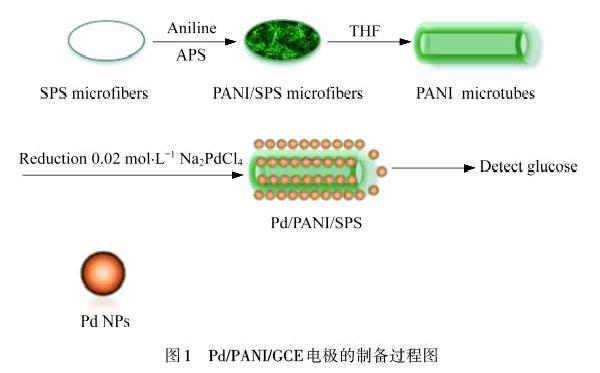
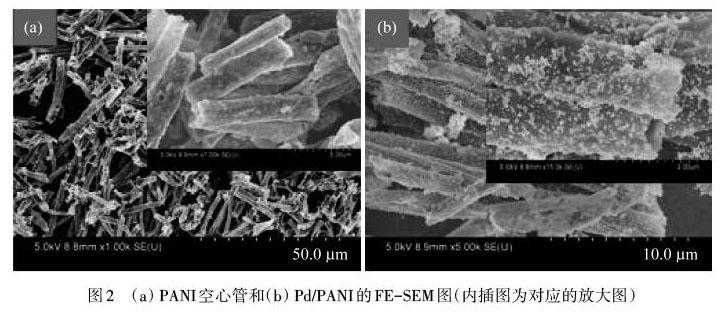
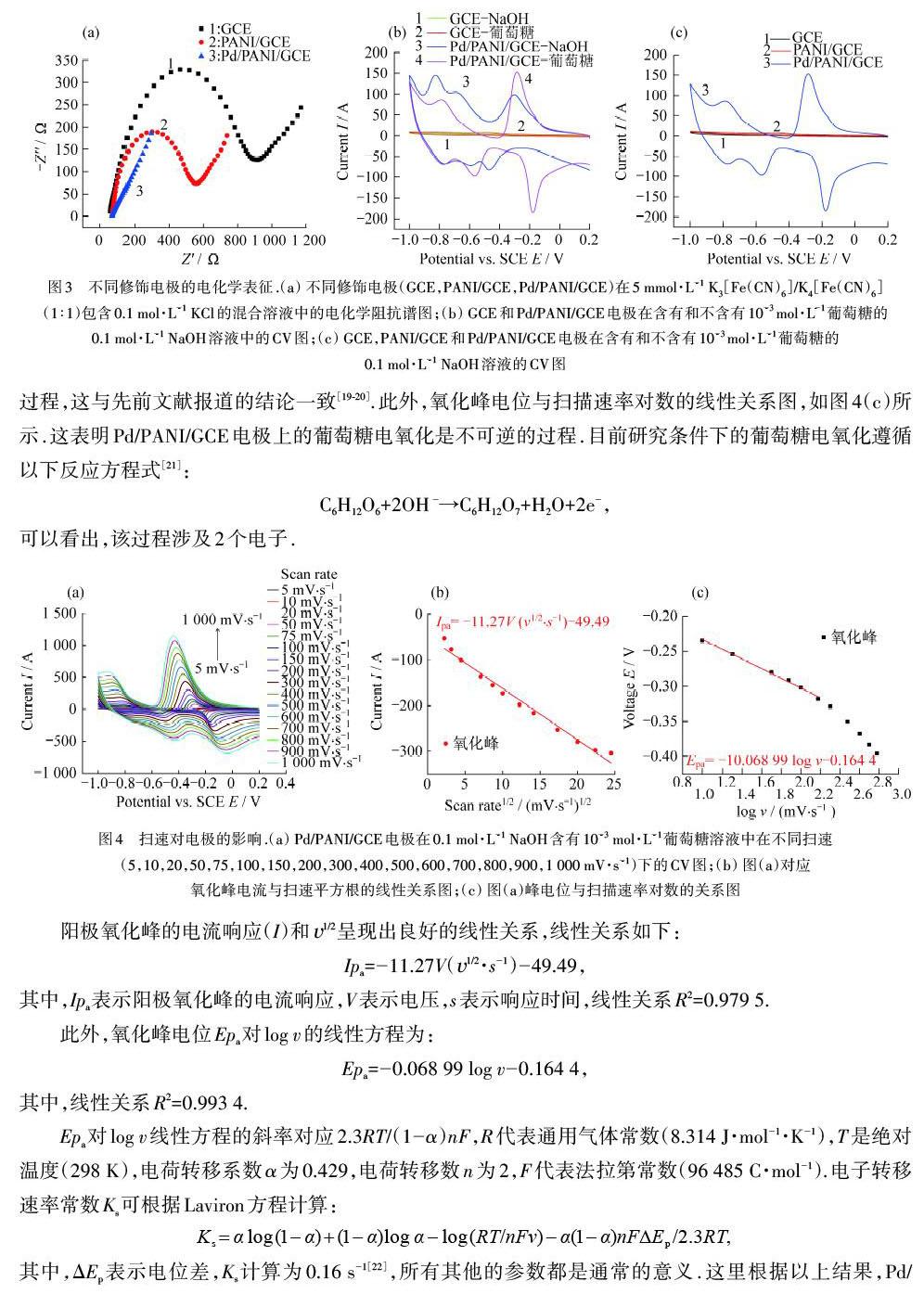
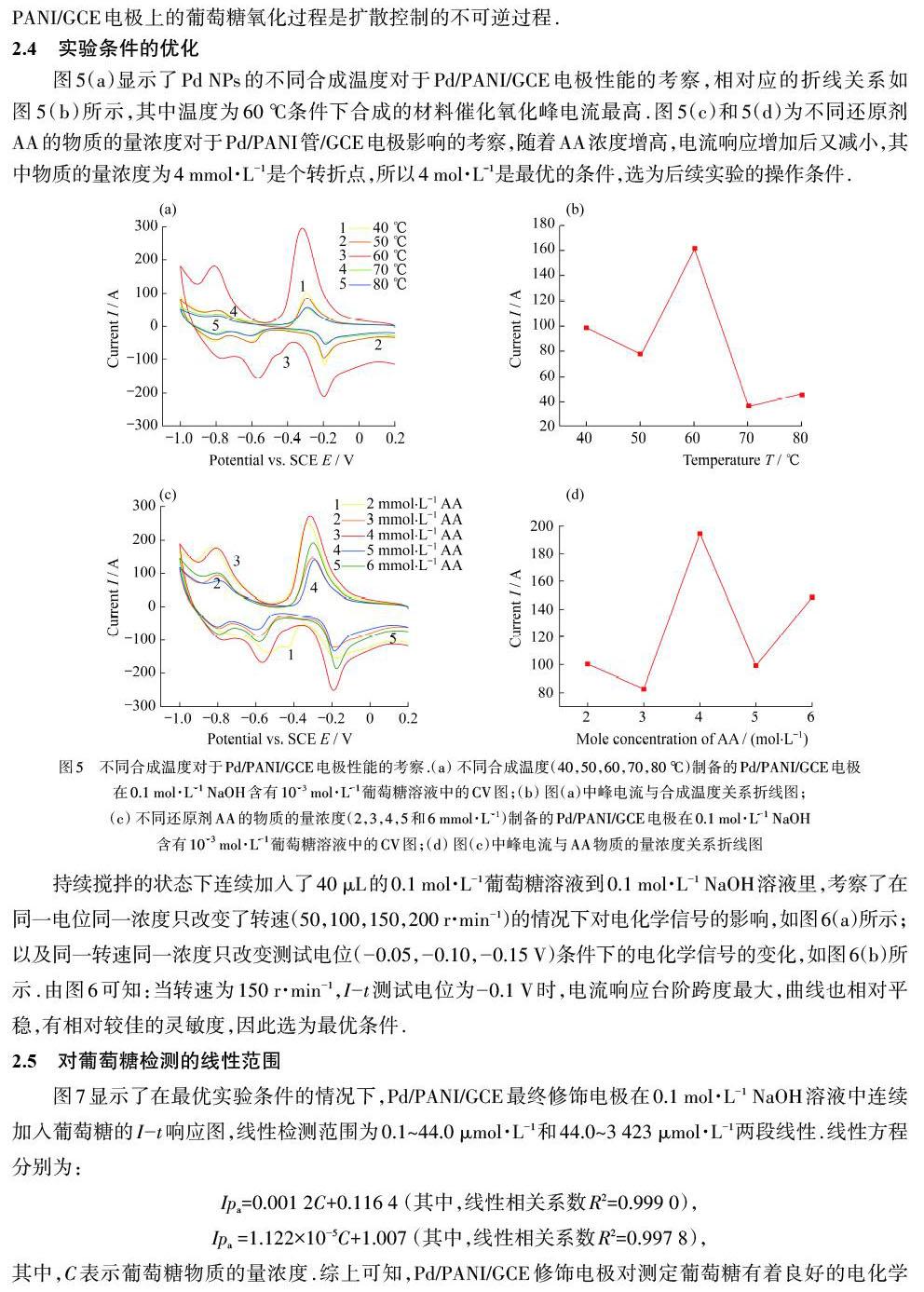
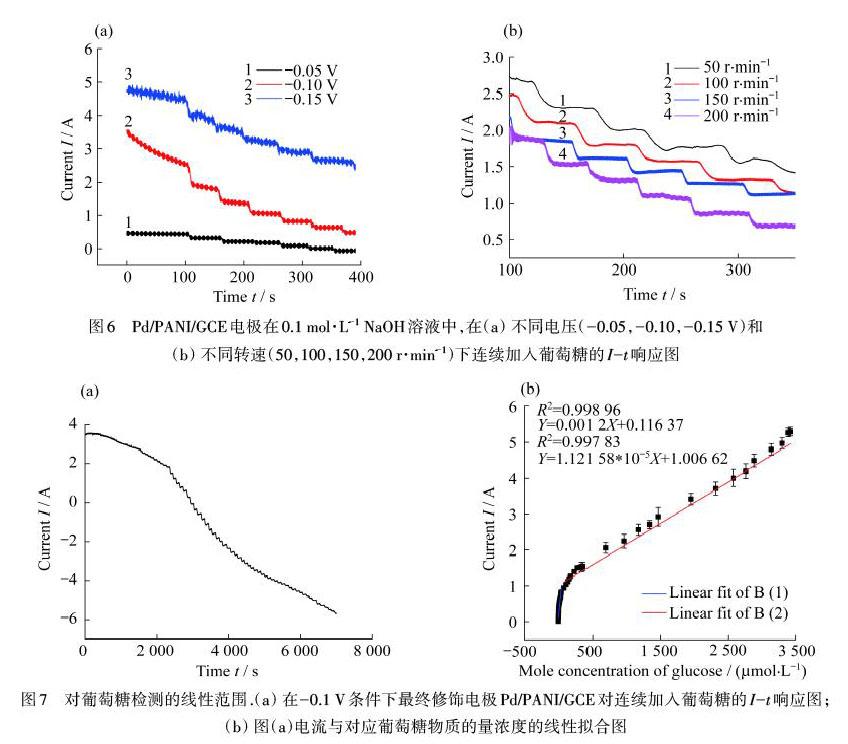
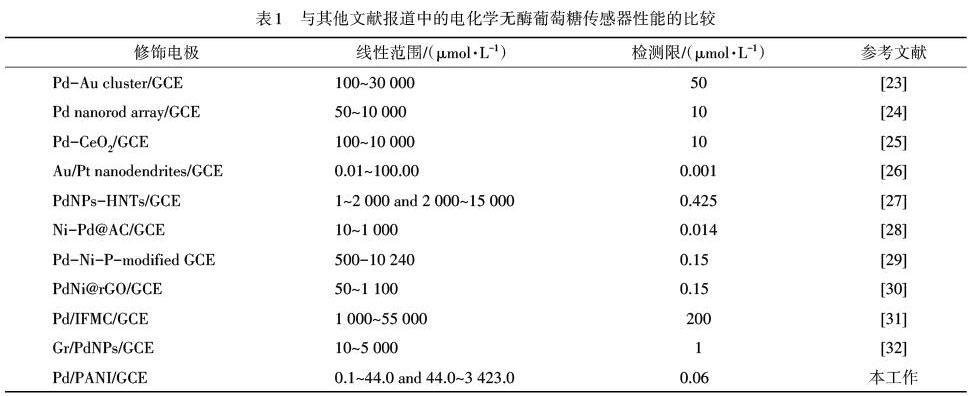
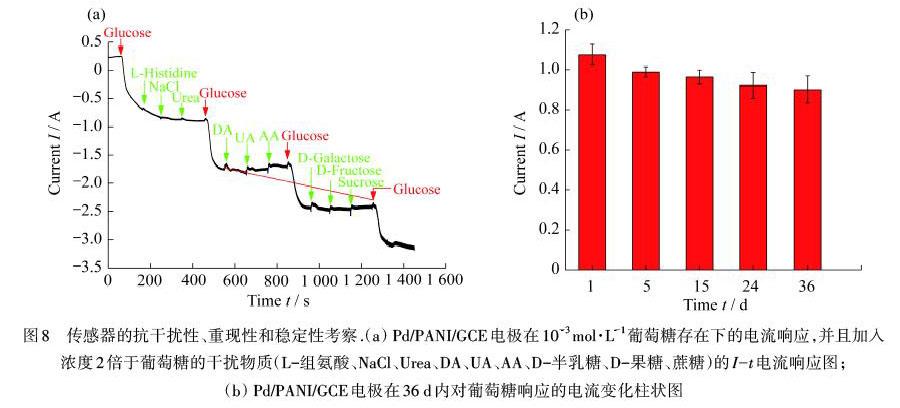

摘 要: 采用静电纺丝技术结合化学原位还原沉积方法构建钯纳米粒子(Pd NPs)修饰的聚苯胺(PANI)空心管复合材料(Pd/PANI/GCE).首先通过静电纺丝法制备聚苯乙烯(PS)纤维膜基底,然后在纤维膜基底上修饰苯胺单体,并进行原位聚合,获得磺化聚苯乙烯@聚苯胺(SPS@PANI)复合纤维膜.采用四氢呋喃(THF)溶解去除磺化聚苯乙烯(SPS)内芯后获得高导电性、高比表面积的PANI空心管材料,再通过化学原位还原法在PANI空心管表面均匀沉积Pd NPs,并由此构建了无酶葡萄糖传感器.实验结果表明:该传感器对葡萄糖检测的线性范围包括0.1~44.0 μmol·L-1和44.0~3 423.0 μmol·L-1两段线性,最低检测限为0.06 μmol·L-1.该传感器能够直接应用于实际唾液样品中对于葡萄糖的检测.
关键词: 静电纺丝; 聚苯乙烯(PS); 聚苯胺(PANI); 钯纳米粒子(Pd NPs); 电化学传感器; 葡萄糖
中图分类号: O 647.3 文献标志码: A 文章编号: 1000-5137(2021)06-0653-10
Abstract: In this work, palladium nanoparticles(Pd NPs) modified polyaniline(PANI) tubes(Pd/PANI/GCE) were prepared by using the in-situ chemical deposition and the electrospinning technology for glucose detection. The PANI was firstly modified on the surface of sulfonated polystyrene fiber membrane through the charge interaction between the positively charged aniline monomers and the sulfonatedunits, and the following polymerization. The polystyrene was extracted from the polystyrene@polyaniline composite fiber (SPS@PANI) by using the tetrahydrofuran (THF) to thus form the PANI hollow tube, which was then deposited with palladium nanoparticles (Pd NPs) to form the catalytic composite membrane for the sensor fabrication. The linear range of the sensor for glucose detection includes 0.1-44.0 μmol·L-1 and 44.0-3 423.0 μmol·L-1, and the detection limit of 0.06 μmol·L-1. The sensor has been applied to determine the concentration of glucose in saliva samples.
Key words: electrospinning; polystyrene(PS); polyaniline(PANI); palladium nanoparticles(Pd NPs); electrochemical sensors; glucose
0 引 言
糖尿病是一種代谢性疾病,人体中由于血糖异常引起的糖尿病是现代最具挑战性的健康问题之一,慢性高血糖症会导致严重疾病发生风险的增加,例如肾衰竭、肥胖、中风、冠心病和神经性疾病等并发疾病的发生.为了人们的身体健康,人体中的葡萄糖的分析测定对于糖尿病和它引起的相关并发症的诊断和治疗是非常重要的,并且具有重要的实际意义.
在过去的几十年中,许多技术已用于检测葡萄糖,包括电化学发光法、傅里叶变换红外光谱法、微透析法、超声渗析法、反离子电渗疗法和荧光法[1-2].然而,这些技术通常受到以……
登录APP查看全文
猜你喜欢
中国设备工程(2022年12期)2022-07-11 04:33:00
海峡科技与产业(2016年3期)2016-05-17 04:32:12