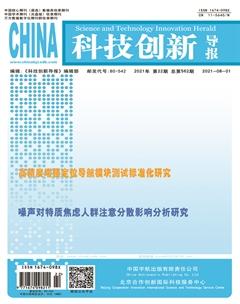
基于搅拌功率的混凝土流变学研究
2021-01-07 00:23:17朱成珂张羽王方方
科技创新导报
2021年22期
关键词:混凝土
朱成珂 张羽 王方方


摘要:当前混凝土的坍落度和扩展度等试验只检测其某个时刻的流变性,无法用于搅拌全过程的流变性研究。为监测C20水泥混凝土在搅拌过程的周期性流变特性,本文基于最小二乘法利用Matlab采用多项式模型拟合间歇式搅拌机的功率曲线,对比拟合结果发现:低阶模型的阶数越高,效果越好;高阶模型中50阶多项式拟合曲线在混凝土流动点附近更贴合试验数据。
关键词:混凝土 搅拌功率 曲线拟合 Matlab
Study on Rheology of Concrete Based on Mixing Power
ZHU Chengke ZHANG Yu WANG Fangfang
(School of Construction Machinery, Chang'an University, Xi'an, Shaanxi Province, 710064 China)
Abstract: At present, the slump and expansion tests of concrete only detect the rheology at a certain time, which can not be used to study the rheology of the whole mixing process. In order to monitor the periodic rheological properties of C20 cement concrete in the mixing process, the power curve of intermittent mixer was fitted by polynomial model based on the least square method and Matlab. The comparison results show that the higher the order of low-order model, the better the effect; The 50 order polynomial fitting curve in the high-order model fits the test data better near the concrete flow point.
Key Words: Concrete; Mixing power; Curve fitting; Matlab
流變学是由宾汉姆教授于美国拉法菲特大学创立,指“研究物质变形和流动的科学”[1]。自1929年美国流变协会成立至今,流变学已广泛应用于塑料、涂料、洗涤剂、石油等工业领域,其中混凝土是流变学领域最难研究的材料之一。根据宾汉姆模型可知,混凝土的流变特性参数有屈服剪切应力和塑性粘度[2]。传统混凝土坍落度、扩展度试验与粘度和屈服应力流变参数有较好的相关性[3],但是这些试验只能检测确定配比下混凝土某一时间点的流变性能,无法监控混凝土在整个搅拌过程中的流变性能。
我国学者认为搅拌机构在搅拌过程中连续克服混合料的屈服剪应力和塑性粘度,将物料由分散到连续的过程中,混凝土材料随搅拌时间的变化其结构状态和流变特性也在不断变化,具体表现在物料作用在搅拌机构上的工作阻力、搅拌机的电流和搅拌机的功率消耗发生动态变化[4]。此前已有外国学者利用功率曲线研究搅拌过程的流变学和动力学等问题[5],我国学者谢友均等人分析了CA砂浆搅拌功率曲线和搅拌波动曲线特征,将搅拌过程分为6个阶段和3个区域。……
登录APP查看全文
猜你喜欢
现代装饰(2022年5期)2022-10-13 08:48:04
建材发展导向(2022年10期)2022-07-28 03:04:00
建材发展导向(2021年7期)2021-07-16 07:08:04
水利规划与设计(2020年1期)2020-05-25 08:01:30
小哥白尼(趣味科学)(2019年3期)2019-06-17 11:57:44
上海建材(2018年3期)2018-08-31 02:27:52
江西建材(2018年2期)2018-04-14 08:01:05
江西建材(2018年2期)2018-04-14 08:00:10
水利技术监督(2017年2期)2017-05-17 05:19:34
水利科技与经济(2016年2期)2016-04-09 02:09:13