新建公路隧道上穿既有地铁的施工安全控制
2021-01-07 00:23:17多冉伟陈国
科技创新导报
2021年22期
多冉伟 陈国
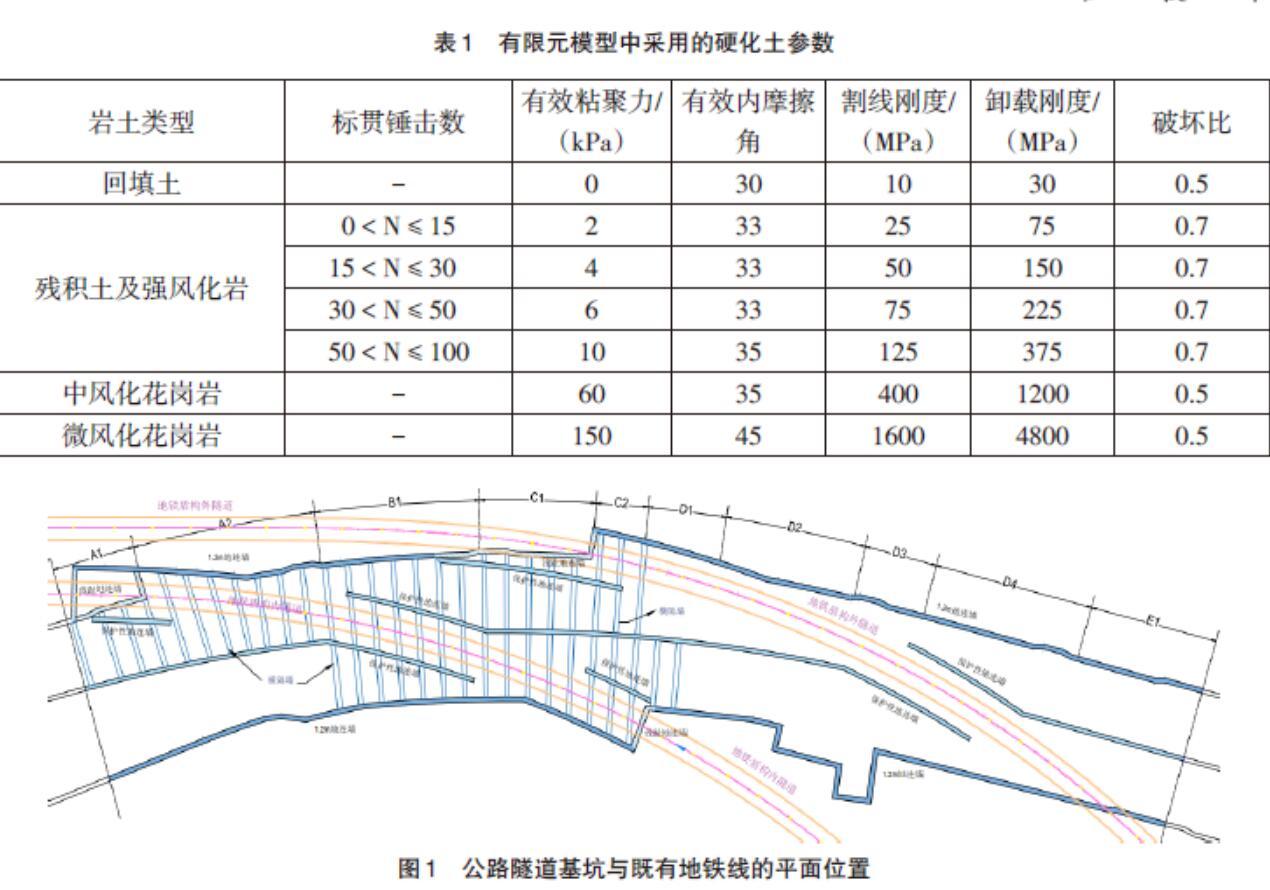
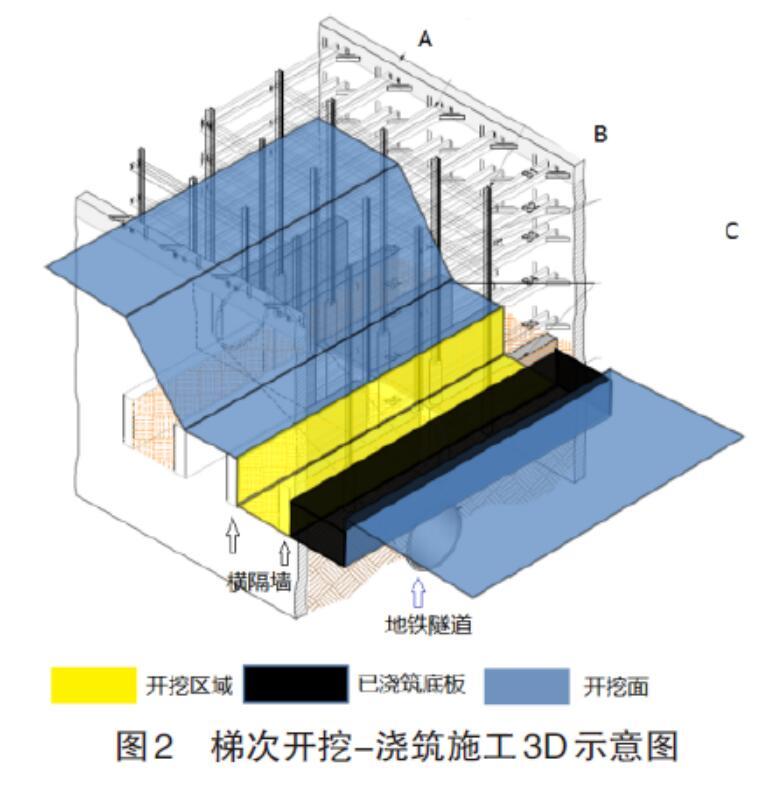

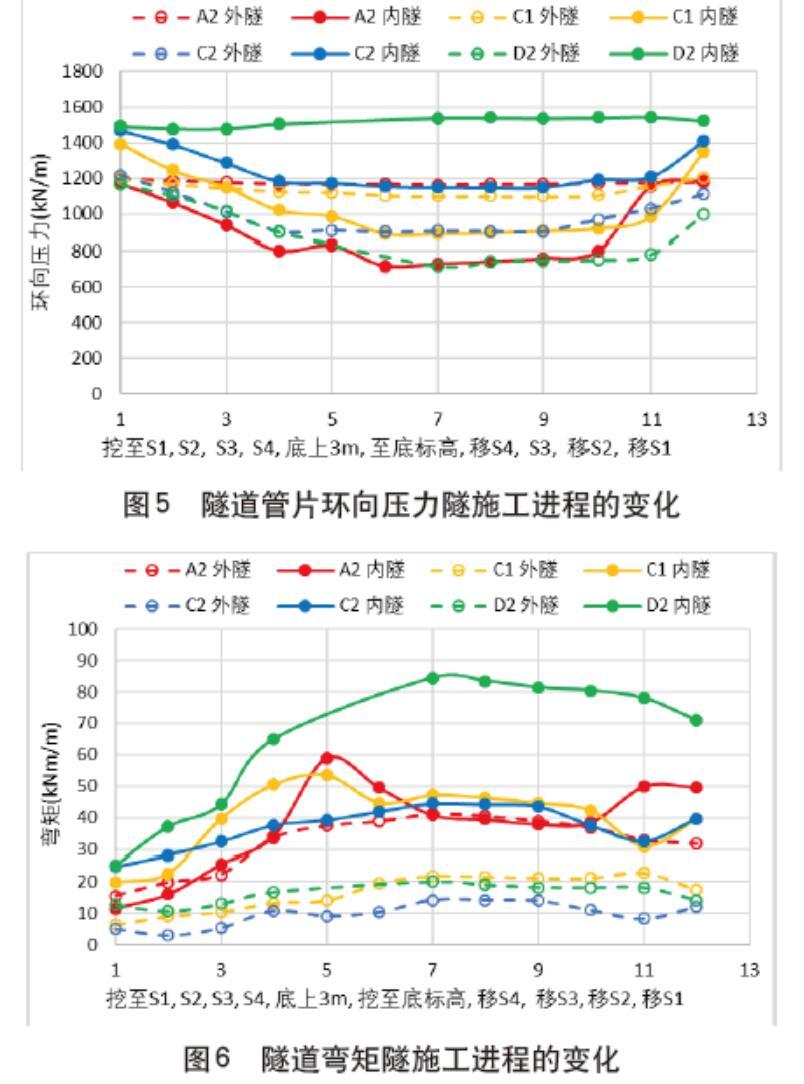
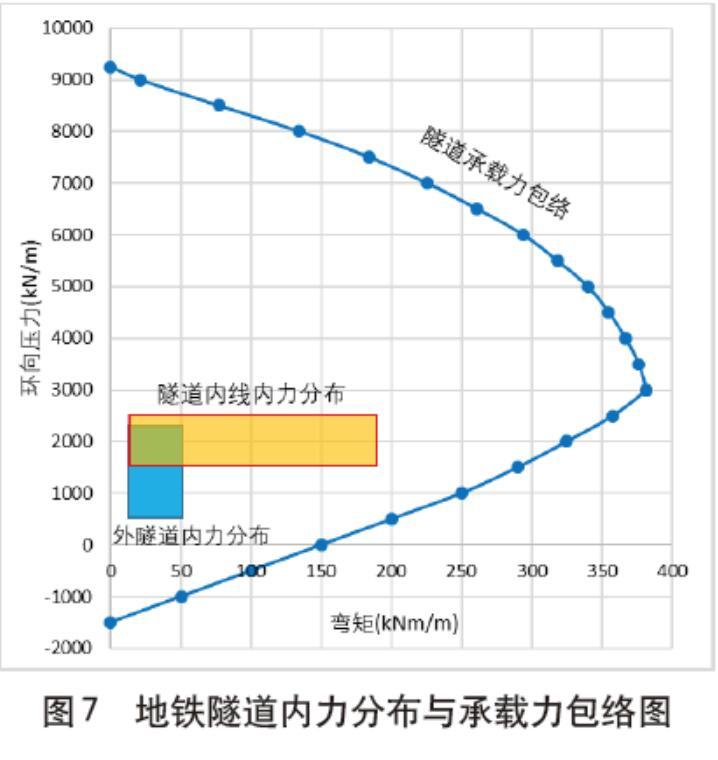

摘要:某公路隧道工程纵向跨越既有运营地铁段近300m,基坑宽度50m,隧道底板距运营的地铁盾构隧道最小距离仅1.5m。施工极易扰动既有地铁结构,并面临着盾构隧道变形,进而引起地下水灌入等风险。本文提出了采用横隔墙兼做分仓间隔的梯次開挖-分仓浇筑的施工方案,采用有限元模型对隧道施工过程进行模拟,分析了施工活动引起的地铁位移和附加压力以评估地铁的安全风险。结果表明,梯次开挖-浇筑的施工方案能有效抑制地铁线的变形及附加压力,确保了基坑施工期间下卧地铁的运营安全。
关键词:地下公路 隧道工程 上穿 有限元分析 变形控制
Construction Safety Control of the Highway Tunnel on the Existing Metro Line
DUO Ranwei1 CHEN Guo2
(1. Third Engineering Branch of China Railway First Group Co., Ltd., Baoji, Shaanxi Province, 721006 China; 2. College of Civil Engineering, Nanjing Forestry University, Nanjing, Jiangsu Province, 210037 China)
Abstract: A highway tunnel project longitudinally spans an existing operating metro section of about 300m, with a foundation pit width of 50m, and the minimum distance between the tunnel floor and the metro shield tunnel is only 1.5m. The construction is very easy to disturb the existing subway structure, and faces the risks of shield tunnel deformation and groundwater injection. To solve this problem, this paper introduces the design concept of cross-wall, and proposed a construction plan of steps excavation & interval casting that use the cross-wall as the partition interval, and adopts structural measures such as setting up wire mesh and water-stop plate at the construction joints. The finite element model is applied to simulate the tunnel construction process, and the subway displacement and additional pressure caused by the construction activities are analyzed to assess the safety risk of the subway. The analysis results show that the steps excavation & interval casting construction scheme can effectively reduce the deformation and induced force to ensure the safety of the existing subway during the excavation of the foundation pit.
Key Words: Underground expressway; Tunnel engineering; Over passing; Finite element analysis; Deformation control
随着城市建设的发展,在有限条件下建立立体交通体系是解决随城市规模不断扩大而引起的交通拥堵问题的有效方法 [1-3]。相比于近年流行的高架桥项目,地下公路隧道由于建造成本高、施工难度大等原因则出现的较少。但与地铁及高架桥等交通方式相比,地下公路(时速60km-90km)基于更合理的线路规划、较少的拆迁纠纷、更优质的空间利用、较短的通勤时间等优势,越来越受到发展较成熟的城市的青睐。地下公路隧道项目面临的主要挑战在于如何减少对既有建筑物和基础设施的影响,如减少扰动、保护年代久远的建筑、防止隧道施工引起的沉降等。
对于在运营的地铁,盾构结构的变形过大会导致管片渗漏水、破裂,甚至轨道变形,影响地铁线的正常运营。因此控制地铁盾构管片的上浮变形和应力突变为上跨深基坑施工的一项关键课题。……
登录APP查看全文
猜你喜欢
建材发展导向(2021年9期)2021-07-16 07:11:36
中华诗词(2020年1期)2020-09-21 09:24:52
小学生作文(中高年级适用)(2018年5期)2018-06-11 01:22:56
数学大王·中高年级(2016年12期)2016-12-26 21:37:36
中国房地产业(2016年2期)2016-03-01 01:25:48
河南电力(2016年5期)2016-02-06 02:11:34
机械工程师(2015年10期)2015-02-02 01:14:03
机电产品开发与创新(2014年4期)2014-03-11 16:42:24
上海金属(2013年4期)2013-12-20 07:57:18
船海工程(2013年6期)2013-03-11 18:57:27