资金受限的中小企业中断保险购买决策分析
2021-02-21 16:05:10吕巍孙晓晨
河北工业大学学报
2021年6期
关键词:利润
吕巍 孙晓晨
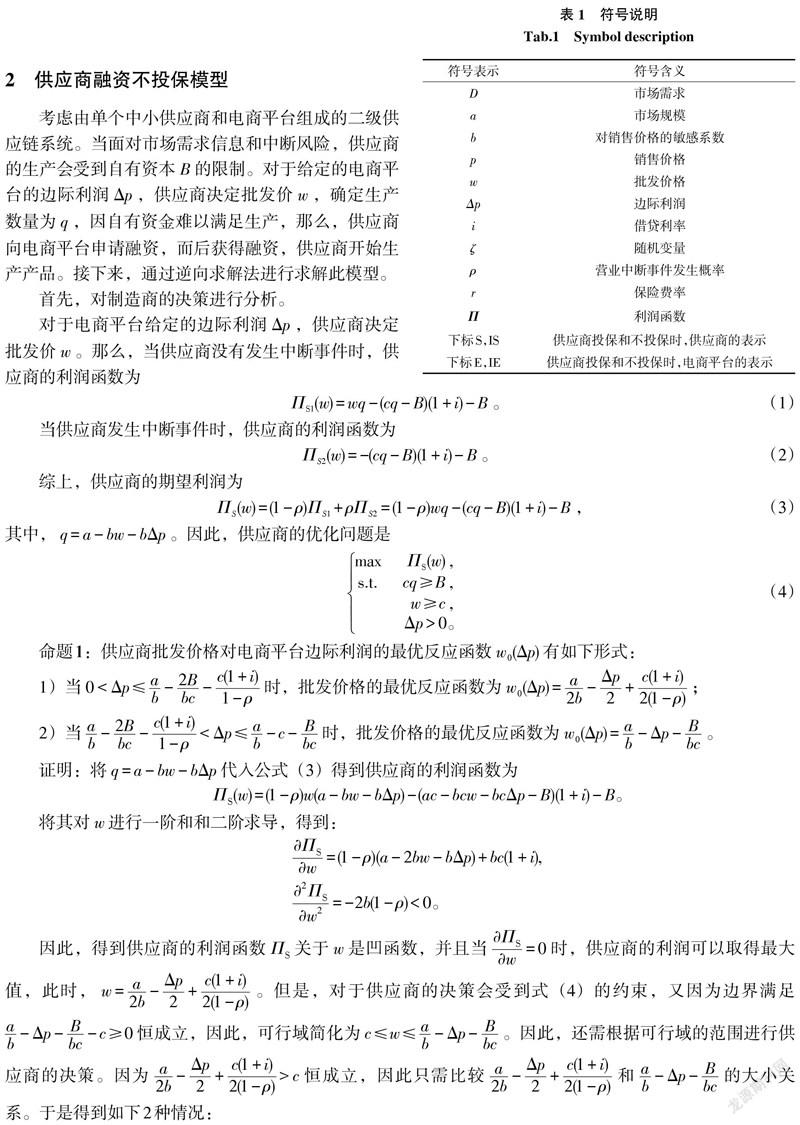
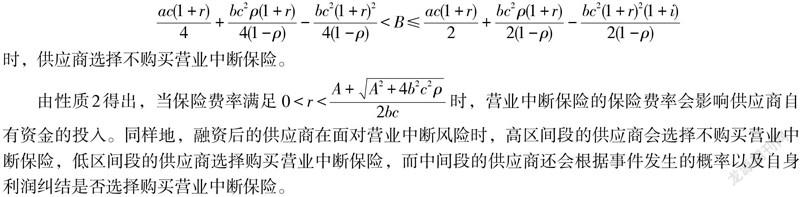
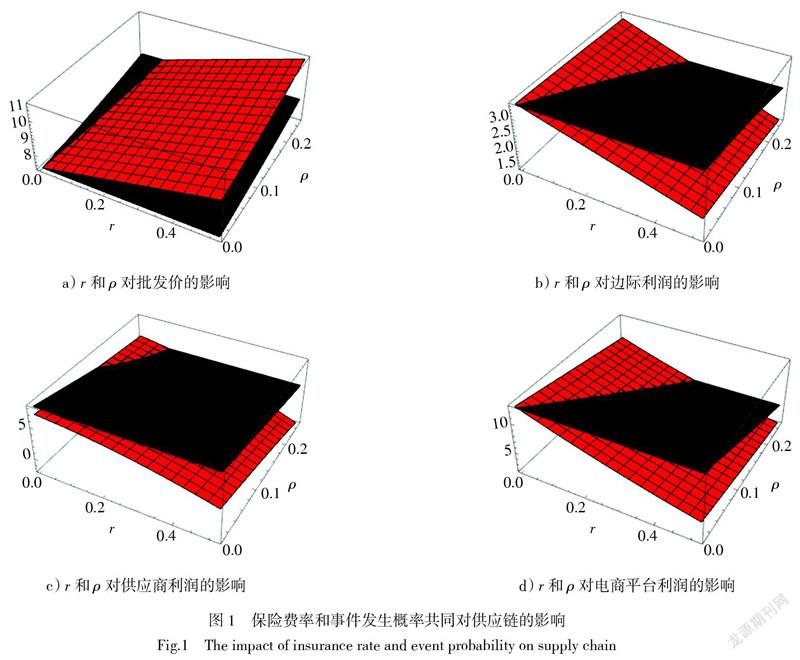
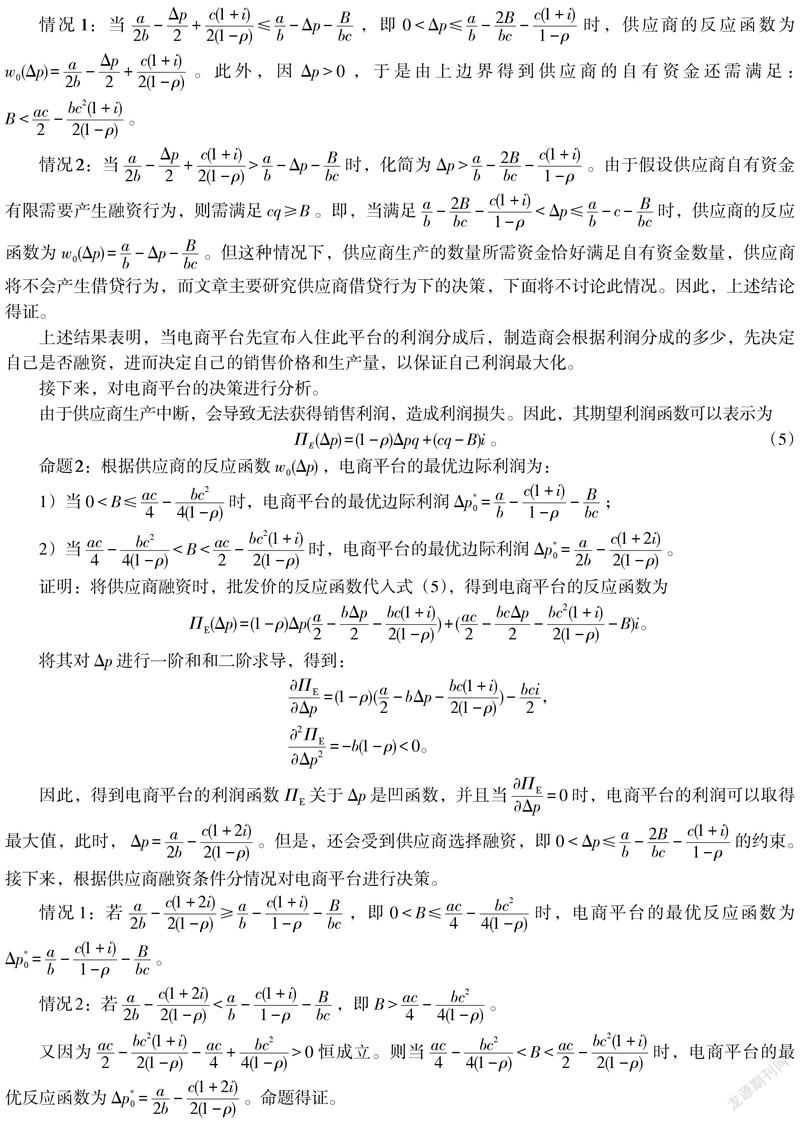
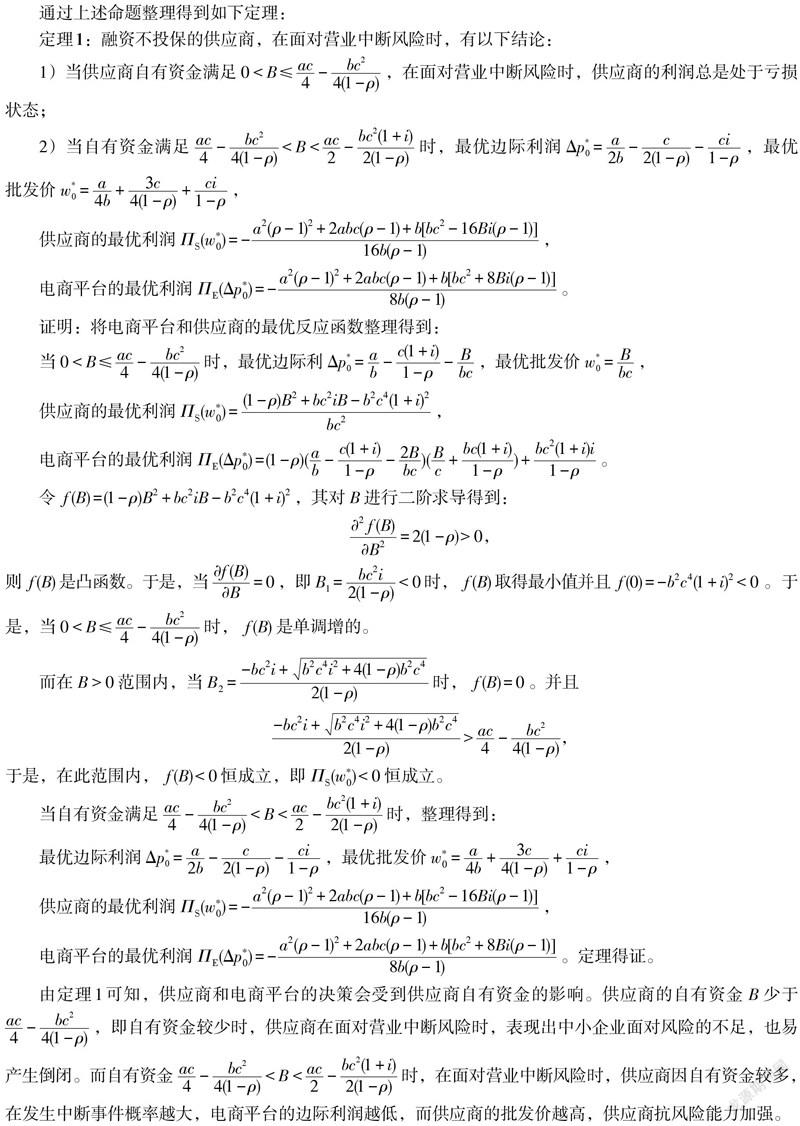
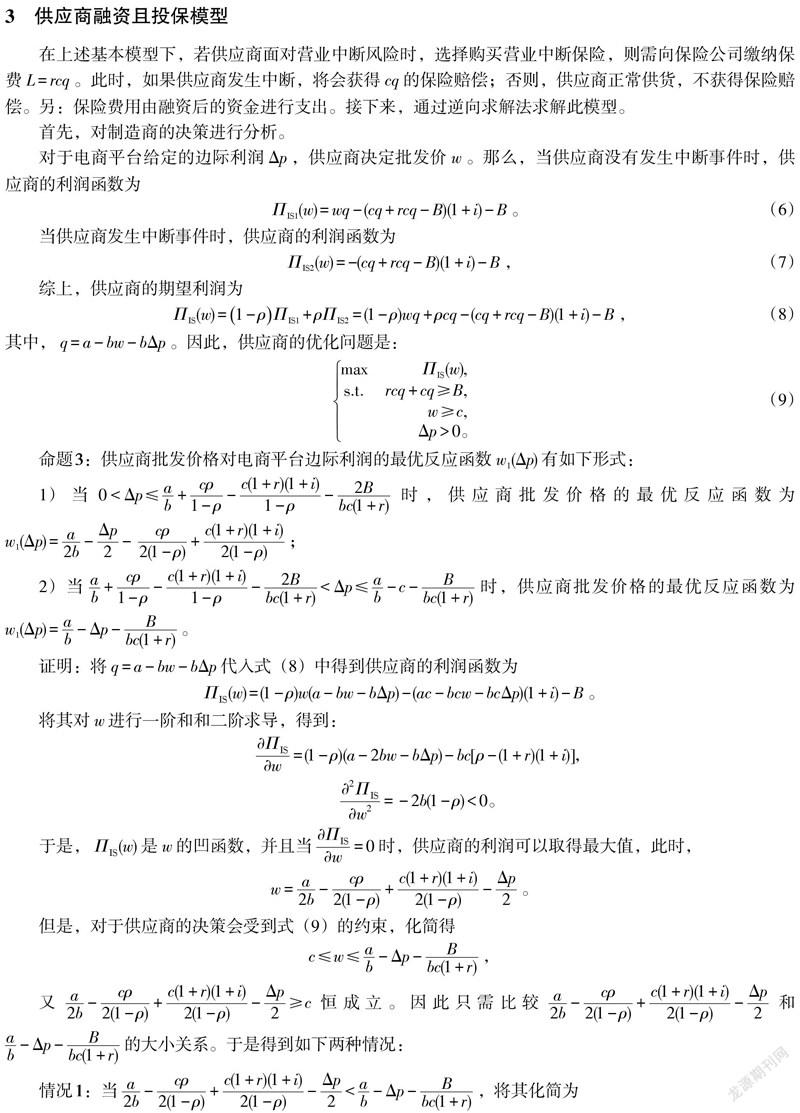
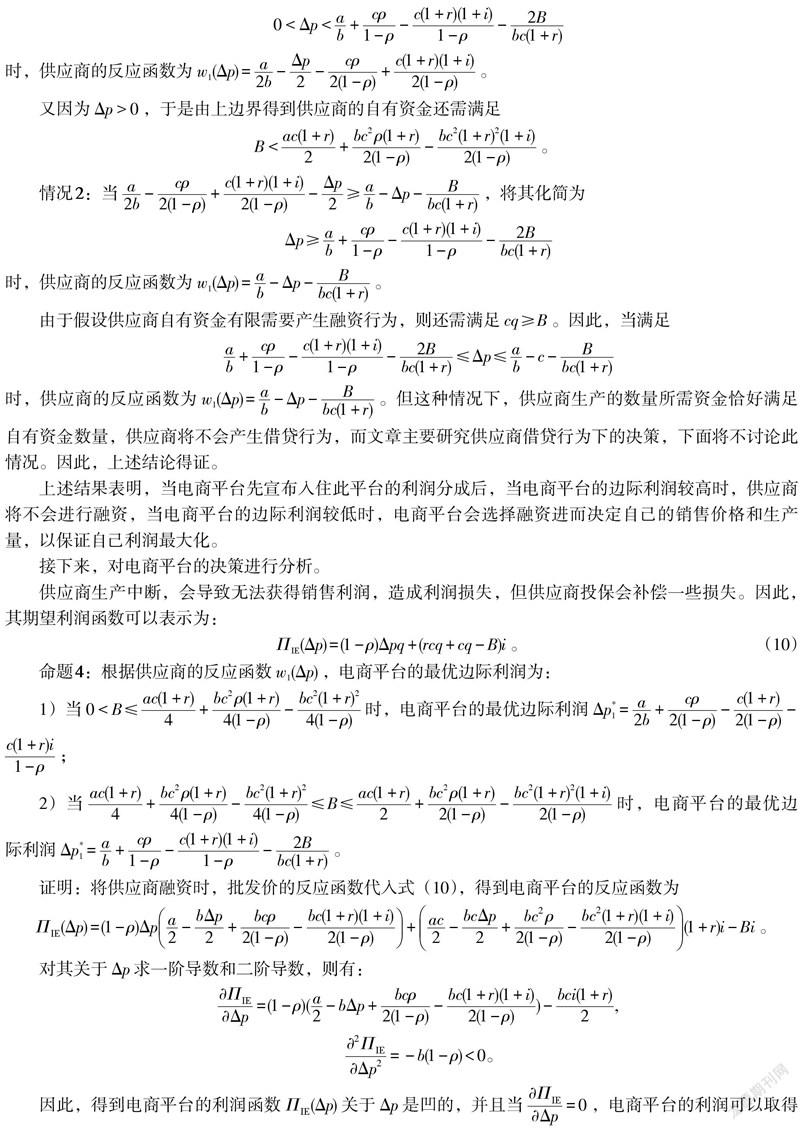
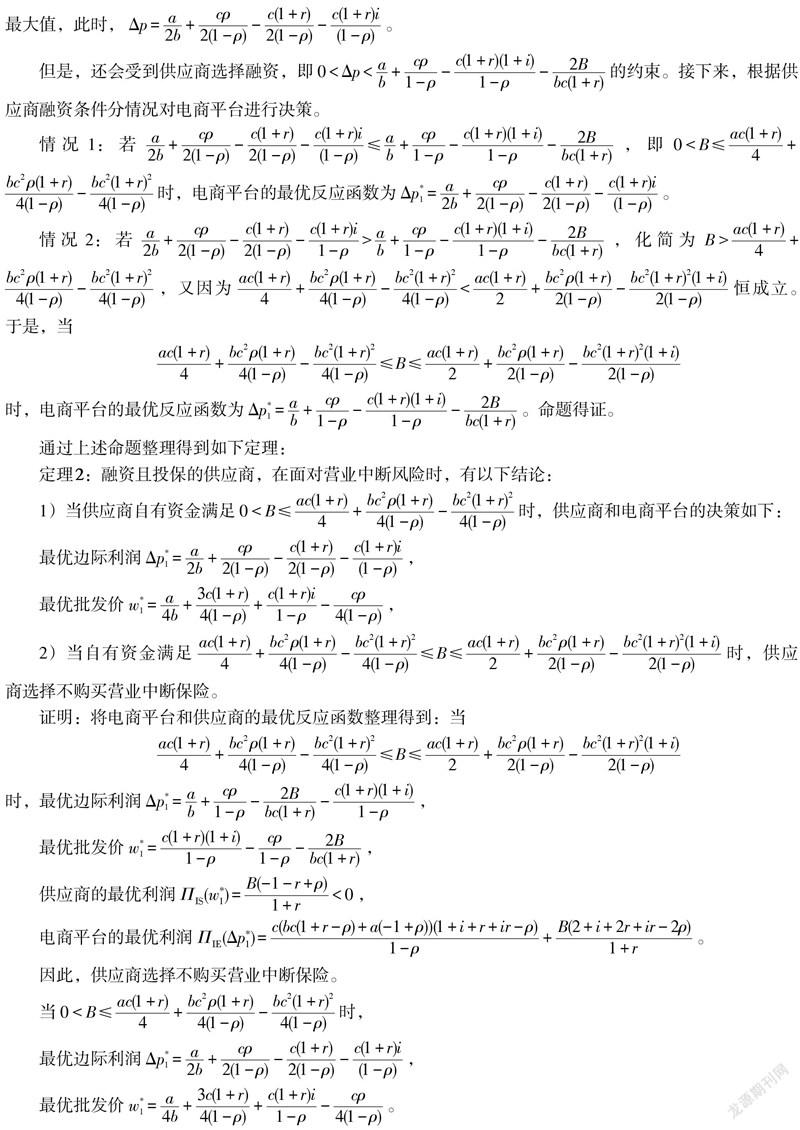

摘要 营业中断和资金不足是很多中小企业经营过程经常遭遇的困境。同时,中小企业处于供应链竞争中的弱势地位,其决策行为受强势企业影响。针对处于供应链弱势地位且资金受限的供应商面对营业中断风险时,利用Stackelberg博弈分析了供应商购买和不购买营业中断保险时供应链成员的最优决策,并对两种情况进行了对比分析。研究结果表明:供应商自有资金水平影响供应商的选择,当其自有资金水平低时,会选择购买营业中断保险;当其自有资金水平高时,选择不购买营业中断保险;而当供应商自有资金水平处于中等时,供应商的选择又会受到保险费率的影响。并且当保险费率较高时,无论是否购买针对营业中断风险的保险,供应商总是处于亏损状态。当保险费率较低时,供应商会因购买保险增加成本而纠结。
关 键 词 营业中断保险;资金约束;供应链;Stackelberg博弈;中小企业
中图分类号 F272 文献标志码 A
文章编号:1007-2373(2021)06-0056-13
Abstract Business interruption and lack of funds are the difficulties that many small and medium enterprises (SMEs) often encounter in the business process. At the same time, SMEs are in a weak position in the supply chain competition, and their decision behaviors are affected by strong enterprises. This paper uses Stackelberg game to analyze the optimal decisions of supply chain members when the supplier is in a weak position in the supply chain with limited capital and faces the risk of business interruption, and makes a comparative analysis about the two cases. The results show that the level of the supplier’s own capital affects his choice. When the level of own capital is low, he will choose to buy business interruption insurance; when the level of his own capital is high, he chooses not to buy business interruption insurance; when the level of his own capital is medium, his choice will be affected by the insurance premium rate. And when the premium rate is high, the supplier is always at a loss regardless of whether to buy the insurance. When the premium rate is low, the supplier will be entangled by the increased cost of the insurance.
Key words business interruption insurance; capital constraint; supply chain; Stackelberg game; small and medium enterprises
0 引言
隨着网络信息快速发展,市场信息更新快速、市场需求变化多样、市场竞争剧烈,上下游企业关系更加密切,供应链更加复杂。一旦正常活动发生意外中断,将导致供应链企业原材料或零部件及产品的供应中断而未能如约供应货物或服务,造成企业无法正常运营遭受巨大的损失。如2020年初,新型冠状病毒肺炎疫情引起全球许多汽车零部件供应链中断,导致中国汽车制造业在第一季度产量削减约15%。……
登录APP查看全文
猜你喜欢
今日农业(2021年14期)2021-11-25 23:57:29
当代水产(2021年4期)2021-07-20 08:10:42
疯狂英语·新读写(2020年3期)2020-06-06 09:06:16
当代水产(2019年7期)2019-09-03 01:02:08
建材发展导向(2019年10期)2019-08-24 06:26:16
艺术品鉴证.中国艺术金融(2018年12期)2018-08-26 06:03:46
中国船检(2017年3期)2017-05-18 11:33:14
湖南农业(2016年3期)2016-06-05 09:37:36
福建质量管理(2016年3期)2016-03-22 03:01:59
现代企业(2015年2期)2015-02-28 18:45:07