疫情防控背景下北京城市文化活动供需的时空分布特征
2021-02-22 06:58:45孙源涵刘永乐张景秋
北京联合大学学报
2021年1期
关键词:文化活动
孙源涵 刘永乐 张景秋
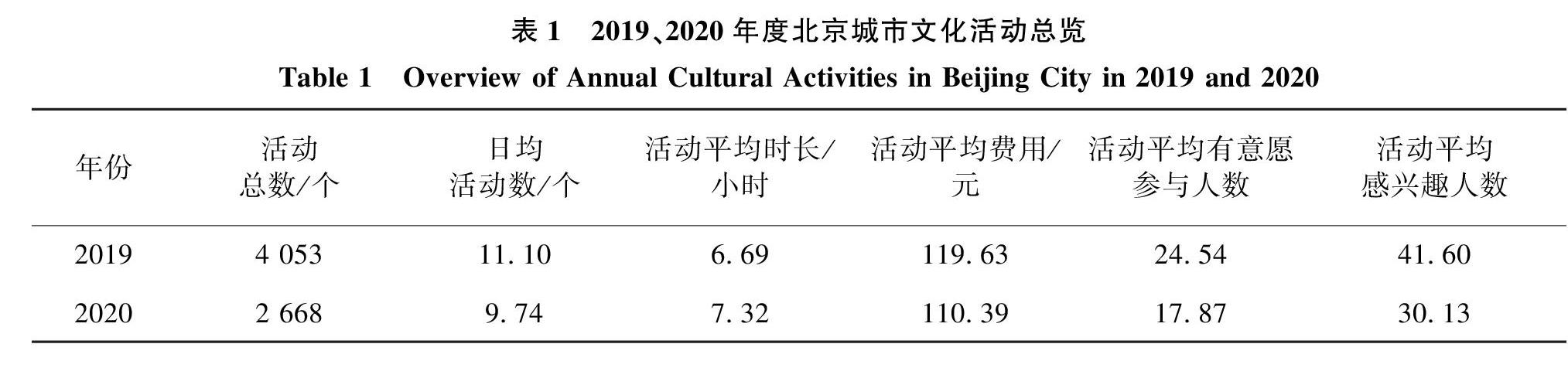
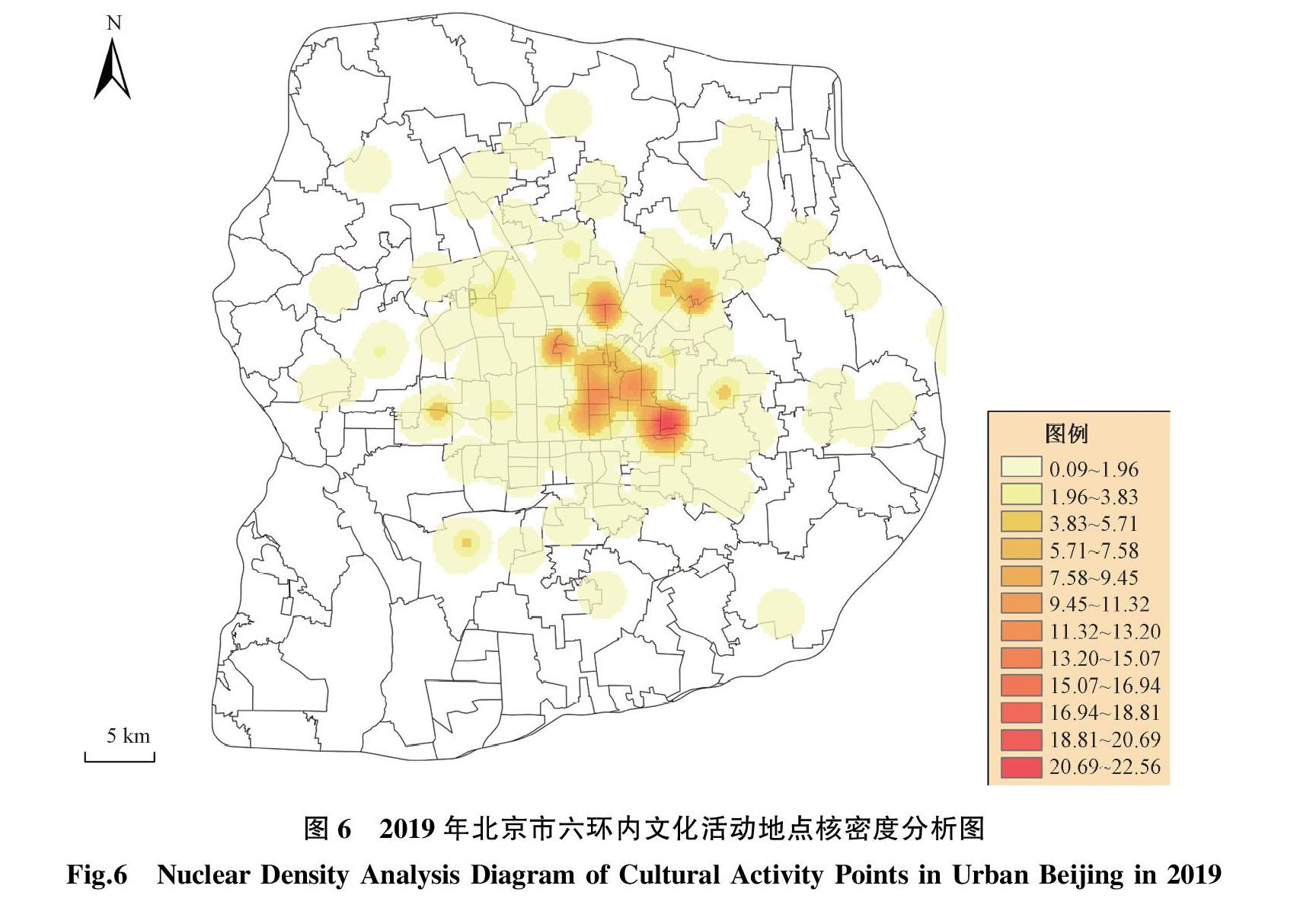
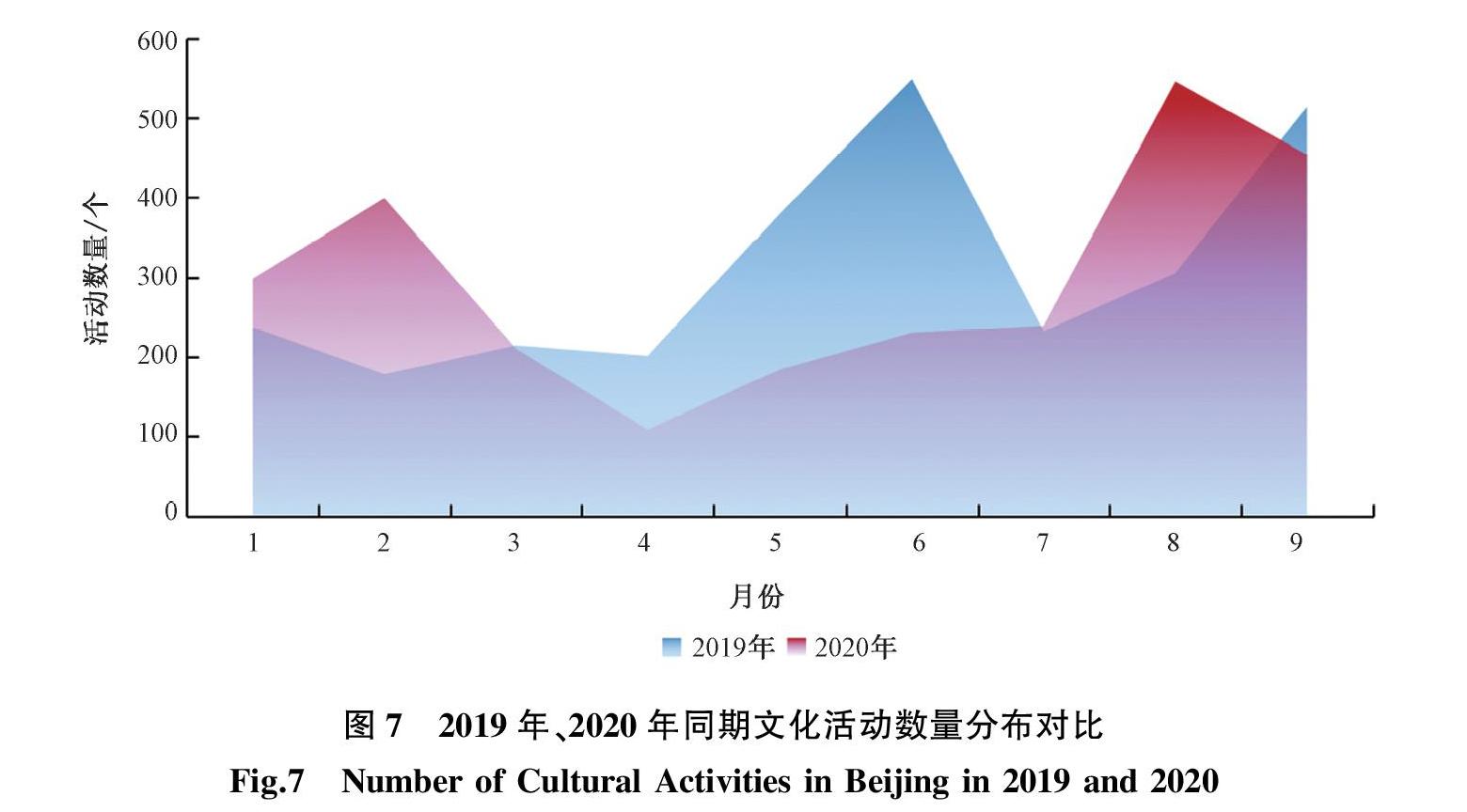
[摘要]随着人民对美好生活的追求,文化活动逐渐成为居民日常生活中的重要组成部分。利用豆瓣网公布的北京市文化活动信息数据,运用统计分析、核密度分析方法,对比分析北京2019年和2020年城市文化活动供需的时空特征,研究发现:1)北京城市文化活动举办较为集中在6月、9月和12月,从日间时段分布来看,一日内10时、14时和19时为文化活动举办高峰;2)文化活动举办场所与公共文化设施分布存在一定程度的空间错位;3)重大公共卫生事件对城市文化活动供需的影响主要表现为对文化活动类型的影响,时间上受事件自身规律的影响,空间上则呈现一定范围的收缩。
[关键词]文化活动;时空分布;供需特征;城市韧性
[中图分类号]G 127.1[文献标志码]A[文章编号]10050310(2021)01001010
A Study of Spatial and Temporal Characteristics of Supply and
Demand of Cultural Activities in Beijing City under the
Prevention and Control of Covid19
Sun Yuanhan,Liu Yongle,Zhang Jingqiu
(College of Applied Arts and Science,Beijing Union University,Beijing 100191,China)
Abstract: With people′s pursuit of a better life, cultural activities have gradually become an important part of residents′ daily life. The spatial and temporal characteristics of supply and demand of Beijing′s urban cultural activities in 2019 and 2020 are compared and analyzed by using the methods of statistical analysis and nuclear density analysis, and the data about the Beijing′s cultural activities information published by Douban.com. The results show that 1) Cultural activities in Beijing are mainly held in June, September and December. From the perspective of day time distribution, cultural activities are held at 10, 14 and 19 o′clock in a day; 2) There is a certain degree of spatial dislocation between the venue of cultural activities and the distribution of public cultural facilities; 3) The impact of major public health events on the supply and demand of urban cultural activities is mainly manifested in the impact on the types of cultural activities. The time is affected by the law of the event itself, and the space shows a certain extent of contraction.
Keywords: Cultural activities; Spatial and temporal distribution; Supplydemand characteristics; Urban resilience
0引言
隨着中国特色社会主义进入新时代,我国社会主要矛盾已经转化为人民日益增长的美好生活需要和不平衡不充分的发展之间的矛盾。城乡居民对文化生活的需求成为美好生活追求中不可缺少的一部分,居民日常生活中的文化休闲活动明显增多,对文化活动的关注与参与度也逐渐提高。
自20世纪80年代开始,中国学者对城市文化研究日益关注。一方面,学者对北京、深圳、上海和广州等地文化设施研究表明,中国大部分城市文化设施的分布都呈现出中心高度集聚,且不同区域之间存在各自特点[15],其影响因素聚焦在人口密集程度、交通便利程度以及经济发展水平等[57]。……
登录APP查看全文
猜你喜欢
科学与财富(2016年29期)2016-12-27 09:50:33
博览群书·教育(2016年9期)2016-12-12 13:55:28
艺术评鉴(2016年15期)2016-11-29 10:29:07
考试周刊(2016年62期)2016-08-15 14:30:01
现代经济信息(2016年10期)2016-05-24 22:40:58
青年文学家(2015年27期)2016-05-09 15:38:45