Module 3 The Violence of Nature
2021-03-18 01:04:27
时代英语·高一
2021年1期
关键词:经验
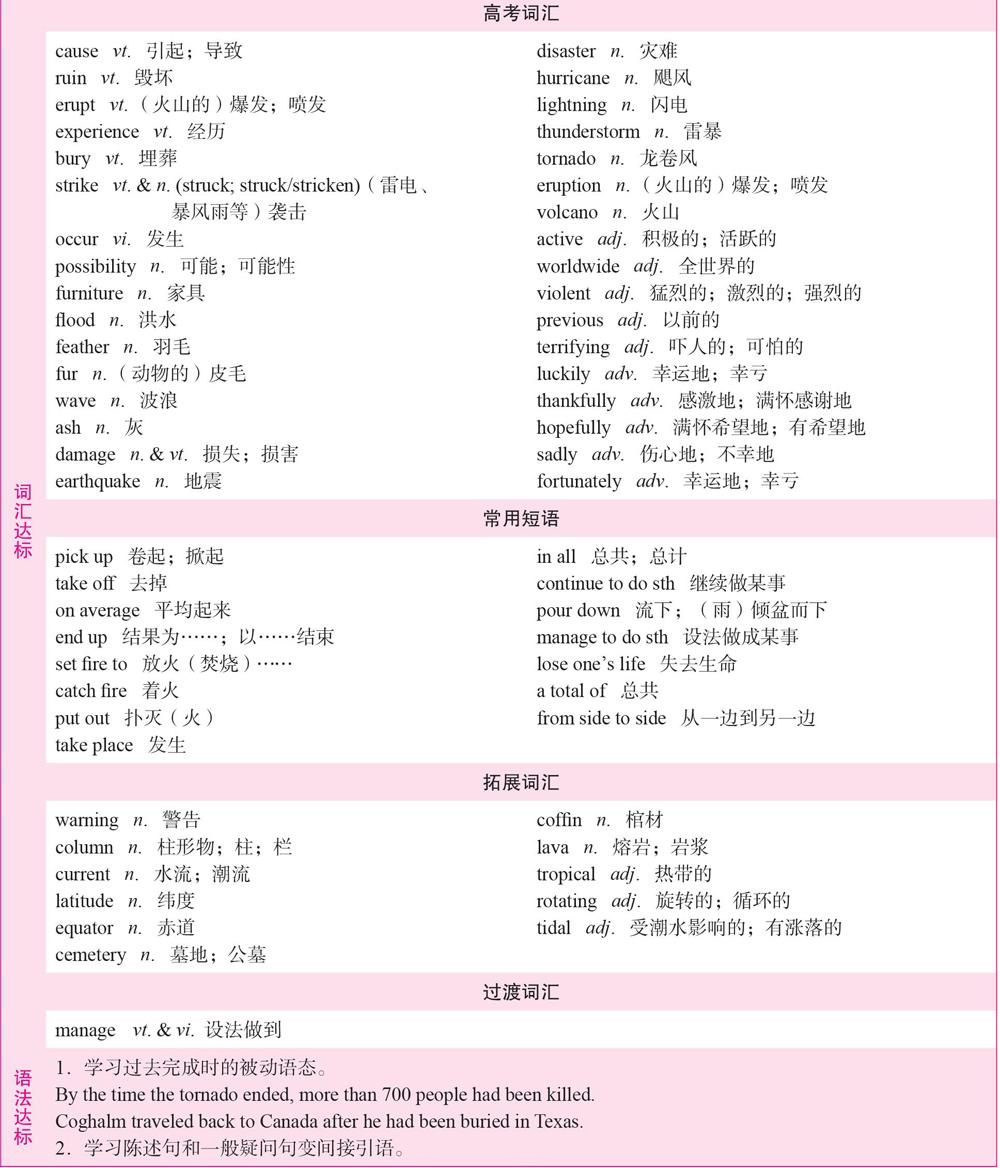

词汇短语园地
1. experience n. 经历;体验;感受;遭受
vt. 经历;通过亲身经历认识到;体验到
(1) vt. 经历;体验,后面常接名词或代词作宾语。
Have you ever experienced real hunger?
你体验过真正的饥饿吗?
Our country has experienced great changes in the past ten years.
在过去的十年里,我们的国家经历了巨大的变化。
(2) n. 经历;经历的事(可数);
经验;体验(不可数),其后常跟介词in。
a common experience 共同的经历
childhood experiences 儿时的经历
I have an unusual experience.
我有一段不寻常的经历。
She has no experience in cooking.
她没有下厨的经验。
I know it from experience.
我根据经验了解此事。
(3) experienced adj.有经验的;熟练的,常与in,at连用。
She has become quite experienced at/in teaching primary school students.
她教小学生已经很有经验了。
2. cause vt. 引起;导致
n. 原因;起因
The childs headache may be caused by stress.
那孩子的头痛可能是压力引起的。
Im sorry to have caused you so much inconvenience.
给你造成的诸多不便,我很抱歉。
These causes led to a bad result.
这些原因导致了不良的后果。
I dont think you have cause to worry.
我认为你没有担心的理由。
比较:cause,excuse,reason的区别
(1) cause指造成某现象、某结果的直接原因,常与effect连用。
Can you tell me the cause and effect of it?
你能不能告诉我它的前因后果?
(2) excuse多指借口,用来推卸责任。
I will not listen to any excuse.
我不会听任何借口。
(3) reason指通情达理、合乎情理地解释某事或某现象的理由。
My reason is that the cost will be too high.
我的理由是费用会很高。
3. occur vi. 发生
I hope this wont occur again.
我希望不要再发生这种事情。
比较:occur,take place,happen,break out的区别
(1) occur是比较正式的用语,可用于具体或抽象的事件,在表示具体的事件时,可与happen换用。
Im afraid that this would occur during my absence.
= Im afraid that this would happen during my absence.
恐怕这事会在我不在时发生。
但是,如果表示“某想法”出现在人的头脑之中,这时不能用happen代替。
Just then a bright idea occurred to me.
那时,我想到一個好主意。
(2) take place通常指某事按计划进行或发生。
The Olympic Games of 2016 took place in Rio de Janeiro.
2016年奥运会在里约热内卢举行。
(3) happen常指具体事件的发生,特别指那些偶然的或未能预见的“发生”。happen还可表示“碰巧;恰好”之意。
New things are happening all around us.
我们身边总有新鲜事发生。
It happened that I had no money on me.
我刚好没钱了。
(4) break out表示战争、火灾、疾病、争吵等的爆发。
A big fire broke out last night.
昨晚发生了一场严重的火灾。
4. strike v. 打;击;撞;触(礁);(钟)敲响;擦
登录APP查看全文
猜你喜欢
党课参考(2023年5期)2023-03-18 01:17:10
党课参考(2023年4期)2023-03-17 02:50:48
党课参考(2021年20期)2021-11-04 09:39:46
小天使·四年级语数英综合(2019年3期)2019-05-08 23:53:48
小哥白尼(军事科学)(2019年6期)2019-03-14 05:49:56
党课参考(2018年20期)2018-11-09 08:52:36
中国蜂业(2018年6期)2018-08-01 08:51:14
中国市场(2016年12期)2016-05-17 05:10:39
都市丽人(2015年4期)2015-03-20 13:33:22
中医研究(2013年1期)2013-03-11 20:26:25