移动端用户行为特征识别研究
2021-03-24 09:56:14杨帆
软件工程
2021年3期
杨帆
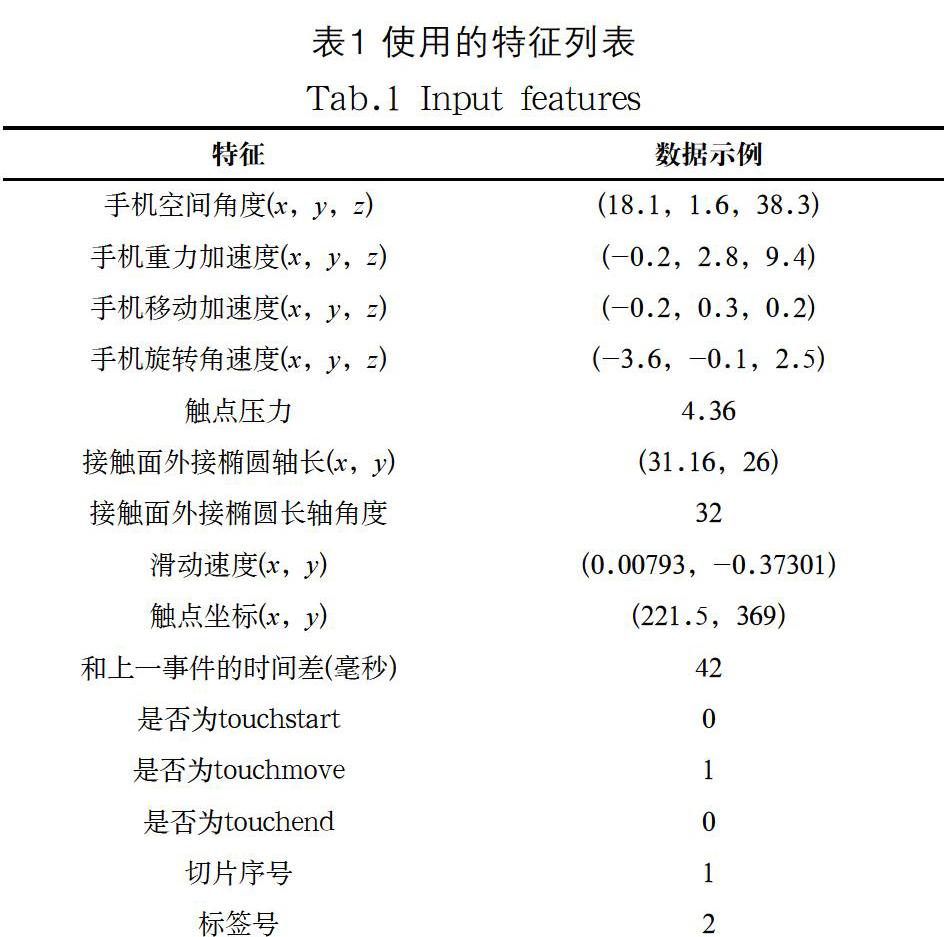
摘 要:随着移动互联网的高速发展,智能手机已经成为人们社交、支付、出行、娱乐等活动中不可或缺的工具。而一旦手机被盗用,用户的各类应用账户都可能被无限制地访问,继而导致身份冒用、隐私泄露、财产损失等严重后果。本文提出一种在移动端采集用户行为特征,并通过神经网络建模的识别方法,通过收集手机的倾斜角度、移动速度、加速度,以及用户点击、滑动屏幕的力度、速度、触点形状、面积等数据,验证设备是否被他人盗用。这种身份验证技术具有难以窃取和伪造、验证流程用户无感知、隐私性好等优点。
关键词:行为生物识别;身份验证;移动互联网;卷积神经网络
中图分类号:TP311.52 文献标识码:A
Abstract: With the rapid development of mobile Internet, smart phones have become an indispensable device in social activities, payments, travelling, entertainment and other activities. Once the mobile phone was stolen, the user's various application accounts might be accessed without restrictions, leading to serious consequences such as identity fraud, privacy leakage, and property loss. This paper proposes a recognition method that collects user behavior features on mobile terminals and uses neural network modeling. Data, such as tilt angle, movement speed, acceleration speed, as well as force, speed, shape and area of touchpoints, are collected to verify whether the device is stolen by others. This kind of identity verification technology has the advantages of being stealing and forgery resistant, undisturbed and privacy-friendly.
Keywords: behavioral biometrics; identity verification; mobile Internet; convolutional neural network
1 引言(Introduction)
目前,各类移动端应用为防止账户盗用,使用了多种身份认证技术,如数字密码、图形密码、短信验证码、指纹识别、人脸识别等,但这些身份验证方法均各自存在一些不足之处。首先,短信验证码在盗用者解锁手机之后就无法起到保护作用;数字和图形密码容易被猜测,其中图形密码还能够通过分析屏幕上残留的手指痕迹被攻破[1];指纹和人脸识别一方面需要手机硬件支持,另一方面依赖用户的唯一生物信息,容易引起对个人隐私的担忧,如最近一份关于个人信息使用的调查中显示,六成受访者认为人脸识别技术有滥用趋势[2]。本文中,我们研究了在移动端采集用户行为特征进行身份验证的方案:通过用户使用手机时的握持方式、运动方式、屏幕点击习惯等信息,进行神经网络建模,验证设备使用者的身份。……
登录APP查看全文