
川崎病患儿血小板聚集率与冠脉损伤的相关性研究
2021-05-06 19:28:09魏苗苗吕临静
中国医学创新
2021年9期
魏苗苗 吕临静
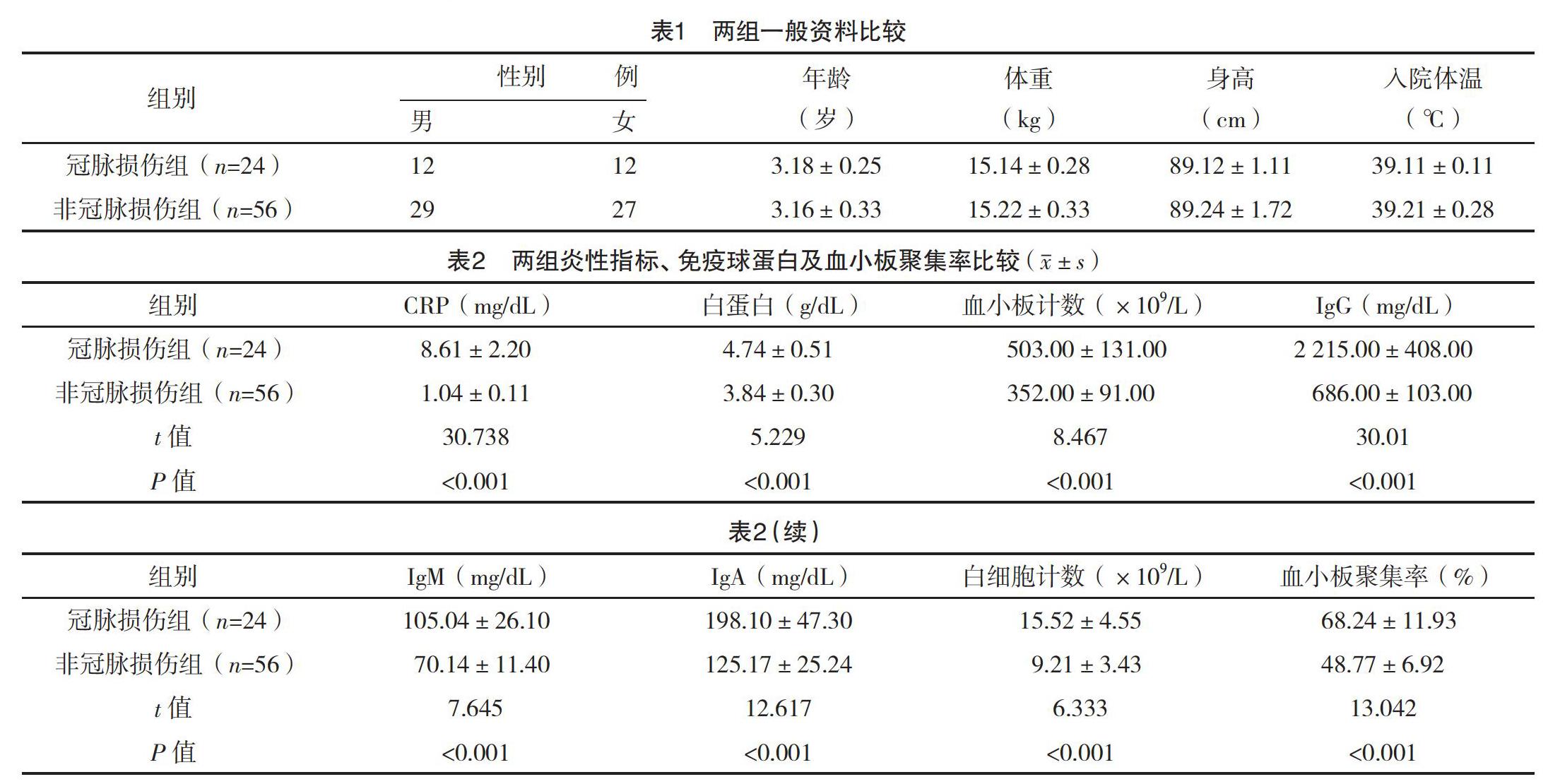

【摘要】 目的:探讨川崎病患儿血小板聚集率与冠脉损伤的相关性。方法:选取2019年1月-2020年5月本院诊治的川崎病患儿80例,将根据其治疗期有无发生冠脉损伤分为冠脉损伤组与非冠脉损伤组。比较两组入院时炎症因子、免疫球蛋白与血小板聚集率,并分析上述各指标与冠脉损伤的相关性。结果:80例患儿中,发生冠脉损伤24例,发生率为30.0%。冠脉损伤组白细胞计数、CRP、血小板聚集率、白蛋白、血小板计数、白细胞计数、IgG、IgA及IgM均高于非冠脉损伤组(P<0.05)。冠脉损伤与血小板聚集率、血小板计数、IgG、CRP及白细胞计数均呈正相关(P<0.05),其中血小板聚集率与血小板计数相关性最强。结论:血小板聚集率与川崎病患儿的冠脉损伤呈正相关,对冠脉损伤具有一定的预测价值,为早期干预提供理论依据。
【关键词】 血小板聚集率 川崎病 冠脉损伤
[Abstract] Objective: To explore the correlation between platelet aggregation rate and coronary artery damage in children with Kawereaki disease. Method: A total of 80 children with Kawasaki disease diagnosed and treated in our hospital from January 2019 to May 2020 were selected. They were divided into coronary artery injury group and non-coronary artery injury group according to whether coronary artery injury occurred during the treatment period. The inflammatory factors, immunoglobulin and platelet aggregation rates at admission were compared between two groups, and the correlation between the above indexes and coronary artery injury were analyzed. Result: Among 80 cases, coronary artery injury occurred in 24 cases (30.0%). The white blood cell count, CRP, platelet aggregation rate, albumin, platelet count, white blood cell count, IgG, IgA and IgM in the coronary artery injury group were higher than those in the non-coronary artery injury group (P<0.05). Coronary artery injury were positively correlated with platelet aggregation rate, platelet, IgG, CRP and white blood cell count (P<0.05), and platelet aggregation rate had the strongest correlation with platelet count. Conclusion: The platelet aggregation rate is positively correlated with coronary artery injury in children with Kawasaki disease, which has a certain predictive value for coronary artery injury, and provides a theoretical basis for early intervention.
[Key words] Platelet aggregation rate Kawereaki disease Coronary artery injury
First-authors address: Huizhou First Peoples Hospital, Huizhou 516000, China
doi:10.3969/j.issn.1674-4985.2021.09.030
川崎病(Kawasaki disease,KD)又称皮肤黏膜淋巴结综合征(mucocutaneous lymph node syndrome,MCLS)是一种好发于学龄前儿童的自身免疫性血管炎性疾病,近年来研究显示川崎病与病毒感染相关[1]。该病的主要病理改变为全身性血管炎,临床症状包括颈部非化脓性淋巴结肿大、球结膜充血、长时间发热等[2]。川崎病可增加患儿出现冠脉损伤的槪率,导致机体出现冠状动脉瘤、冠状动脉扩张甚至冠状动脉血栓性闭塞等,已成为我国小儿后天性心脏病的主要病因[3]。冠脉损伤的具体发病机制还不明确,不过血栓形成是心血管疾病形成的主要机制之一,血小板聚集率越高,越易形成血栓致心血管疾病[4-5]。并且血小板聚集功能检测具有易于开展、简便、经济等优势,可常規用于冠心病患者的常规筛查。但是当前临床上对血小板检测方法比较多样,血小板功能检测标准缺少统一化,血小板聚集率是否作为预测川崎病的预后与进行病情判断尚待研究[6-7]。……
登录APP查看全文
