基于性能的屈曲约束支撑与黏滞阻尼器组合减震结构设计方法
2021-07-11 11:12:48吴克川陶忠潘文王林
土木建筑与环境工程
2021年3期
吴克川 陶忠 潘文 王林


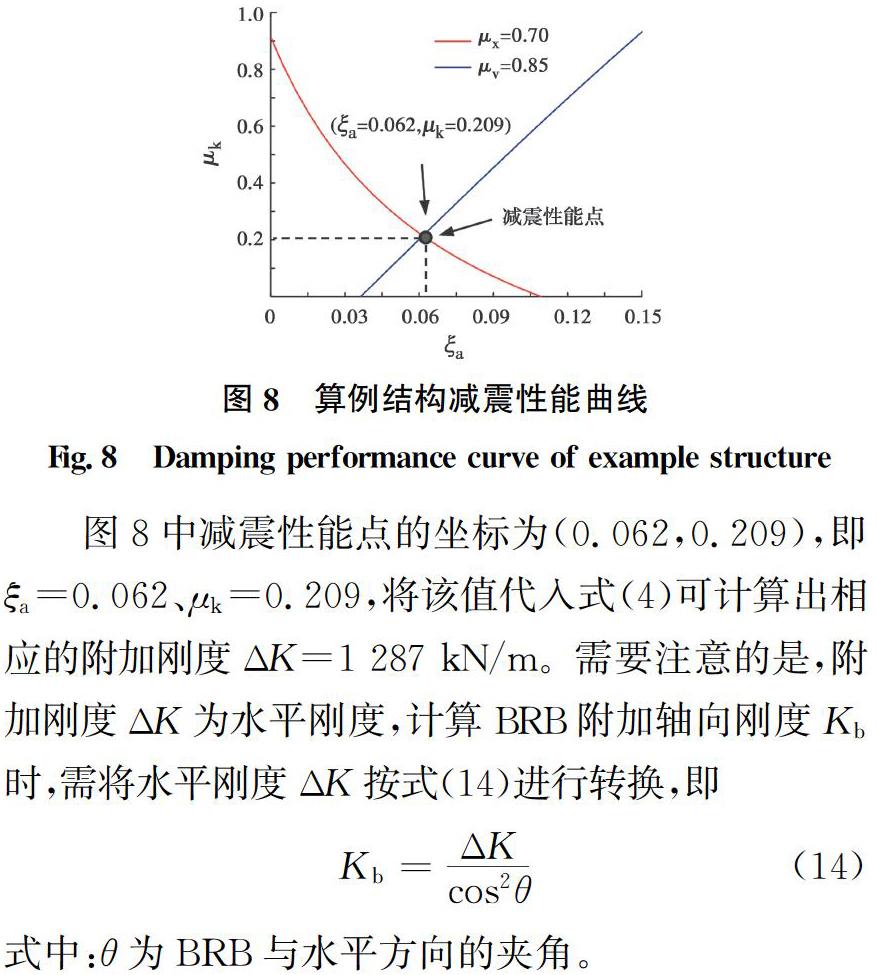
摘 要:基于结构自振周期及阻尼比变化对结构地震作用的影响规律,推导屈曲约束支撑(BRB)与黏滞阻尼器(VD)组合减震结构单自由度体系位移降低率及地震剪力降低率计算公式,绘制组合减震结构在目标位移降低率及目标剪力降低率下的减震性能曲线,提出基于性能的组合消能减震设计方法,采用工程算例验证该设计方法的有效性,并提出组合减震设计方法在多自由度体系中的简化应用模式。结果表明:当目标位移降低率及目标剪力降低率确定时,结构存在唯一减震性能点,合理设计下,组合减震结构可同时取得较好的位移及地震剪力减震控制效果,用该设计方法得到的算例结构实现了设定的减震目标,质量和刚度沿高度均匀分布的多自由度体系组合减震设计可采用该基于一阶振型的简化应用方法。
关键词:屈曲约束支撑;黏滞阻尼器;组合减震;位移降低率;剪力降低率
中图分类号:TU352.1;TU311.41 文献标志码:A 文章编号:2096-6717(2021)03-0083-10
Abstract: Based on the influence rule of the structural natural vibration period and the damping ratio on the seismic excitation of the structure, the calculation formula of displacement reduction rate and seismic shear reduction rate of SDOF system of the combined damping structure with BRB and VD are derived and the damping performance curve of combined energy dissipation structure under target displacement reduction rate and target shear reduction rate is established. In addition, the performance-based combined energy dissipation design method is proposed and the validity is verified with a practical engineering example. The simplified application mode of the combined energy dissipation design method in multi-degree-of-freedom system is proposed. The results show that there exists unique performance point under the case that the target displacement reduction rate and target shear reduction rate are determined, and the combined damping structure could achieve excellent displacement response and seismic shear reduction control effects if designed reasonably. The calculation example structure designed according to the design method achieves the expected damping target. The simplified application method based on the first-order mode can be used for the combined seismic design of multi degree of freedom system with uniformly distributed mass and stiffness along the height.
Keywords:buckling restrained brace; viscous damper; combined energy dissipation; displacement reduction rate; shear reduction rate
消能減震技术[1]是指在建筑结构的特定部位设置消能装置,通过该装置吸收、耗散输入结构的振动能量,从而减小结构的地震反应。消能装置根据不同的工作原理可分为位移型消能器和速度型消能器[2],其中,屈曲约束支撑(buckling restrained brace,BRB)与黏滞阻尼器(viscous damper,VD)分别为位移型消能器和速度型消能器的典型代表。目前,工程中应用消能减震技术时,大多采用单一类型阻尼器进行结构抗震设计[3-6],而对组合使用BRB和VD减震技术的研究则较少。……
登录APP查看全文