标准化督导模式在医院重点专科建设中的应用
2021-09-10 04:43:49王雪婷周文杰马智群胡红艳刘学英
医学前沿
2021年6期
关键词:标准化
王雪婷 周文杰 马智群 胡红艳 刘学英
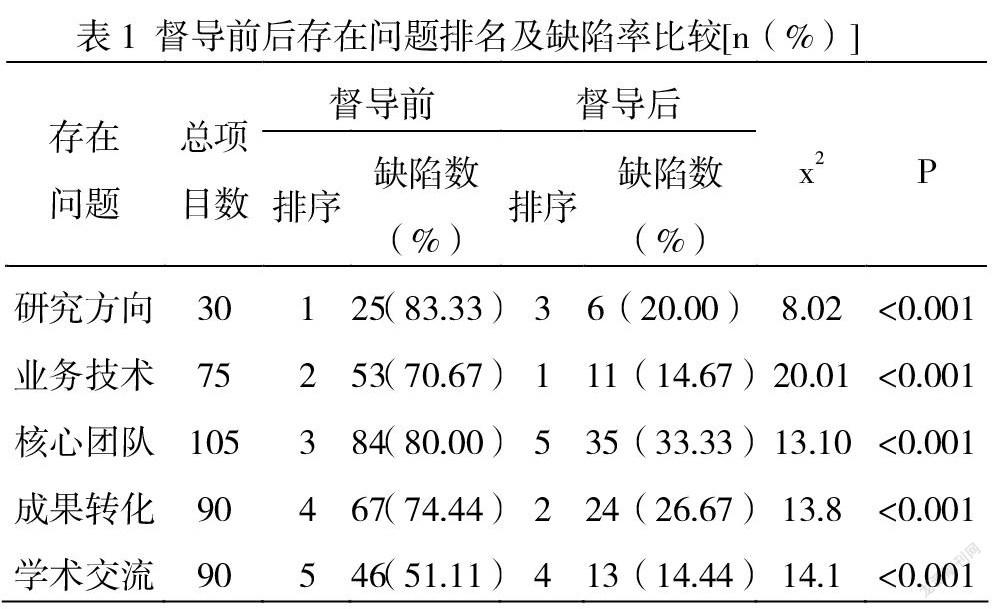
摘要:目的 探讨标准化督导模式在医院重点专科建设中的效果。 方法 通过标准化督导模式收集15个省级重点专科督导前后资料,对比各重点专科二级指标前后得分平均值和缺陷数。结果 存在问题前五位的二级指标缺陷率明显下降(P<0.05)。结论 标准化督导模式能深化重点专科科室对省级重点专科评价指标体系的理解和认识,提高评审通过率。
关键词:标准化;现场督导;重点专科;
[Abstract] Objective To explore the effect of standardized supervision mode on the construction of key specialties in hospitals. Methods Through the standardized supervision mode, data of 15 provincial key specialties in hospitals were collected and compared before and after the supervision of key specialties. Results The defect rate of the top five secondary indexes with problems was significantly decreased (P < 0.05). Conclusions Standardization supervision mode can deepen the understanding and understanding of the evaluation index system of provincial key specialty departments and improve the passing rate of the evaluation.
[Key words] standardized; Site supervision; Key specialty
學科建设是医院发展的核心动力,也是医院品牌、质量、管理水平的体现[1]。标准化是进行质量管理的依据和基础[2]。由于医院学科建设的发展主要以重点专科数量为衡量目标,对于学科发展的科研能力、业务技术等内涵质量方面缺乏有效的对比评估,导致某些学科建设目标定位不清、层次不明、品牌学科优势不显著[3]。标准化督导模式是一种全新的模式,主要通过三个阶段开展,分别是培训阶段、自评阶段和督导反馈阶段,培训阶段是由科教部对重点专科进行培训,采取一对一的督导方式,针对各科室建设中遇到的问题进行有针对性解答;自评阶段是各科室根据培训情况在自评表上写出得分理由和实际得分情况,并在规定时间内提交到科教部,科教部看后进行评判,然后反馈给各科室,指导各科室针对具体问题制定相对应的重点专科项目建设计划;督导反馈阶段主要是科教部到各科室进行督导并且反馈情况的过程。……
登录APP查看全文
猜你喜欢
电器工业(2023年1期)2023-02-13 06:31:42
口腔护理用品工业(2021年4期)2021-11-02 08:22:56
机械工业标准化与质量(2018年5期)2018-05-30 09:48:17
中国公路(2017年9期)2017-07-25 13:26:38
水利技术监督(2017年2期)2017-05-17 05:19:25
福建轻纺(2017年12期)2017-04-10 12:56:27
质量与标准化(2015年7期)2015-07-12 12:21:02
汽车维修与保养(2015年8期)2015-04-17 03:32:51
石家庄理工职业学院学术研究(2014年4期)2014-04-27 14:14:40
中国质量与标准导报(2014年9期)2014-02-28 22:25:45