
干燥方式对槟榔理化特性和抗氧化能力的影响
2021-09-14 14:28:54袁源刘洋洋龚霄周伟李积华
热带作物学报
2021年8期
袁源 刘洋洋 龚霄 周伟 李积华
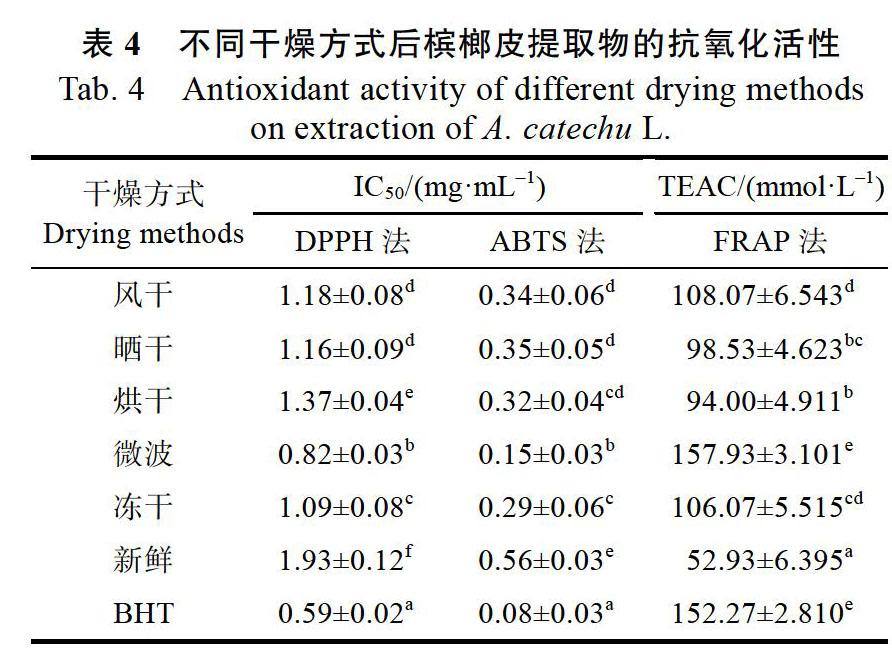
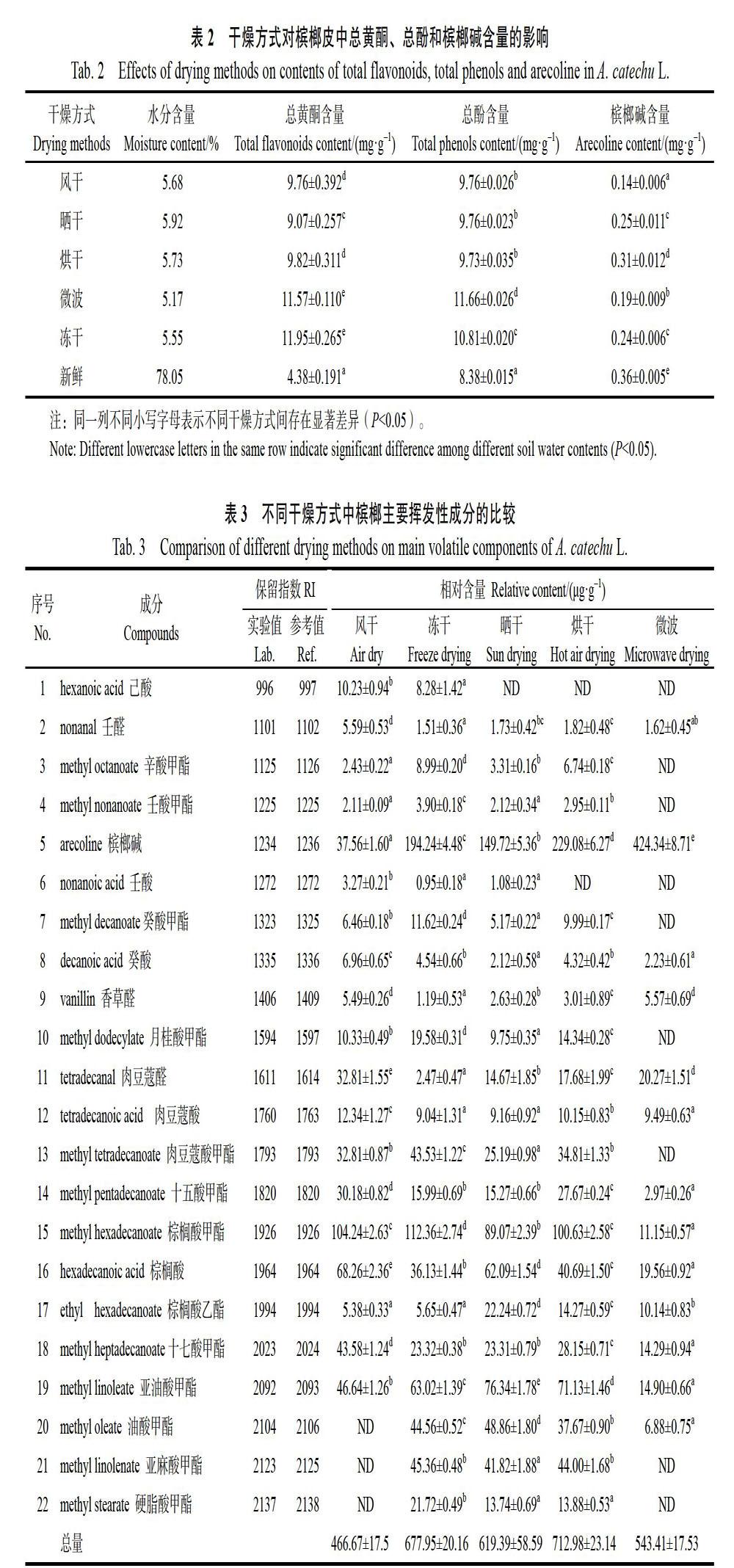

摘 要:本研究以槟榔为对象,采用色差、气质、液相、紫外等分析手段,研究不同干燥方法对槟榔外观形态、活性成分和抗氧化能力的影响。结果表明:槟榔的干燥速率与温度呈正相关,最快到达干燥终点的是微波干燥;干燥后槟榔外皮亮度增加,绿色度下降,黄色度提高;槟榔干制品的厚度与干燥温度呈负相关,低温的冻干可基本保持槟榔的厚度;干燥过程中槟榔的硬度出现先下降再上升的趋势,在失水率50%时硬度最低,为后续粉碎工艺提供理论支持;干燥后槟榔的总黄酮、总酚含量均显著高于新鲜青果,抗氧化能力均显著强于新鲜样品;而槟榔碱含量干燥样品均显著低于新鲜样品,因此可推断槟榔的抗氧化能力可能与其总黄酮、总酚含量相关,与槟榔碱无明显相关。不同干燥方式对槟榔的影响明显不同,在生产中应根据实际需求选择不同的干燥方式或复合使用。
关键词:槟榔;干燥;理化特性;抗氧化能力
Abstract: The effects of different drying methods on the appearance, active components and antioxidant capacity of Areca catechu L. were studied by gas chromatography-mass spectrome (GC-MS), high-performance liquid chromatograph (HPLC) and ultraviolet spectrophotometry (UV). The drying rate of areca nuts was positively correlated with temperature, and the fastest drying method was microwave drying. After drying, the brightness of areca nut skin increased, the green degree decreased, and the yellow degree increased. The thickness of dried areca nuts was negatively correlated with the drying temperature, and low-temperature freeze-drying could basically maintain the thickness of areca nut. During the drying process, the hardness of areca nuts decreased first and then increased. The hardness was the lowest when water loss rate was 50%, which provided a theoretical support for the subsequent grinding process. The content of total flavonoids and total phenols in the dried areca nut was significantly higher than those in the fresh, and the antioxidant capacity was significantly stronger than that in the fresh. The content of arecoline in the dried samples was significantly lower than that in the fresh, so it could be inferred that the antioxidant capacity of Areca catechu L. may be related to the content of total flavonoids and total phenols, but not with arecoline obviously. The effects of different drying methods on areca nut were obviously different. Therefore, different drying methods or combined use should be selected according to the actual needs in production.
Keywords: Areca catechu L.; drying; physicochemical properties; antioxidant capacity
檳榔(Areca catechu L.),为棕榈科槟榔属常绿乔木槟榔的果实[1]。其用途广泛,主要用于食用,嚼槟榔是吸烟、饮酒和喝咖啡后,世界上最流行的第四种习惯[2]。槟榔还是重要药用植物之一,其药用历史悠久,始载于三国时期的《药录》;历版《中国药典》均有收载,被列为“四大南药”之首[3-4]。据药监部门统计,我国有220余个药品或方剂含有槟榔及各药用部位。此外,还可用于制作保健、营养食(药)品[5-6]。槟榔在我国主要分布于海南省,其产量约占中国产量的 95%(未含台湾省)[7]。……
登录APP查看全文
