α-1抗胰蛋白酶对缺氧/复氧小鼠心肌细胞凋亡的影响
2021-09-18 10:09:52黄达刘燕黄兰松岑团刘文静潘兴寿黄照河
右江医学
2021年8期
黄达 刘燕 黄兰松 岑团 刘文静 潘兴寿 黄照河
【摘要】 目的 建立小鼠心肌細胞缺氧/复氧模型,观察α-1抗胰蛋白酶(α-1 antitrypsin,A1AT)对小鼠心肌细胞凋亡的影响。
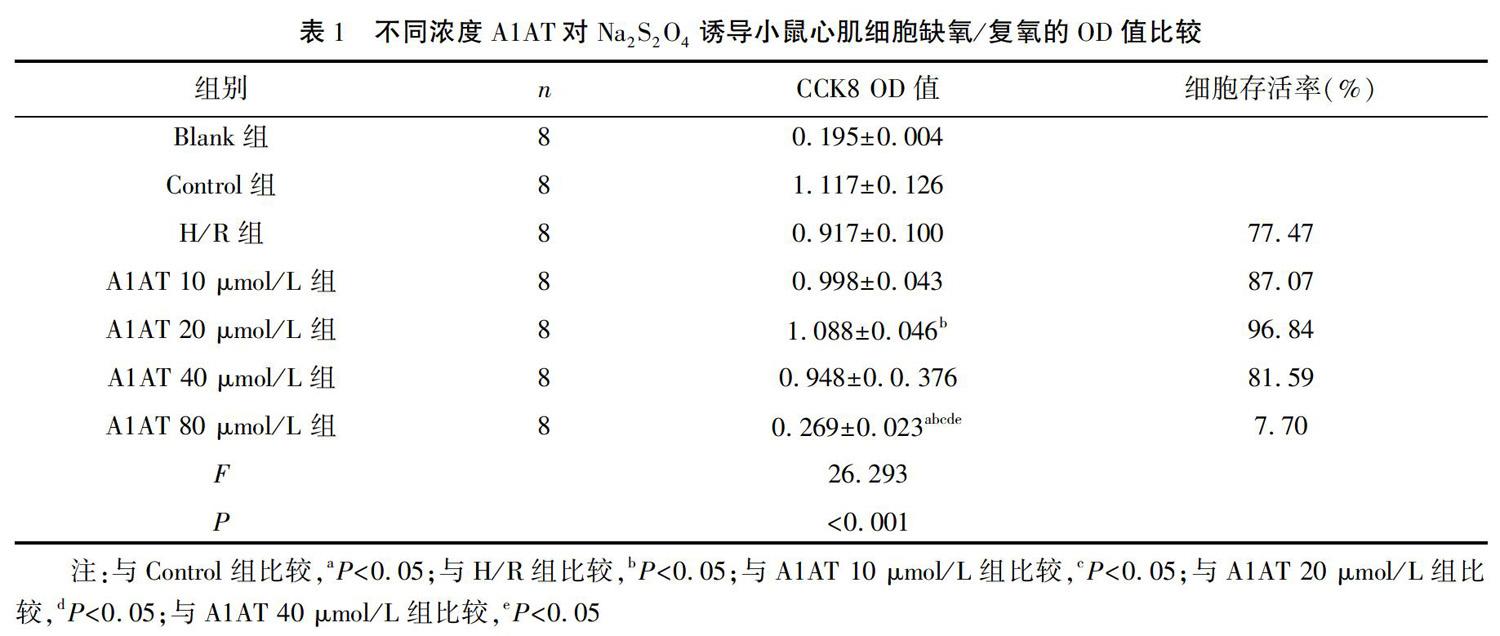
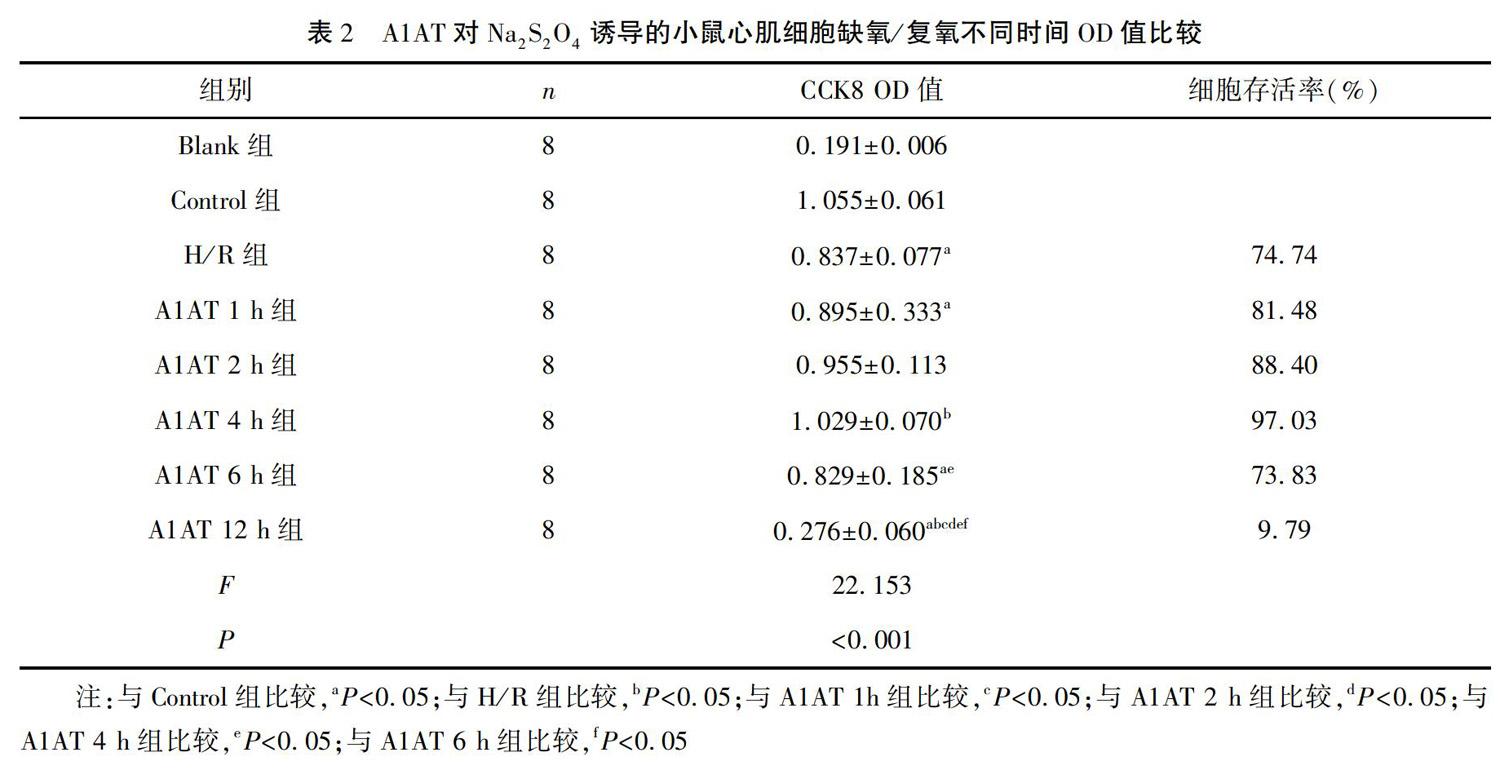
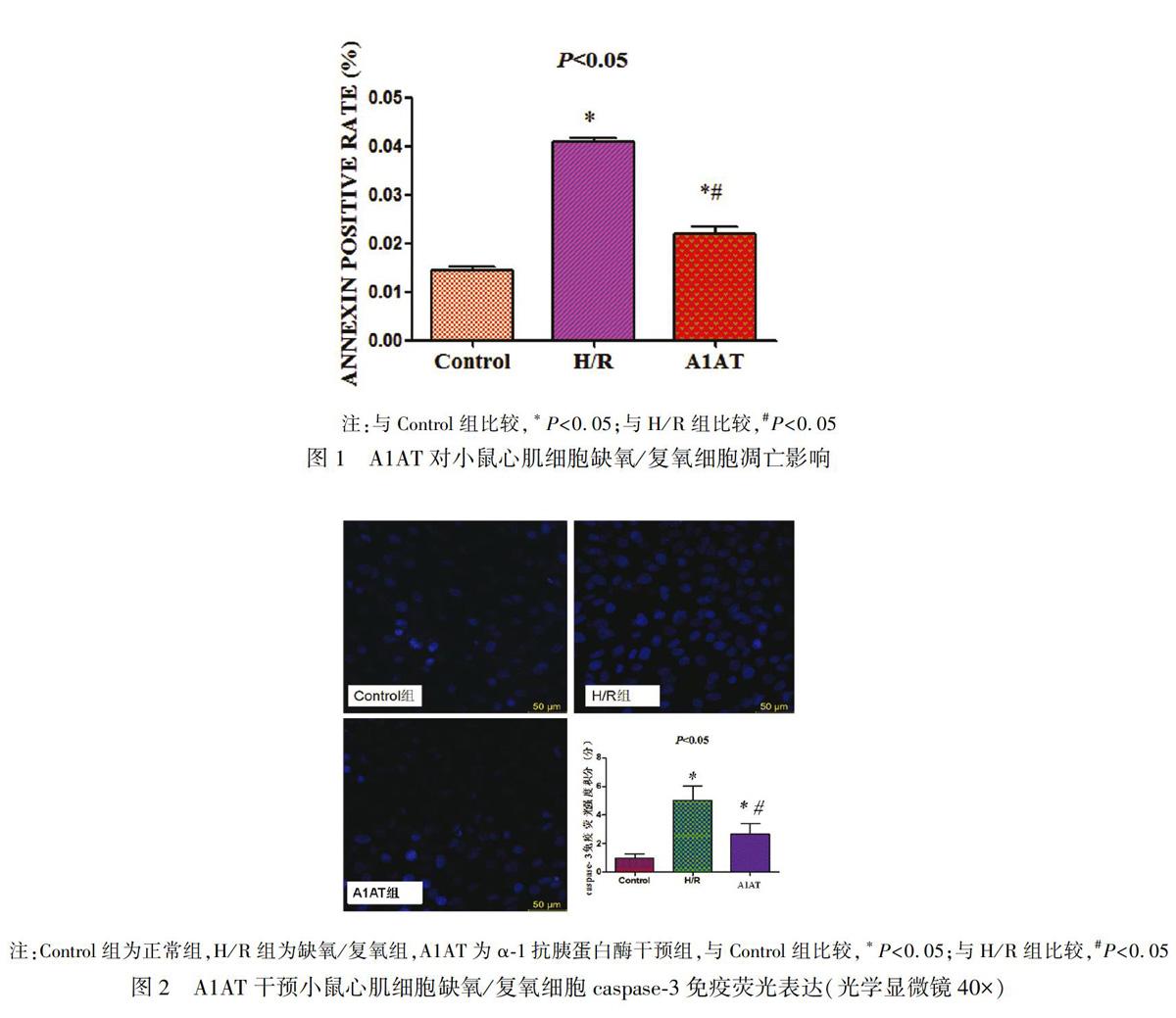
方法 体外采用连二亚硫酸钠(Na2S2O4)4 mmol/L诱导的缺氧培养基培养小鼠心肌细胞,模拟缺氧/复氧模型,并筛选A1AT最佳干预浓度,筛选A1AT最佳干预浓度实验分为7个组:Blank组、Control组、H/R组、A1AT 10 μmol/L 组、A1AT 20 μmol/L 组、A1AT 40 μmol/L 组以及A1AT 80 μmol/L 组。筛选最佳干预时间实验分为8个组:Blank组、Control组、H/R组、A1AT 1 h组、A1AT 2 h组、A1AT 4 h组、A1AT 6 h组及A1AT 12 h组。之后A1AT干预实验分组:正常组(Control组)、缺氧/复氧组(H/R组)、α-1抗胰蛋白酶干预组(A1AT组)。利用CCK-8检测细胞功能、流式细胞仪检测细胞凋亡、免疫荧光及Western Blot 检测caspase-3的表达。并用SPSS 22.0进行数据统计。
结果 A1AT最佳干预浓度为20 μmol/L,最佳干预时间为4小时。流式细胞仪检测发现H/R组细胞凋亡率增加,A1AT组细胞凋亡率明显下降,Control组、H/R组及A1AT组三组比较差异有统计学意义( P <0.05)。免疫荧光检测发现H/R组caspase-3分子表达强阳性,与Control组及A1AT组比较,差异有统计学意义( P <0.05)。Western Blot检测发现H/R组caspase-3蛋白表达上调,与Control组及A1AT组比较,差异有统计学意义( P <0.05)。
结论 α-1抗胰蛋白酶对小鼠缺氧/复氧心肌细胞凋亡具有改善作用。
【关键词】 α-1抗胰蛋白酶;Na2S2O4;缺氧/复氧;凋亡;caspase-3
中图分类号: R363 文献标志码: A DOI: 10.3969/j.issn.1003-1383.2021.08.003
Effects of α-1 antitrypsin on cardiomyocyte apoptosis in hypoxia/reoxygenation mice
HUANG Da, LIU Yan, HUANG Lansong, CEN Tuan, LIU Wenjing, PAN Xingshou, HUANG Zhaohe▲
(Department of Cardiovascular, Affiliated Hospital of Youjiang Medical University for Nationalities, Baise 533000, Guangxi, China)
【Abstract】 Objective To establish a hypoxia/reoxygenation model of cardiomyocytes in mice, and observe the effect of α-1 antitrypsin (A1AT) on cardiomyocyte apoptosis in mice.
Methods Mouse cardiomyocytes were cultured in vitro by hypoxia medium induced by (Na2S2O4) 4 mmol/L of sodium dithionite, hypoxia/reoxygenation model was simulated, and the best intervention concentration of A1AT was selected. The experiment of screening the best intervention concentration of A1AT was divided into 7 groups: blank group, control group, H/R group and A1AT 10 μmol/L group, A1AT 20 μmol/L group, A1AT 40 μmol/L group and A1AT 80 μmol/L group. The experiment of screening the best intervention time was divided into 8 groups: blank group, control group, H/R group, A1AT 1 h group, A1AT 2 h group, A1AT 4 h group, A1AT 6 h group and A1AT 12 h group. After that, A1AT intervention experiment was divided into normal group (control group), hypoxia reoxygenation group (H/R group) and α-1 antitrypsin intervention group (A1AT group). CCK-8 was used to detect cell function, flow cytometry was used to detect the expression of apoptosis, and immunofluorescence and Western Blot were used to detect the expression of caspase-3. In addition, SPSS 22.0 was used for data statistics.
Results The best intervention concentration for A1AT was 20 μmol/L, and the best intervention time was 4 hours. The results of flow cytometry showed that the apoptosis rate increased in the H/R group and decreased significantly in the A1AT group, and there was statistically significant difference among the control group, the H/R group and the A1AT group ( P < 0.05). The Immunofluorescence detection revealed that the expression of caspase-3 molecules in the H/R group was strong positive, and compared with the control group and the A1AT group, the difference was statistically significant ( P < 0.05). Western Blot detection revealed that the expression of caspase-3 molecules in the H/R group was up-regulated, and compared with the control group and the A1AT group, the difference was statistically significant ( P < 0.05).
Conclusion α-1 antitrypsin can improve the apoptosis of hypoxia/reoxygenation cardiomyocytes in mice.
【Key words】 A1AT; Na2S2O4; hypoxia/reoxygenation; apoptosis; caspase-3
目前,心血管病死亡占城鄉居民总死亡原因的首位,农村占45.91%,城市占43.56%[1]。《中国心血管健康与疾病报告2019》推算心血管病现患人数3.30亿,其中冠心病1100万,肺源性心脏病500万,心力衰竭890万,先天性心脏病200万,高血压2.45亿。心血管病死亡率的上升趋势主要是由于缺血性心脏病(ischemia heart disease,IHD)死亡上升所致。急性心肌梗死是IHD的主要类型,早期再灌注治疗是恢复心肌血液供应唯一有效的途径,虽然及时恢复心肌血液灌注挽救了不少生命,但心脏血液供应不足一段时间后,恢复血液灌注心肌损伤反而加重,从而出现心肌顿抑、心脏功能下降甚至致命性心律失常,即心肌缺血再灌注损伤(myocardial ischemic reperfusion injury,MIRI)。……
登录APP查看全文
猜你喜欢
兴趣阅读·兴趣作文与阅读(低年级)(2025年8期)2025-08-18 00:00:00
学苑创造·A版(2020年9期)2020-10-13 09:41:02
世界科学技术-中医药现代化(2020年2期)2020-07-25 02:05:56
海峡科技与产业(2016年3期)2016-05-17 04:32:12
西南军医(2016年6期)2016-01-23 02:21:19
西南军医(2015年2期)2015-01-22 09:09:37
云南中医学院学报(2014年3期)2014-07-31 18:57:34
食品科学(2013年15期)2013-03-11 18:25:48
七彩语文·画刊(2012年3期)2012-04-29 00:00:00