浅析柴油机SCR系统尿素结晶机理和解决思路
2021-10-09 13:49:07周明胜曲兴年李元臻陈修娟
内燃机与配件
2021年19期
周明胜 曲兴年 李元臻 陈修娟



摘要: 針对柴油机选择性催化还原(SCR)系统出现的尿素结晶问题,在尿素结晶形成机理分析的基础上,提出影响尿素结晶的关键因素,通过一系列改进措施,在满足排放法规的前提下,降低了结晶风险区域尿素喷射量,增强了废气与氨气的混合均匀性,进一步改善了流动的均匀性,提升了抗结晶风险的能力。结果表明,能够有效解决尿素结晶问题。
Abstract: In view of the urea crystallization problem in the selective catalytic reduction system of diesel engine, on the basis of the analysis of the mechanism of urea crystallization formation, the key factors affecting urea crystallization are put forward, and through a series of improvement measures, the urea injection volume in the crystallization risk area is reduced under the premise of meeting the emission regulations, which enhances the mixed uniformity of exhaust gas and ammonia gas, further improves the uniformity of exhaust gas flow and enhances the resistance to crystallization risk. The results show that, it can effectively solve the problem of urea crystallization.
关键词: 柴油机;选择性催化还原;尿素结晶
Key words: diesel engine;selective catalytic reduction;urea crystallization
中图分类号:TK421+.5 文献标识码:A 文章编号:1674-957X(2021)19-0010-03
0 引言
柴油机以其扭矩大油耗低的优势,被广泛应用于交通运输、农业机械、工程机械等领域,但是柴油机尾气中的污染物对大气危害日益严重[1]。柴油机排气具有温度低、氧气含量高等特点,使得去除NOx的难度很大,因而高效去除柴油机排气中的NOx一直是催化化学研究的难点和热点。选择性催化还原(SCR)技术是目前满足排放法规降低NOx的重要技术路线[2]。现有SCR技术主要通过尿素喷射系统喷射车用尿素水溶液,在催化剂的作用下,把柴油机尾气中的NOx还原成N2和H2O。使用SCR技术,随之带来的问题就是尿素结晶问题[3]。尿素结晶问题不但能够使后处理不能正常工作,结晶严重时会直接影响整车的动力性、经济性和排放水平[4]。
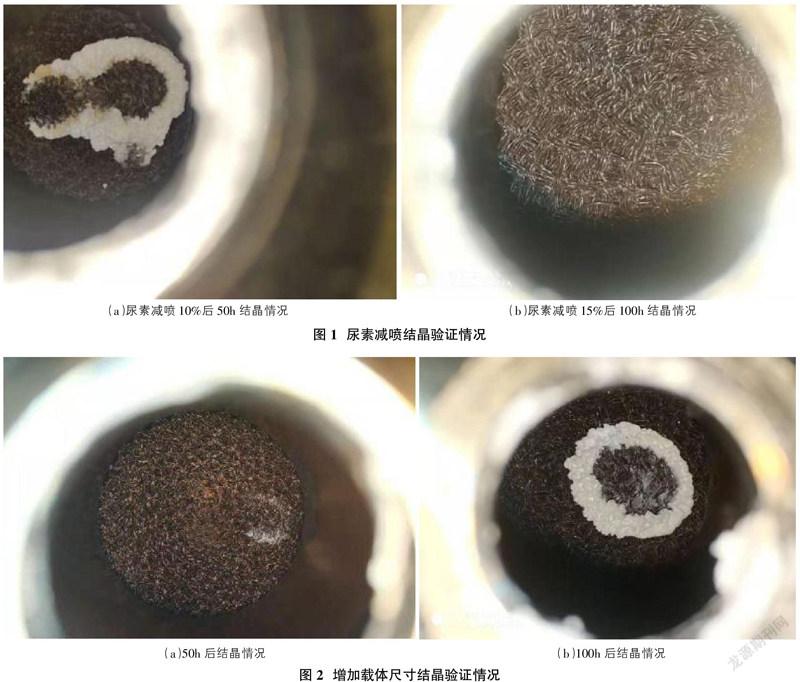
本文主要从结晶的形成机理出发,分析影响结晶的关键影响因素,结合试验研究,通过控制尿素喷射量和优化SCR系统硬件等手段解决结晶问题。
1 结晶形成机理
1.1 SCR催化转化器中主要化学反应
登录APP查看全文