某型悬臂梁结构散热器振动强度分析及结构优化设计
2021-10-31 00:21:21李超仇振安焦鹏程
河南科技
2021年15期
李超 仇振安 焦鹏程

摘 要:近年来,航空发动机悬臂梁结构散热器产品数量增多,部分产品在进行振动试验时安装耳片处出现振裂故障,为避免此类产品振动故障的发生,采用ANSYS对某悬臂梁结构散热器进行随机振动分析。结果表明:产品应力最大处位于安装耳片过渡圆角处。在产品设计时,应着重考虑安装耳片处的强度,以降低产品振动时出现故障的风险。
关键词:悬臂梁结构;散热器;安装耳片
中图分类号:TU832.23文献标识码:A文章编号:1003-5168(2021)15-0034-04
Abstract: In recent years, the number of “cantilever beam” structure heat exchanger products in XINHANG has increased, and some products have vibration crack failure at the mounting lug during vibration test. In order to avoid the occurrence of vibration failure of such products, ANSYS is used to analyze the random vibration of a “cantilever beam” structure heat exchanger. The analysis results show that the maximum product stress is located at the excessive fillet of the mounting lug. In the design of the product, the strength of the mounting lug should be considered to reduce the risk of failure when the product vibrates.
Keywords: cantilever beam; heat exchanger;mounting lug
燃滑油散热器是航空发动机滑油系统的重要附件。随着发动机结构的紧凑设计,主机单位在设计滑油系统时,更倾向于将燃滑油散热器设计成悬臂梁结构。该结构形式在振动、冲击、加速度等环境下,容易造成结构件断裂等故障,其中振动的破坏性最为严重[1]。为此,需要在设计时充分考虑产品的结构强度,采用仿真软件对产品结构进行强度校核,识别出产品结构的薄弱环节。
1 某民机产品振动试验要求
根据《机载设备的环境条件和测试程序》(RTCA DO-160F)第8章节振动试验要求[2],某型发动机配套燃滑油散热器的试验谱线如下。
1.1 随机谱线部分
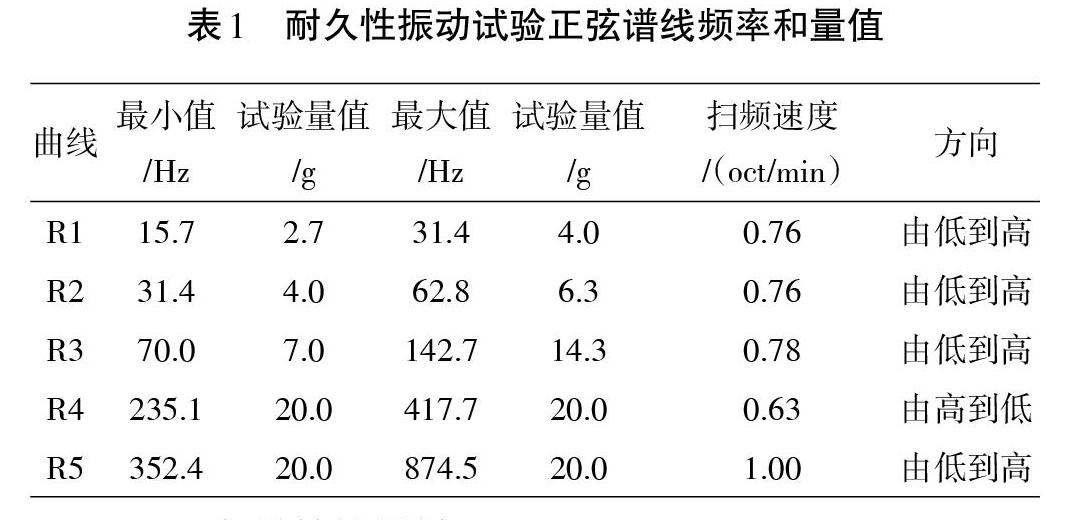
10~300 Hz范围内,功率谱密度(Power Spectral Density,PSD)为0.02 g2/Hz;300~2 000 Hz范围内,功率谱密度(PSD)由0.02 g2/Hz均匀变化到0.002 g2/Hz。正弦谱线部分见表1。
1.2 产品结构设计
该发动机燃滑油散热器结构如图1所示。其主要由法兰盘、壳体、散热芯体、滑油压差旁通活门、端盖组成,主要通过5个安装螺钉固定在发动机油滤机匣上,为悬臂梁式结构。新乡航空工业(集团)有限公司类似悬臂梁结构燃滑油散热器在进行振动试验时曾出现安装耳片处断裂的故障。……
登录APP查看全文