
上海青草沙水库表层沉积物重金属含量水平及其生态风险评价
2021-11-10 02:29:20朱宜平李小飞梁霞
华东师范大学学报(自然科学版)
2021年2期
朱宜平 李小飞 梁霞


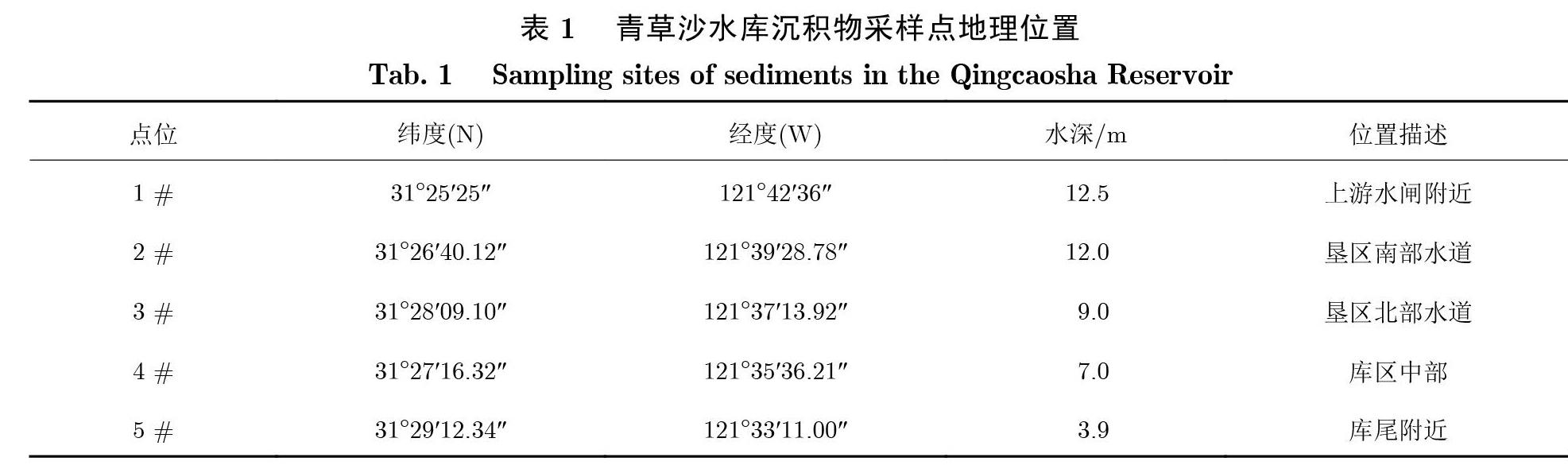
摘要:采集青草沙水库上游水闸、垦区南北水道、库中以及库尾5个代表性区域的30个表层沉积物样品,分析了沉积物中7种重金属(Cu、Zn、Pb、Cr、Cd、As和Hg)含量和赋存形态,并评价了其潜在生态风险。结果显示,青草沙水库中部表层沉积物的重金属含量相对较高,而垦区南北水道附近重金属含量最低。表层沉积物重金属以残渣态为主,可交换态含量低。基于重金属污染的生态风险评价可知,水库表层沉积物的潜在生态风险指数值(ERI)介于55~113,属于低风险或不具潜在生态风险水平,其中上游水闸附近的生态风险相对最高,而南北水道和库尾附近的生态风险最低。
关键词:重金属;沉积物;生态风险;水库;饮用水水源地
中图分类号:X131.3文献标志码:ADOI:10.3969/j.issn.1000-5641.2021.02.006
ContentandecologicalriskassessmentofheavymetalsinthesurfacesedimentsofQingcaoshaReservoirinShanghai
ZHUYiping1,LIXiaofei2,LIANGXia3
(1.ShanghaiChengtouRawWaterLimitedCompany,Shanghai200125,China;
2.SchoolofGeographicalSciences,FujianNormalUniversity,Fuzhou350007,China;
3.StateKeyLaboratoryofEstuarineandCoastalResearch,EastChinaNormalUniversity,Shanghai200241,China)
Abstract:Surfacesedimentswerecollectedfromfiverepresentativeareas—thefloodgateentrance,thenorthandsouthsidesofthereclamationarea,andthecentralanddownstreamsections—ofQingcaoshaReservoir;thepollutioncharacteristicsandpotentialecologicalriskofsevenheavymetals(Cu,Zn,Pb,Cr,Cd,AsandHg)inthesesedimentsweresubsequentlyinvestigated.Resultsshowedthattheheavymetalcontentinthesurfacesedimentsshowedspatialvariations:thecontentwasrelativelyhigherinthecenterofthereservoirandwaslowinthenorthandsouthsidesofthereclamationarea.Heavymetalsinthesurfacesediments,inaddition,weremainlyintheresidualfraction;thecontentofheavymetalsintheexchangeablefractionwasextremelylow.Apotentialecologicalriskassessmentindicatedthatthecomprehensivepotentialecologicalriskindex(ERI)oftheinvestigatedheavymetalsrangedfrom55to113.ThemaximumERIvaluewasobservedaroundthefloodgateofthereservoirentrance,andlowERIvalueswereobservedatthenorthandsouthsidesofthereclamationarea.TheERIwaslowerthanthethresholdforlowecologicalrisk,indicatingthatheavymetalsinthesurfacesedimentsoftheQingcaoshaReservoirhavelowpotentialecologicalrisk.
Keywords:heavymetal;sediment;ecologicalrisk;reservoir;drinkingwatersource
0引言
水庫作为重要的淡水资源,在农业灌溉、区域防洪、饮用水供给以及水电清洁能源等方面都扮演着重要的角色[1-2]。受人类活动影响,近年来水库沉积物重金属污染问题日益突出,对水库生态环境安全提出了挑战。自然水体中的重金属主要源于岩石风化和土壤淋溶流失[3]。然而随着人类工业活动,大量重金属通过废水排放以及大气干湿沉降等方式进入河流、湖泊和水库等水体。这些重金属在悬浮颗粒物表面吸附沉积,并随着水环境改变而经历吸附-解吸、氧化-还原、溶解-沉淀以及颗粒凝聚等一系列过程,沉积物因此成为水体重金属污染的重要来源[4-6]。作为我国重金属污染综合防治“十二五”规……
登录APP查看全文