充电桩盈利模式及经济效益分析
2021-11-10 02:34:10严艳芳周群
科学与生活
2021年12期
严艳芳 周群

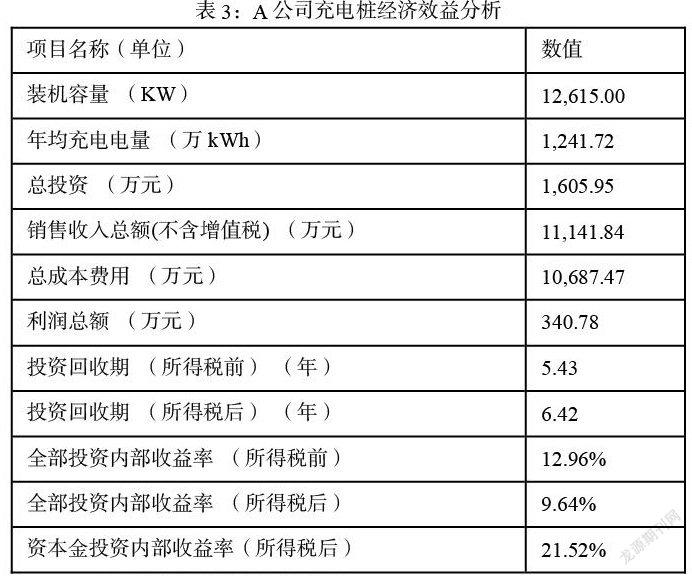

摘要:我国对石油的需求增长量约占全球的41%,而新增石油大部分都用于交通运输。在碳达峰、碳中和目标下,电动汽车的发展对减少石油资源消耗具有举足轻重的影响。本文通过对充电桩行业发展现状、充电桩盈利模式分析,以长沙市A充电桩运营企业为例,对充电桩运营经济效益进行分析。得出充电桩具有一定的经济性,但充电桩抗风险能力差,盈利模式需向多元化方向转变,通过增值服务收入来提升充电桩运营企业整体收益。
关键词:充电桩、盈利模式分析、经济效益分析
China's annual oil demand growth accounts for 41% of the global demand growth, and two-thirds of the new oil demand is used in the transportation industry. Under the target of carbon peak and carbon neutralization, the development of electric vehicles has a decisive impact on reducing the consumption of oil resources. Based on the analysis of the development status of charging pile industry and the profit model of charging pile, this paper takes Changsha a charging pile operation enterprise as an example to analyze the economic benefits of charging pile operation. It is concluded that the charging pile has a certain economy, but the anti risk ability of the charging pile is poor, and the profit model needs to be changed to the direction of diversification, so as to improve the overall income of the charging pile operation enterprise through the value-added service income.
Key words: charging pile, profit model analysis, economic benefit analysis
1背景
2020年3月国家主席习近平总书记在中共中央政治局常务委员会上强调,要加快推进充电桩等新型基础设施建设。充电桩的发展将为国家经济增长提供新动力。2020年9月在第75届联合国大会上宣布:中国碳排放力争2030年达峰值,2060年实现碳中和。并于2020年12月在气候雄心峰会宣布:到2030年,中国二氧化碳排放量与2005年比下降65%以上,中国非化石能源消费占一次能源的比例达到25%左右。
汽车尾气引起的一系列光化学烟雾污染等环境问题日益引起人们的关注[1][2],经过对PM2.5源数据分析,雾霾的形成15-30%是由汽车尾气排放导致[3],是大气污染的重要组成部分。电动汽车的推广及充电桩的发展在能源消费测能有效减少非化石能源的使用,随着风电、光伏等清洁能源发展逐渐代替火电等非清洁能源的能源结构调整,电动汽车将100%使用绿色电力,真正实现零碳交通、零碳城市,助力碳达峰、碳中和。……
登录APP查看全文