读懂隐含信息,攻克读后续写
2021-11-16 15:40:06蓝利霞
广东教育·高中
2021年10期
关键词:信息
蓝利霞
读后续写要写好,考生要学会读懂原文的隐含信息,才能快速地完成续写。下面笔者以2021年全国新高考I卷的读后续写为例,分析如何读懂隐含信息。
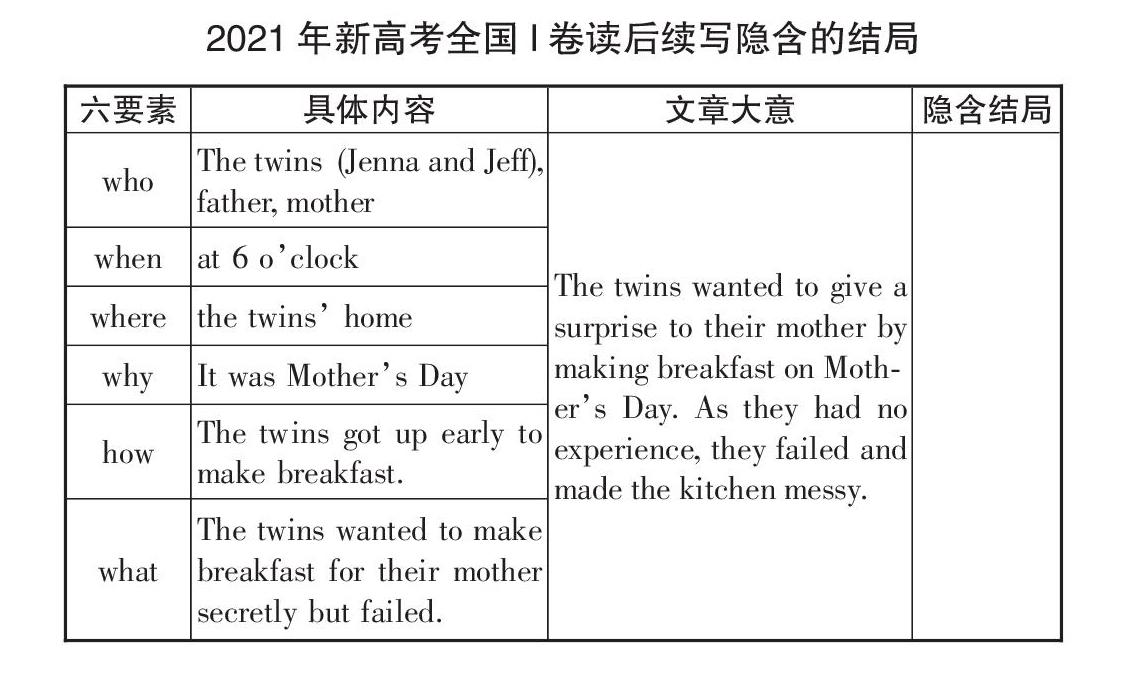
一、根据原文大意,推测文章的结局
对于故事类文章,考生先找到故事的六要素,即5W1H(what, when, who, where, why, how),了解故事情节,获取文章大意,然后再根据正能量结尾的原则,分析其最终的结局,为续写铺平道路,从而为后面的续写节省宝贵的时间。
参考答案:With breakfast made by them successfully, their mother must be surprised and joyful.
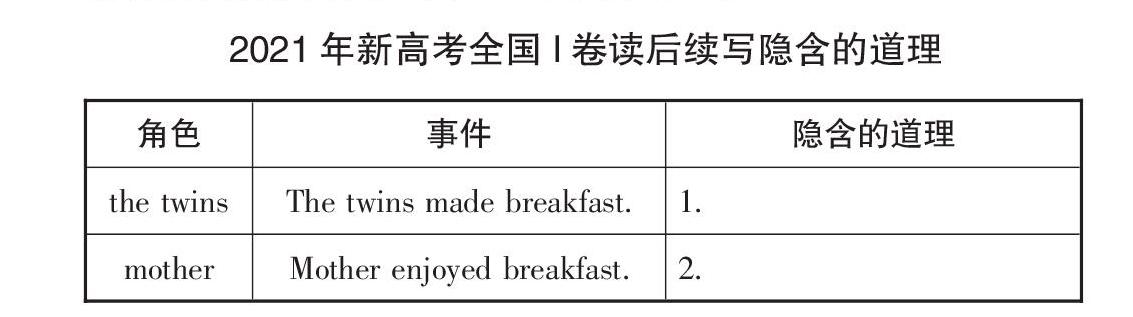
二、根据角色事件,推测隐含的道理
每一个故事都隐含着富有哲理的人生道理,让考生体会到人间的“真善美”,从而树立正确的人生观和价值观。2021年新高考全国I卷的读后续写,如果考生能在理解原文的基础上,根据故事中的人物和他们所做的事情,去推断文章所隐含的道理,那文章会有一个质的升华。
参考答案:
1. Its hard for the twins to make breakfast, and they would think their mother was great.
2. Moved by her kids, mother thought they had grown up.
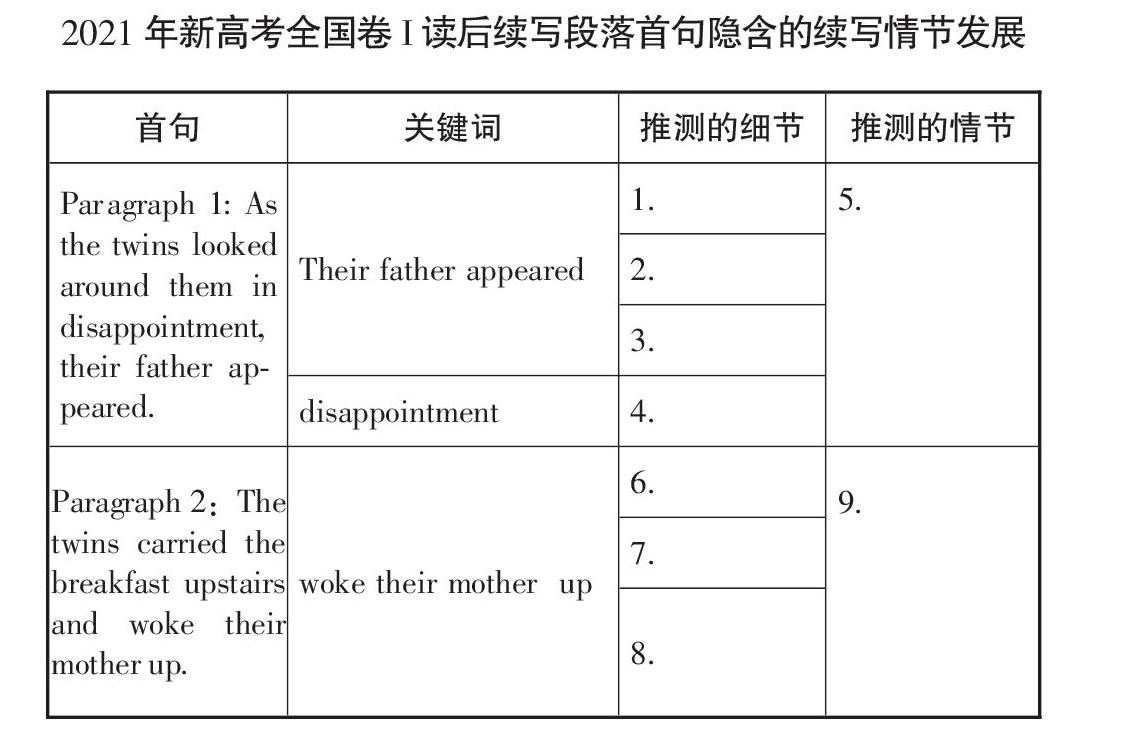
三、根据段落首句,推测情节的发展
为了衔接阅读原文,推动情节的合理发展,考生要理解所给的两个段落首句,抓住其关键词,推测故事情节的发展。
参考答案
1. What was his reaction to the mess?
2. Did he criticize them before knowing the truth?
3. How did he find the truth?
4. What would make them happy again?
5. The father appeared, encouraged them and helped them make breakfast successfully.
6. What would she feel?
7. What would the twins say to their mother when presenting the breakfast to her?
8. What would mother say to them?
9. Mother would be happy, thinking it was the most delicious food she had eaten.
四、分析原文細节,获取隐含的续写信息
2021年新高考全国I卷读后续写的原文有不少生动的细节描写,让故事显得真实可信。考生在阅读这些细节的基础上,分析其隐含的续写信息,利用这些隐含信息刻画出生动的人物形象和有趣的画面,从而写出动人的故事。
参考答案:
1. Mother would be pleased and proud when seeing the breakfast.
2. The breakfast might be not tasty because they had never made it.
3. It was hard for them to make breakfast.
4. Mom got up early to make breakfast every day.
5. The kitchen was in a mess and they would clean it up together.
6. Father might be angry when seeing messy kitchen.
7. Father must be worried when knowing Jeffs injury.
8. They failed! But they would try again.
五、文章隐含的好词佳句助力续写
在分秒必争的高考中,为了快速地完成续写任务,并达到与原文“协同”的效果,考生可以适当地借鉴引用原文隐含的好词佳句。……
登录APP查看全文
猜你喜欢
中华手工(2017年2期)2017-06-06 23:00:31
中外会展(2014年4期)2014-11-27 07:46:46
大众创业(2009年10期)2009-10-08 04:52:00
数字社区&智能家居(2009年7期)2009-09-29 08:16:48
数字社区&智能家居(2009年11期)2009-06-25 04:30:34
数字社区&智能家居(2009年3期)2009-04-21 03:09:04
数字社区&智能家居(2009年2期)2009-03-27 04:33:44
数字社区&智能家居(2009年12期)2009-02-03 07:50:48
建筑创作(2001年3期)2001-08-22 18:48:14
祝您健康(1987年3期)1987-12-30 09:52:32