1958—2017年辽宁省热量资源时空演变特征分析
2021-11-26 20:59:43宗艳伟
安徽农业科学
2021年21期
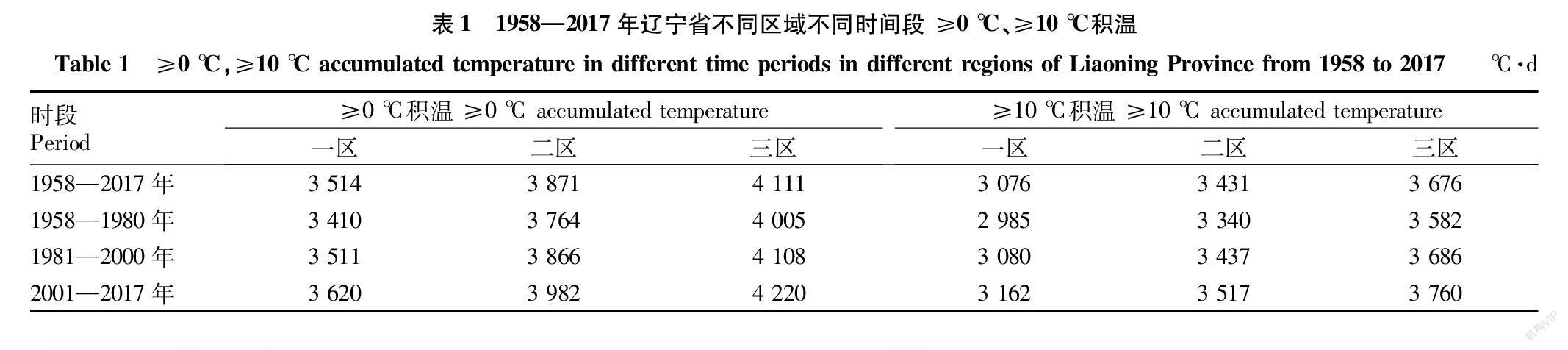
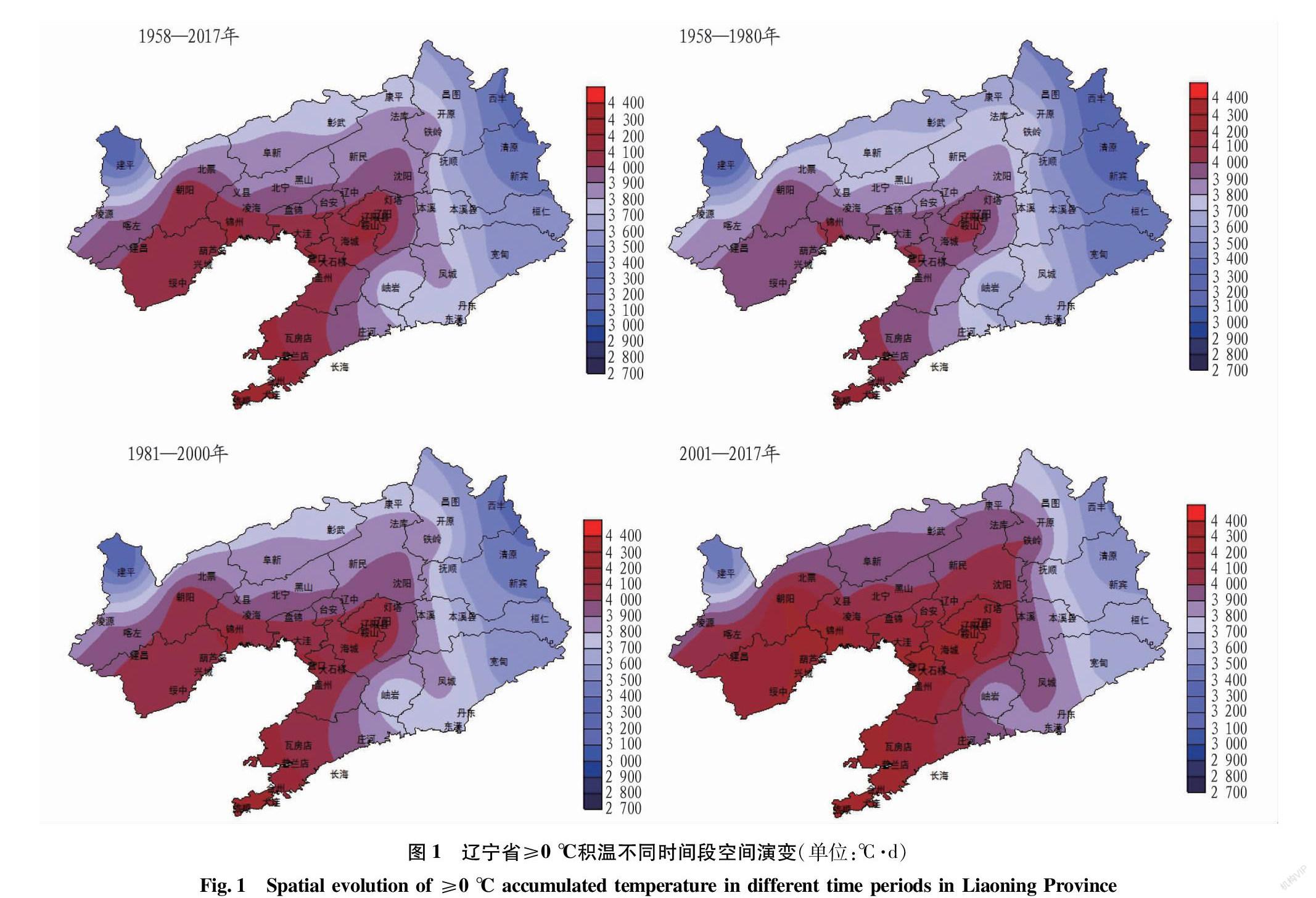

摘要 选用1958—2017年气候资料,运用气候诊断分析方法,对辽宁地区热量资源时空变化进行分析。结果表明,辽宁省热量资源以南部沿海区最多,西北部丘陵区和东部山区最少,中部平原区居中的分布格局;1981—2017年相比1958—1980年≥0 ℃、≥10 ℃积温等值线向北推进100~160 km。辽宁省≥0 ℃、≥10 ℃积温分别在1993、1996年发生气候突变,南部沿海气候突变较早于内陆,气候突变前后 ≥0 ℃、≥10 ℃积温增加194 ℃·d,其增加的量值西北部丘陵区和东部山区少于中部平原区和南部沿海区。
关键词 热量资源;积温;时空演变;变化特征;辽宁省
中图分类号 P 423 文献标识码 A
文章编号 0517-6611(2021)21-0231-05
doi:10.3969/j.issn.0517-6611.2021.21.059
开放科学(资源服务)标识码(OSID):
Analysis on the Characteristics of Spatio-temporal Evolution of Heat Resources in Liaoning Province from 1958 to 2017
ZONG Yan-wei
(Lanzhou Vocational and Technical College of Resources and Environment, Lanzhou, Gansu 730000)
Abstract Based on the climatic data from 1958 to 2017, the temporal and spatial variation of heat resources in Liaoning Province was analyzed by using the method of climatic diagnosis and analysis.The results showed that the heat resources in Liaoning Province exhibited the most in the southern coastal area, the least in the northwestern hills and eastern mountainous areas, and the middle in the central plain area. Compared with 1958-1980, the accumulative temperature isoline of ≥0 ℃ and ≥10 ℃ pushed 100-160 km northward from 1981 to 2017. In 1993 and 1996, the accumulated temperature≥ 0 ℃ and ≥ 10 ℃ in Liaoning Province changed abruptly. The climate change in the southern coastal area was earlier than that in the inland area. Before and after the abrupt climate change, the accumulated temperature ≥ 0 ℃ and ≥ 10 ℃ increased by 194 ℃·d, and the incremental value was less in the northwest hilly area and eastern mountain area than in the central plain.
Key words Heat resources;Accumulated temperature;Temporal-spatial variation;Change characteristics;Liaoning Province
作者簡介 宗艳伟(1987—),女,辽宁朝阳人,讲师,从事大气探测技术研究。
收稿日期 2021-03-24
热量资源是重要的气候资源之一,与人类生活息息相关,研究热量资源的变化与空间分布对农业经济、农业种植业布局、农村农林牧渔业协调发展等具有重要意义。20世纪80年代以来气候变暖明显[1-2],世界气象组织(IPCC)研究指出21世纪末年平均气温将升高1.1~6.4 ℃[3-4]。气温升高、气候变暖、热量资源增加对自然界正负面影响同时存在,张富荣等[5-7]研究认为气候变暖、热量资源增加可延长农作物生长期,存在复种指数的可能性,也给霜期农业、设施农业带来发展空间等。周广胜等[8-9]研究认为气候变暖对人类的负面影响更为明显,如加剧极端性气象灾害、破坏固有的自然生态系统、冰川消融、海平面上升、土地盐碱化以及水分的大量蒸腾使土地沙漠化等。热量资源随着时间和空间的变化而变化,直接影响一个地区的植物分布、农作物熟型和种植结构,是引起农业产品产量变化的重要因素[10-13]。……
登录APP查看全文