垃圾渗滤液中氮循环细菌与氮元素变化分析
2022-03-13 23:13:17张秋钰邵梓涵鲁明会李淑英
安徽农学通报
2022年4期
张秋钰 邵梓涵 鲁明会 李淑英
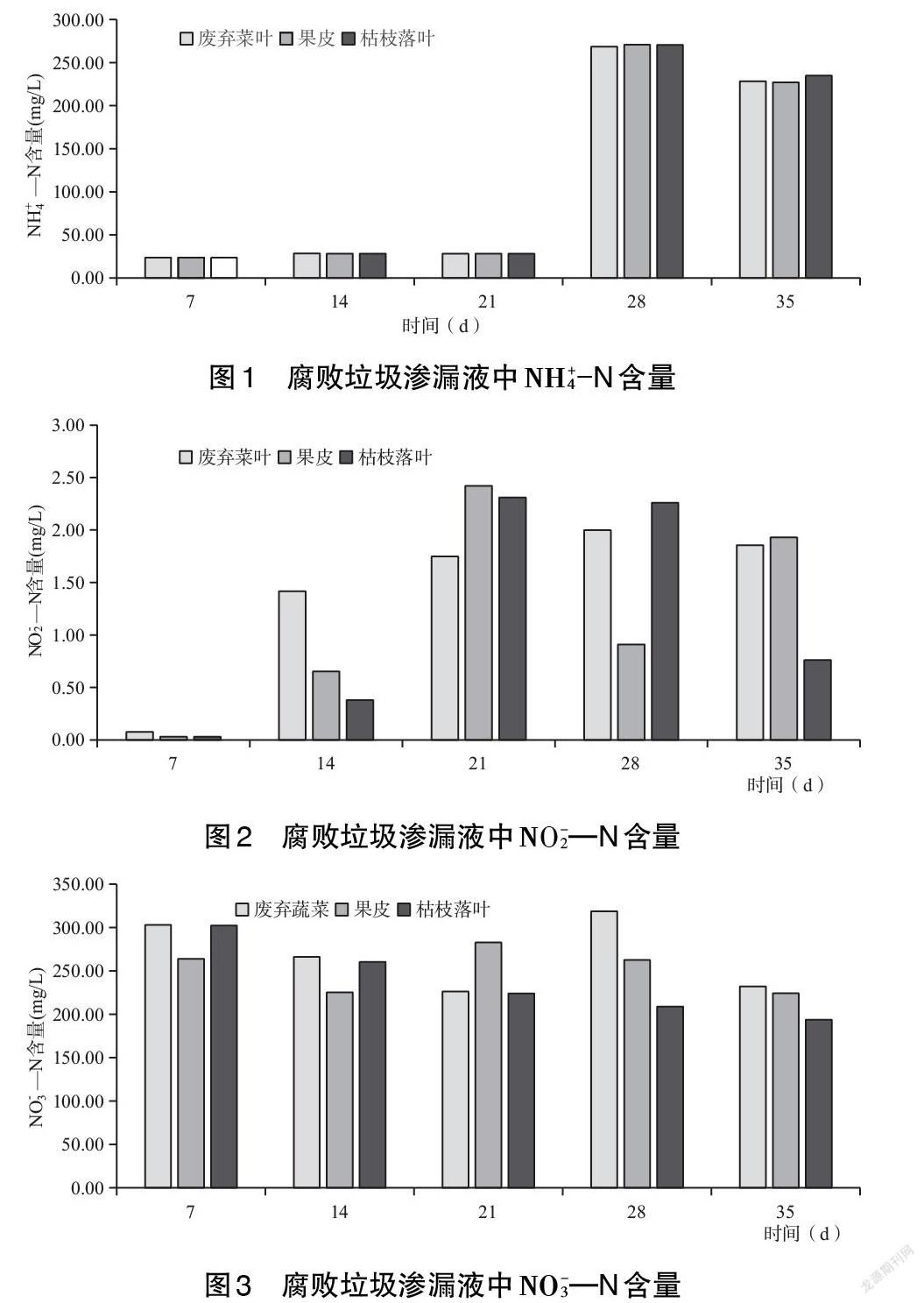
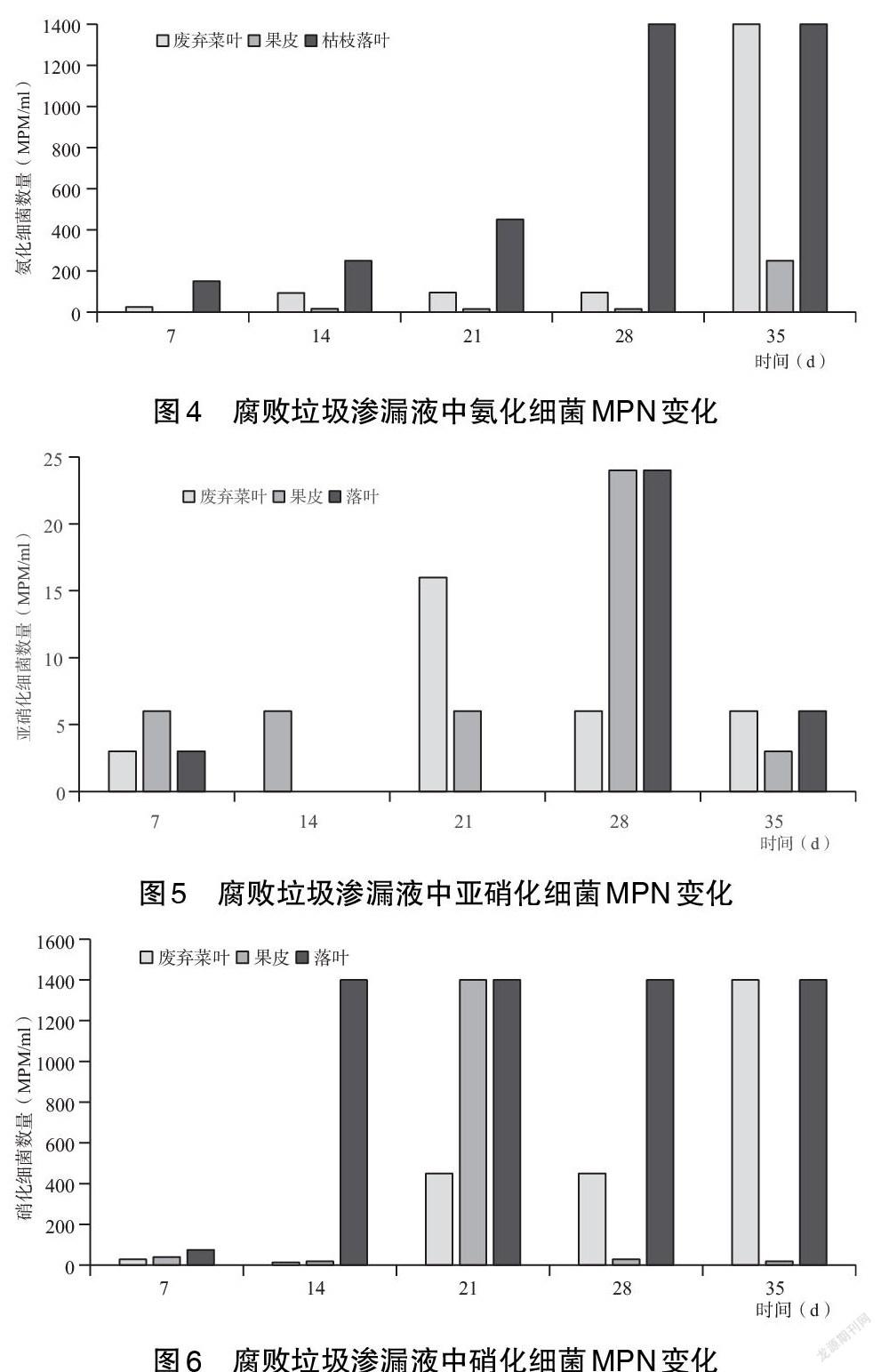
摘 要:以枯枝落叶、废弃蔬菜和果皮为原料,采用自然堆放腐败方法,进行为期35d堆肥化处理,收集3类易腐垃圾渗漏液,采用最大可能数法(MPN:Most-Probable-Number)测定氨化细菌、硝化细菌和亚硝化细菌,同时测定渗漏液中的NH4+-N、NO3--N、NO2--N含量,进行氮循环主要菌群与氮元素变化的分析。结果表明:3类垃圾腐败渗漏液中,NH4+-N含量28d后增加明显,NO2--N含量后期有降低趋势,但含量依然较高,NO3--N含量堆放初期含量较高,后期略有降低趋势;垃圾渗漏液中氨化细菌MPN增加,亚硝化细菌MPN先升高后降低,3类垃圾渗漏液中硝化细菌MPN有较大的差异性,揭示了垃圾渗漏液中氮素循环与关键菌群之间相互作用,同时受反硝化作用的影响较大。
关键词:渗滤液;氮循环细菌;氮元素
中图分类号 X172 文献标识码 A 文章编号 1007-7731(2022)04-0022-04
Abstract: In this study, litter, waste vegetables and fruit peels produced by residents′ daily life were used as our experimental materials. The natural stacking method was used of composting treatment for 35 days. Three types of perishable waste leakage liquid were collected, ammonifying bacteria,nitrifying bacteria and nitrobacteria were determined by the Maximum Possible number Method (MPN), and the [NH+4]-N and The contents of [NO-3]-N and [NO-2]-N were analyzed for the changes of main flora and nitrogen elements in the nitrogen cycle. The experimental results show that the content of [NH+4]-N in the leakage solution of the three types of garbage corruption increases obviously after treatment 28 days,and the content of [NO-2]-N decreases in the later stage, but the content is still higher than the average level. The content of [NO-3]-N is higher in the early stage of stacking and slightly decreases in the later stage than the early stage;The MPN of ammoniating bacteria increased,and the MPN of nitrobacteria increased first and then decreased. There were great differences in the MPN of nitrifying bacteria in the three types of waste leakage, revealing the interaction between nitrogen cycle and key bacterial groups in waste leakage, which was greatly affected by the process of denitrification.
Key words:Leachate; Nitrogen cycling bacteria; Nitrogen
垃圾滲滤液中氮的去除已成为研究热点,何品晶[1]等通过文献和实地调查发现,生活垃圾主要是易腐有机垃圾,包括厨余垃圾、农作物秸秆及枯枝败叶等,一般占垃圾总量的40%~50%,有机物含量高、含水率高,同时掺杂了农药、化肥等有害垃圾,其危害性一般大于城市生活垃圾。目前,生活垃圾处理方法主要包括物理化学法和生物脱氮法等。生物脱氮是指在微生物联合作用下,将有机氮、无机氮转化为气态氮的过程,其循环包括生物固氮、氨化、硝化、亚硝化、反硝化等作用,是微生物特有的过程。参与的细菌包括:氨化细菌(Ammonifier)、氨氧化细菌(Ammonium-oxidizingbacteria)、亚硝酸氧化细菌(Nitrite-oxidizingbacteria)以及反硝化细菌(Denitrifier)[2]。氨化细……
登录APP查看全文