基于生物信息学的酒精性肝病关键基因筛选及验证
2023-06-07 16:26:24王一涵漆光紫李文学岑育芳韦俊宏唐玉航庞雅琴
右江医学
2023年5期
关键词:生物标志物
王一涵 漆光紫 李文学 岑育芳 韦俊宏 唐玉航 庞雅琴
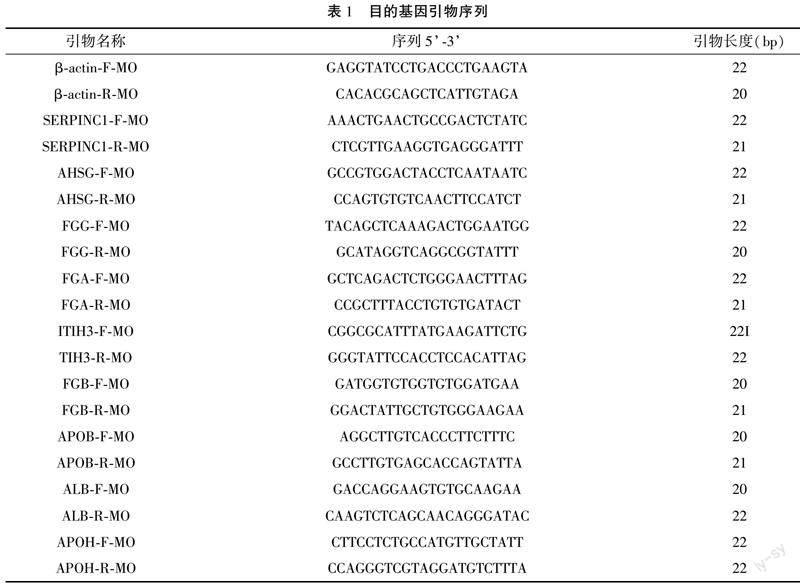
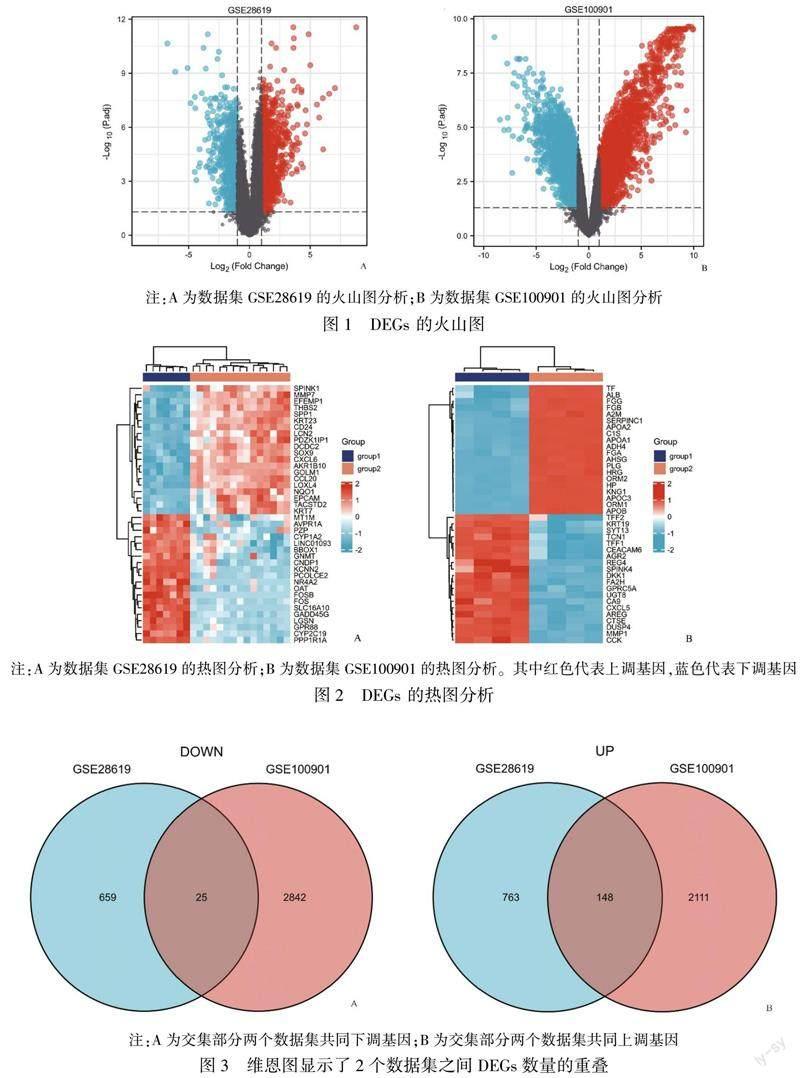
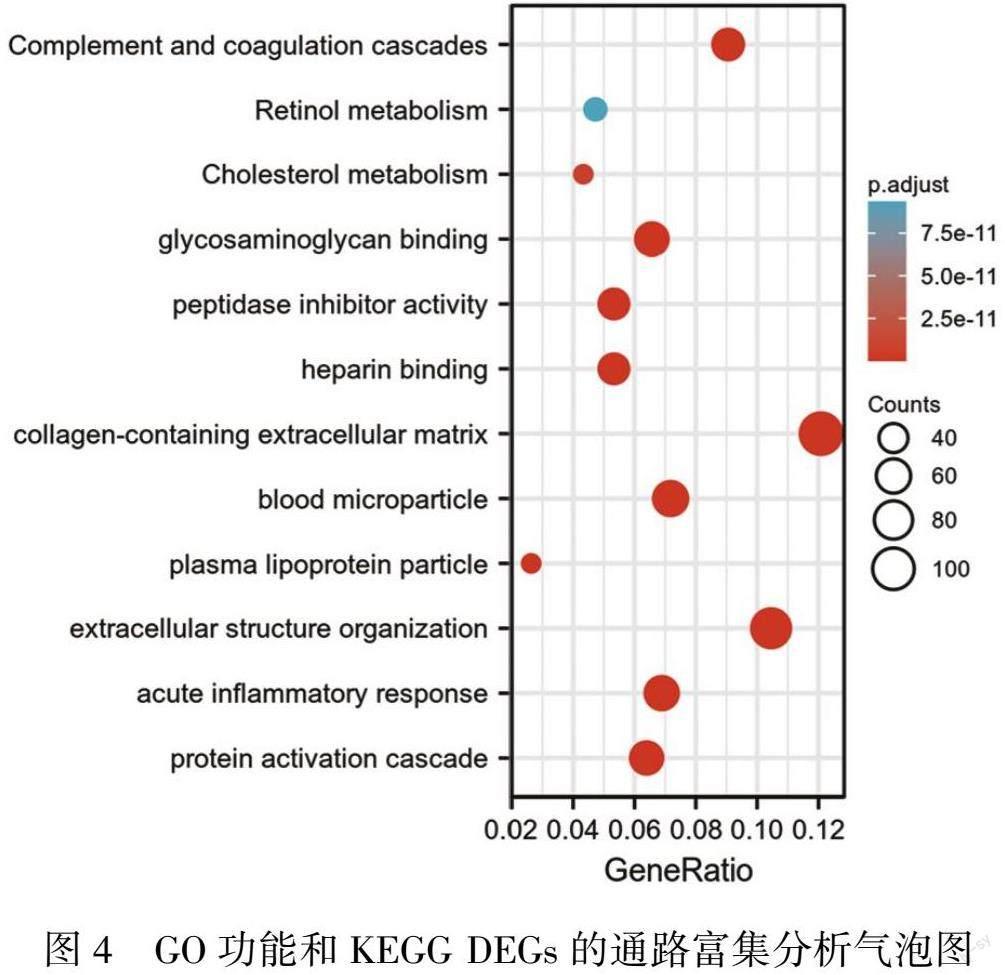
【摘要】 目的 利用生物信息学方法探索酒精性肝病(alcoholic liver disease,ALD)潜在的关键基因并通过实验验证,为寻找ALD潜在的生物标志物提供依据。方法 从美国国立生物技术信息中心(National Center for Biotechnology Information,NCBI)的公共基因芯片数据平台(Gene Expression Omnibus,GEO)的数据库下载两个基因表达谱芯片(GSE28619和GSE100901),利用GEO2R筛选出酒精性肝病实验组与正常对照组的差异表达基因(differentially expressed genes,DEGs),对DEGs进行基因本体论(gene ontology,GO)与京都基因和基因组百科全书(Kyoto encyclopedia of genes and genomes ,KEGG)信号通路的富集分析,进一步应用STRING数据库构建蛋白质的相互作用网络,用Cytoscape来筛选出关键基因。构建ALD小鼠模型,通过RT-qPCR验证筛选出关键基因。结果 总共鉴定出173个DEGs,GO显示DEGs生物学功能主要涉及5个KEGG通路,包括补体和凝血级联、胆固醇代谢、视黄醇代谢、药物代谢-细胞色素P450、胆汁分泌相关信号通路,结合蛋白质相互作用网络(protein-protein interaction,PPI)和CytoHubba的结果,筛选出SERPINC1、AHSG、FGG、FGA、ITIH3、FGB、APOB、ALB和APOH 9个关键基因,通过RT-qPCR检測验证,发现与WT小鼠相比,ALD小鼠肝脏ALB、APOB和FGB 的mRNA表达上调(P<0.05),而ITIH3、FGG和SERPINC1的 mRNA表达下调(P<0.05)。结论 ALB、APOB、 FGB、ITIH3、FGG、SERPINC1 有望成为ALD潜在的生物标志物。
【关键词】 生物信息学;酒精性肝病;基因;生物标志物
中图分类号:R575.5;Q811.4 文献标志码:A DOI:10.3969/j.issn.1003-1383.2023.05.002
【Abstract】 Objective To explore the potential key genes of alcoholic liver disease (ALD) by bioinformatics methods and to validate them through experiments, so as to provide basis for searching for potential biomarkers of ALD. Methods Two gene expression profile chips (GSE28619 and GSE100901) were downloaded from the database of the public GeneChip Data Platform(Gene Expression Omnibus, GEO) of the National Center for Biotechnology Information (NCBI) in the United States. GEO2R was used to select differentially expressed genes (DEGs) in ALD group and control group. The enrichment analysis of gene ontology (GO) and Kyoto encyclopedia of genes and genomes (KEGG) signaling pathways in DEGs was conducted. Furthermore, STRING database was applied to construct the interaction network of proteins, and key genes were screened by Cytoscape. ALD mice models were constructed and key genes were screened by RT-qPCR validation.Results A total of 173 DEGs were identified. GO showed that the biological functions of DEGs mainly involved in five KEGG pathways, including complement and coagulation cascade, cholesterol metabolism, retinol metabolism, drug metabolism-cytochrome P450, and bile secretion-related signaling pathways. Based on the results of protein-protein interaction network (PPI) and CytoHubba, 9 key genes, namely, SERPINC1, AHSG, FGG, FGA, ITIH3, FGB, APOB, ALB, and APOH, were screened out. RT-qPCR detection found that compared with WT mice, the mRNA expressions of ALB, APOB, and FGB in the liver of ALD mice upregulated (P<0.05), while the mRNA expressions of ITIH3, FGG, and SERPINC1 downregulated (P<0.05).Conclusion ALB, APOB, FGB, ITIH3, FGG and SERPINC1 are expected to be potential biomarkers for ALD.
【Key words】 bioinformatics; alcoholic liver disease(ALD); gene; biomarkers
酒精性肝病(alcoholic liver disease,ALD)俗称酒精肝,是全球最普遍的肝病之一[1],根据世界卫生组织的调查,2016年全球酒精导致3000万人死亡,占全球死亡人数的5.3%,占全球疾病负担的5.1%[2]。近年来,ALD导致的病死率有所增加。在美国,酒精已超过丙型肝炎病毒成为肝脏相关疾病死亡的主要病因,自2007年以来ALD年龄标准化病死率持续性增长,年增长率为3.1%[3]。酒精通过抑制线粒体β氧化和增加脂肪酸合成,导致甘油三酯、磷脂……
登录APP查看全文
猜你喜欢
云南中医中药杂志(2017年7期)2017-07-25 09:55:02
分析化学(2017年7期)2017-07-12 17:28:05
中国医学创新(2017年14期)2017-06-08 07:36:20
中国医药导报(2017年5期)2017-04-05 00:05:25
中国科技纵横(2017年3期)2017-03-29 09:49:01
中国医药导报(2017年1期)2017-03-15 17:37:13
中国中药杂志(2016年21期)2017-02-16 14:10:12
中国中药杂志(2016年21期)2017-02-16 13:04:42
江苏农业科学(2016年5期)2016-07-23 01:38:03
中国科技博览(2016年8期)2016-04-25 06:02:18