
生熟五味子在小青龙汤中化学成分比较
2015-08-06 15:18:07高慧等
中国医药科学
2015年11期
关键词:化学成分
高慧等
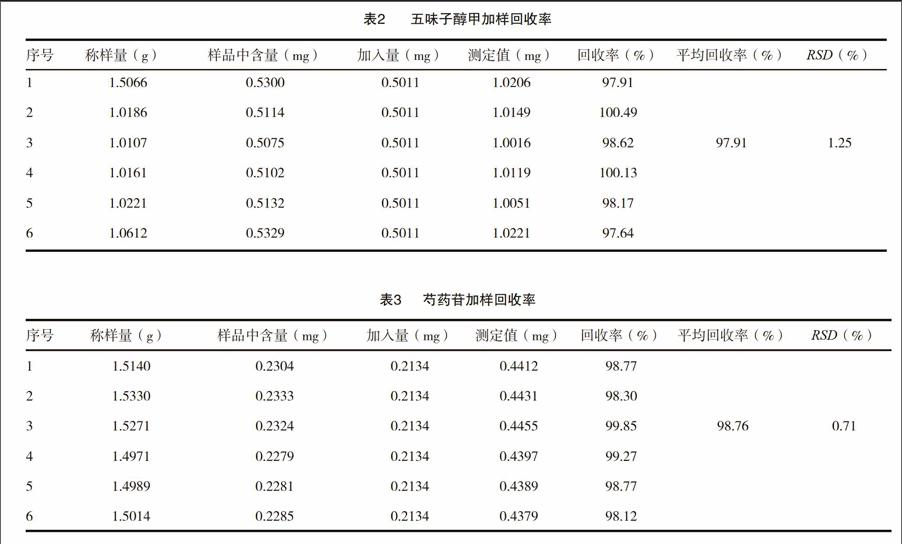
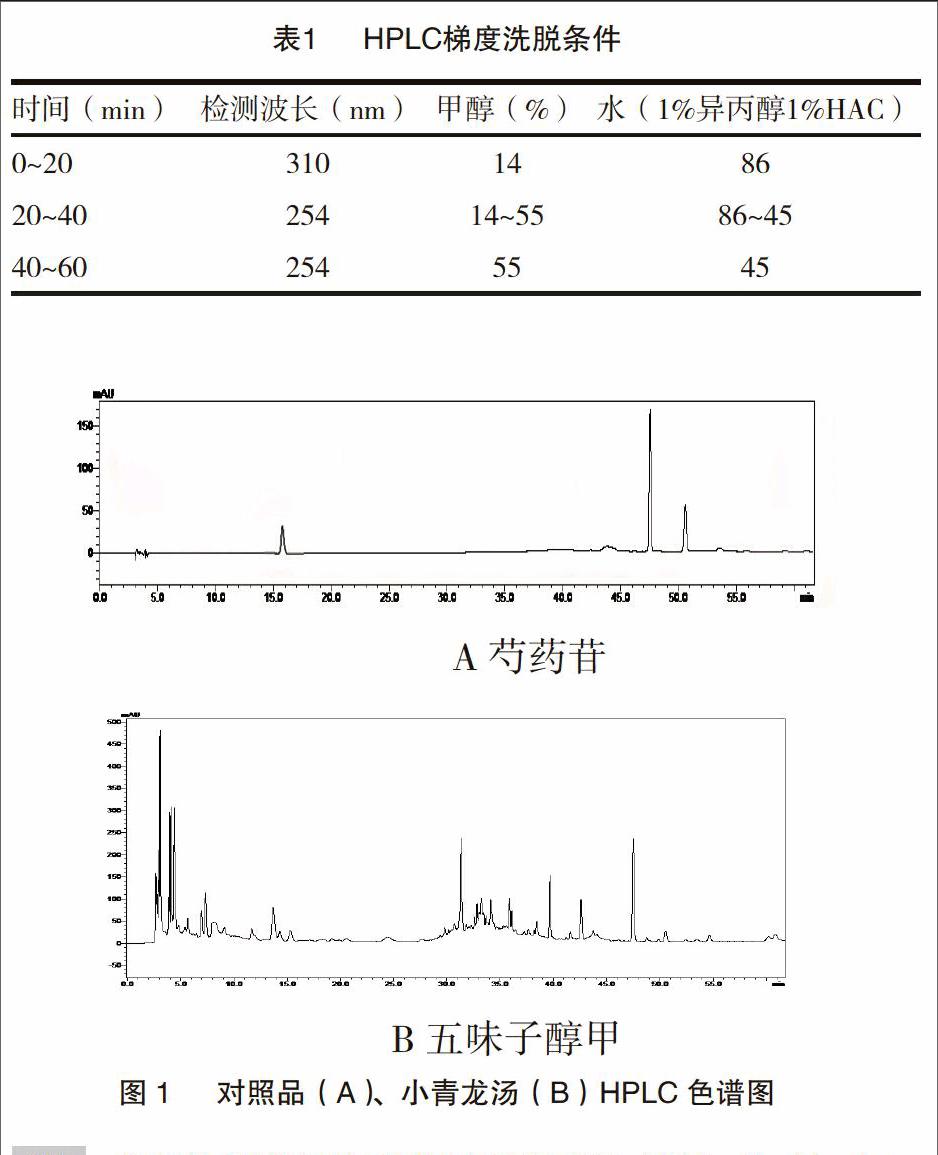
[摘要]目的 比较生熟五味子对复方化学成分的影响,为五味子“生熟异用”临床合理用药提供实验依据。 方法 采用HPLC法,测定小青龙汤中(含生五味子或酒五味子)五味子醇甲、芍药苷的含量。 结果 小青龙汤(含生五味子)中五味子醇甲、芍药苷的含量分别为0.0524%、0.0152% ,小青龙汤(含酒五味子),五味子醇甲、芍药苷的含量分别为0.0502%、0.0146% 。 结论 从化学成分角度能够验证五味子“入嗽药生用”的传统理论。
[关键词]五味子;炮制;小青龙汤;化学成分
[中图分类号] R289 [文献标识码] A [文章编号] 2095-0616(2015)11-35-03
[Abstract] Objective To provide scientific basis for the research and the clinical applications of "the processed Schisandra chinensis Fruits is different from the raw ones" through comparing the difference about chemical compounds in Xiaoqinglong decoction(contains raw Schisandra chinensis)and Xiaoqinglong decoction (contains processed Schisandra chinensis). Methods To determine schisandrin and paeoniflorin in Xiaoqinglong decoction(contains raw Schisandra chinensis or wine processed Schisandra chinensis) by HPLC. Results The contents of schisandrin and paeoniflorin in Xiaoqinglong decoction which contain raw Schisandra chinensis were0.0524% and 0.0152%; the contents of schisandrin and paeoniflorin in Xiaoqinglong decoction which contain wine Schisandra chinensis were 0.0502% and 0.0146%. Conclusion Verified the traditional theory "raw Schisandra chinensis should be used in cough" from the chemical compounds of view.
[Key words] Schisandra chinensis; Processed; Xiaoqinglong decoction;Chemical compounds
五味子为木兰科植物五味子(Schisandra chinensis (Turcz.)Baill.)的干燥成熟果实,主产于辽宁、吉林、黑龙江、河北等地,习称“北五味子”,五味子酸、甘,温,归肺、心、肾经,收敛固涩,益气生津,补肾宁心[1]。传统理论认为五味子“入补药熟用,入嗽药生用”[2],即五味子“生熟异用”。五味子常见的炮制品种有醋五味子、酒五味子,五味子醋制后能够增强酸涩收敛之性,酒制后能够增强益肾固精的作用[3]。关于五味子炮制的研究,见有炮制工艺、化学成分、药效学等方面的报道[4-8]。本课题组紧紧围绕五味子“生熟异用”,开展五味子生熟对比研究[9-10],从药效学角度验证了五味子“入补药熟用,入嗽药生用”的传统理论,并将生熟五味子分别纳入复方小青龙汤,比较了小青龙汤中用生五味子或熟五味子抗过敏性哮喘作用的差异[11]。因生熟五味子在复方中表现出药理作用上的差异,推测其
化学成分也一定存在差异,所以本文在前期研究基础上,选取小青龙汤指标性成分芍药苷、五味子指标性成分五味子醇甲,采用高效液相色谱法分析指标性成分的含量,为药理作用的改变寻找依据。……
登录APP查看全文
猜你喜欢
中国中药杂志(2016年22期)2017-02-13 17:22:57
热带农业科学(2016年11期)2017-01-21 15:16:16
现代养生·下半月(2016年5期)2017-01-09 10:19:45
现代养生·下半月(2016年5期)2017-01-09 10:17:13
吉林农业(2016年12期)2017-01-06 19:51:03
云南中医中药杂志(2016年11期)2016-12-26 14:20:38
华夏医学(2016年4期)2016-12-12 00:19:20
科技视界(2016年9期)2016-04-26 12:19:35
河北渔业(2015年11期)2015-11-18 16:32:21
河北渔业(2015年7期)2015-07-21 11:04:49
