
黄土洼淤地坝沟道沉积物粒度特征与沉积环境分析
2016-05-14 10:02:45王朋晓岳大鹏郭坤杰刘婧春程金文达兴
山东农业科学
2016年5期
王朋晓 岳大鹏 郭坤杰 刘婧春 程金文 达兴
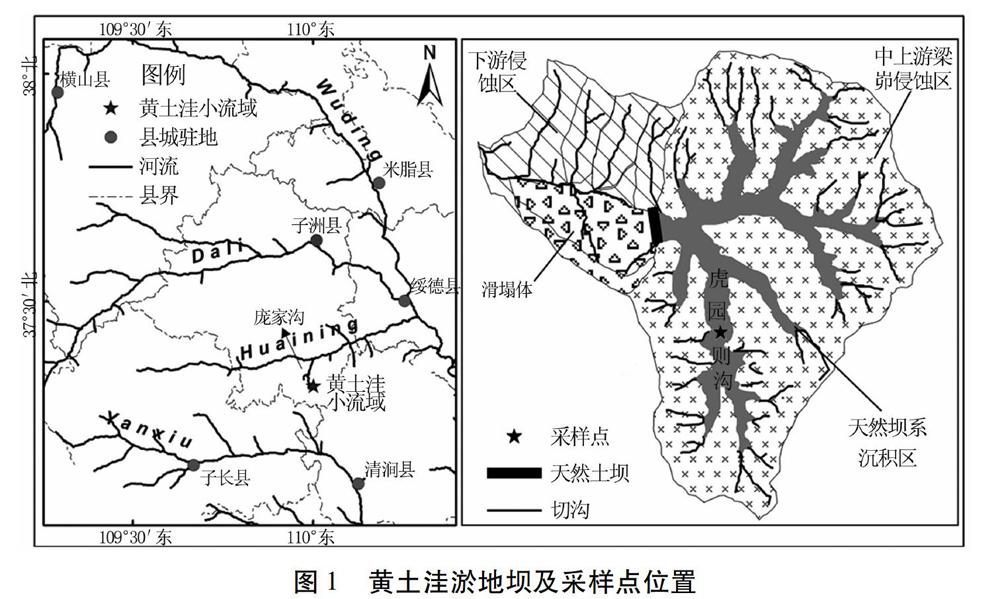

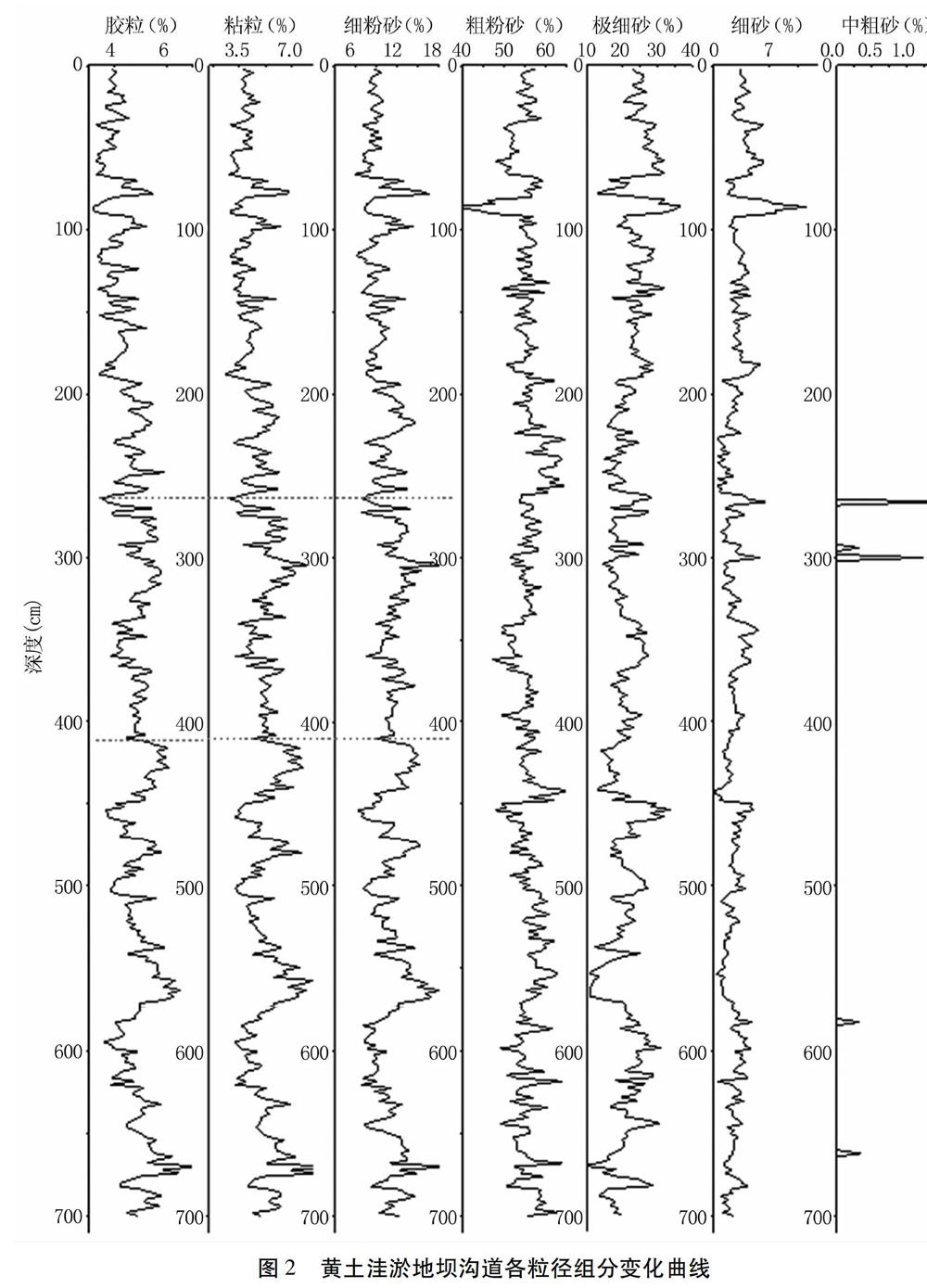
摘 要:通过对淤地坝沟道350个样品粒度特征分析可知:黄土洼沟道沉积物粒度在 0.1~250 μm之间,以粗粉砂含量最多,占55.50%,其次是极细砂,占21.53%,而细砂和中粗砂含量极少,颗粒整体较细;胶粒、粘粒、细粉砂在垂直深度上分布趋势基本相似,与极细砂和细砂变化趋势相反;根据胶粒、粘粒、细粉砂含量变化,可将沟道发展历史分为三个阶段;剖面在36、58、86、182、292 cm处对应着侵蚀力强的降雨,86 cm对应着历史最强降雨;整个地区平均粒径变化呈现出“细-粗-细”的沉积旋回变化规律,408 cm以上沉积层理变化显著,动力环境复杂;以单峰为主,沉积物分选性较差,频率曲线呈正偏和极正偏,峰态有中等和很窄两类;黄土洼地区1963~1986年之间沉积速率较大,1986~1994年沉积速率变慢,1994年之后沉积速率加快。
关键词:黄土洼;淤地坝;沉积物;粒度特征;沉积环境
中图分类号:S151.2文献标识号:A文章编号:1001-4942(2016)05-0067-08
Abstract Based on the analysis of grain size characteristics of 350 samples in check dam of Huangtuwa, the grain size of channel sediments was between 0.1 μm and 250 μm, which was mainly made up of coarse silt, accounting for 55.50%, followed by very fine sand, accounting for 21.53%. The contents of fine sand and medium-coarse sand were extremely low, so the grains were fine on the whole. The distributions of colloid, clay and fine silt in the vertical depth were similar, in contrast with the trends of very fine sand and fine sand. The development history of channel could be divided into three stages according to the content changes of colloid, clay and fine silt. The profile at the 36, 58, 86, 182 and 292 cm corresponded to rainfalls with strong erosion, among which, 86 cm corresponded to the strongest rainfall. The mean grain size of the whole area showed sedimentary cycle change rule of “fine - coarse - fine”. The sedimentary structure above 408 cm changed significantly and the dynamic environment was complex. Most of the grain size frequency curves were unimodal; the sorting of sediments was weak; the frequency curve presented positively skewed and very positively skewed; there were moderate and very narrow kurtosis. The deposition rate in Huangtuwa Area was higher in 1963~1986, slower in 1986~1994, and got faster after 1994.
Key words Huangtuwa; Check dam; Sediments; Grain size characteristics; Sedimentary environment
黄土高原是世界上水土流失最为严重的地区之一,对黄土高原水土流失的治理有十分重要的意义[1]。淤地坝既能充分利用水土资源,又能有效防治水土流失,是黄土高原地区最为重要的水土保持工程措施之一[2]。淤地坝相当于小流域的沉沙池,拦蓄了大量泥沙,泥沙记录了沉积环境演变的相关信息[3],通过对沉积物泥沙粒度特征分析有助于提取沉积环境的有关信息[4]。黄土洼淤地坝是黄土高原现今已知淤积时间最长的天然坝地[5],1568年九牛山崩塌堆积之后,泥沙逐渐堆积形成了现今的天然淤地坝,坝内次生黄土堆积物剖面发育的很完整,是环境变化的天然信息源。……
登录APP查看全文
