归义军政权对徭役影庇的限制
2016-06-03 00:48:02赵大旺
敦煌研究
2016年2期
赵大旺
内容摘要:官斋劳动是归义军时期敦煌百姓承担的杂役,官员、衙前子弟、色役人等出现于官斋劳动中表明其本身虽免杂役,但不能影庇户内其他丁男。这种对徭役影庇的限制与中原地区的政策是一致的,归义军时期官员等政府服务人员出现于官斋及其他杂役中,显示其限制政策得到了较为充分的落实。
关键词:归义军;官斋劳动;徭役;蠲免;影庇
中图分类号:G256.1 文献标识码:A 文章编号:1000-4106(2016)02-0079-07
Abstract: Under the control of the Gui-yi-jun regime, a program of “assorted labor”was impressed upon the people of Dunhuang. The officers, official service workers, and other official labor service employees took part in cooking work, including cooking for local Buddhist monks, showing that they had little privilege to protect their families from“assorted labor”tasks. This policy showed an obvious similarity to the policies enacted in the Central Plains. According to the fact that the abovementioned officials took part in cooking and other common tasks under the force of the Gui-yi-jun regime, we can conclude that the restrictive policies adopted by the Gui-yi-jun regime were well implemented.
Keywords: Gui-yi-jun regime; official labors which provide food to Buddhist monks; labor; exclusion of labors; privilege to protect a whole family from labor.
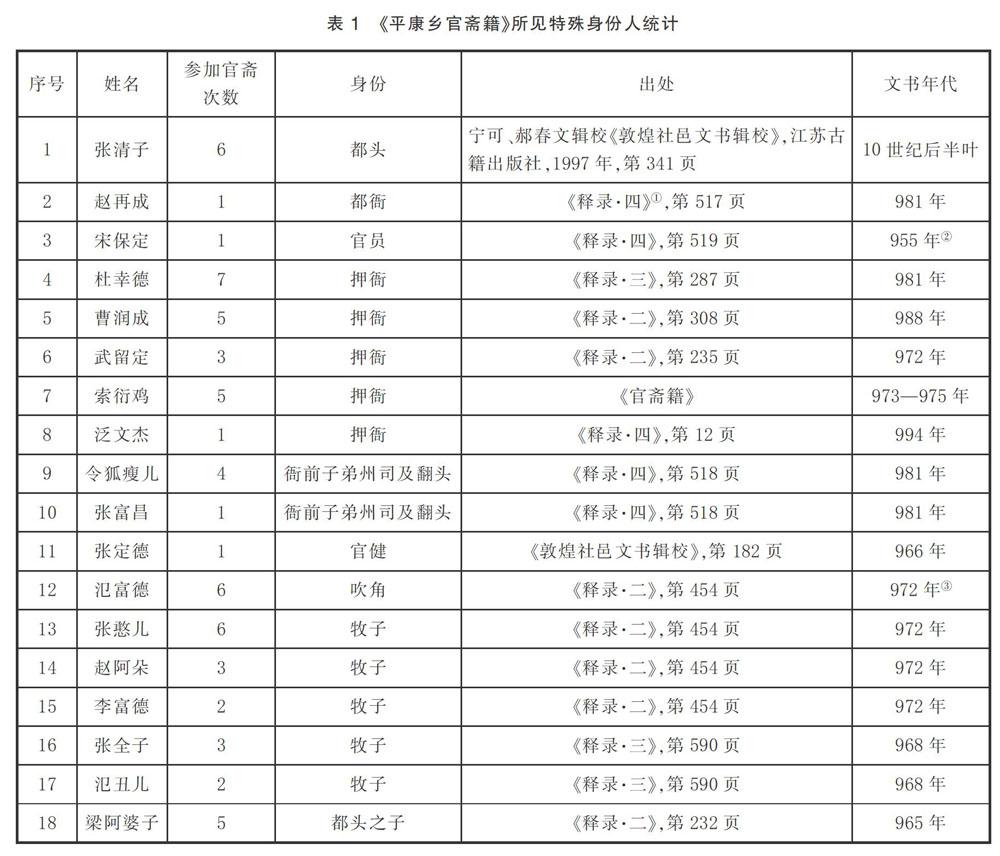
关于归义军时期的徭役制度,学界已有一些论述,其中雷绍锋、刘进宝等先生在著作中研究了归义军的赋役蠲免政策。笔者通过对P.3231(11)《平康乡官斋籍》的考察,发现一些本该享受免役特权的人参与了官斋劳动,从而表明其免役权有限,不能影庇户下徭役。《平康乡官斋籍》成于曹氏归义军时期,记载了癸酉年至丙子年(973—976)平康乡百姓参与官斋劳动的情况。雷绍锋曾撰写《〈癸酉年至丙子年敦煌县平康乡官斋籍〉之研究》一文,对其反映的劳动性质做了研究[1]。笔者以为,这件文书与赋役制度的关系仍有进一步探究的必要,故撰此文,求教方家。
一 文书反映的劳役性质
雷绍锋先生曾针对《平康乡官斋籍》认为斋僧具有力役性质,并引《北梦琐言》“程贺以乡役充厅仆”作为类比,认为官斋劳动是真正意义的“乡役”。笔者认为这个观点尙可商榷。首先,对于唐代的“乡役”,学界还没有一个清晰的概念,张泽咸认为“乡役”即“邑役”,是地方性的乡里之役,也是色役,又称“乡村色役”[2]。……
登录APP查看全文