
多因素评估及干预在预防社区老年人跌倒中的效果评价
2016-09-21 22:42:32张娴龚钦青杨永红叶翠松
上海医药
2016年16期
关键词:老年人
张娴+龚钦青+杨永红+叶翠松
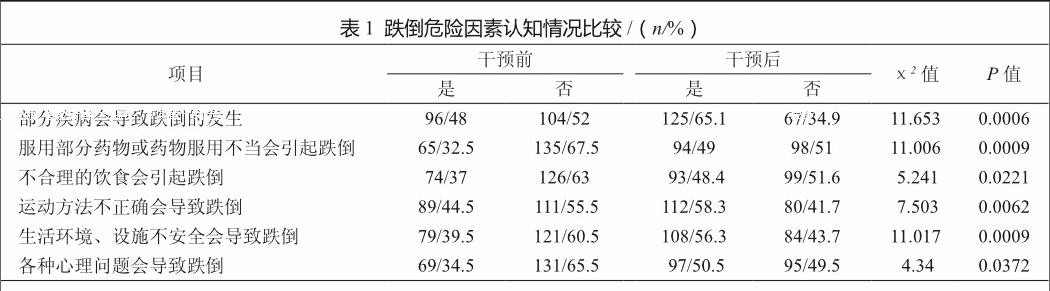
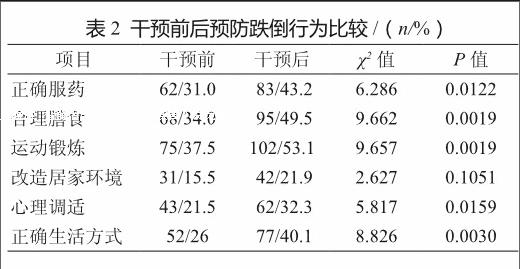
摘 要 目的:评价多因素评估及干预在预防社区老年人跌倒中的效果。方法:2013年1月—12月对本街道老年人进行跌倒危险评估,筛选出高危人群200人,实施多因素评估及针对性干预,主要包括健康教育、用药干预、运动干预、饮食干预、环境干预、日常生活方式干预及心理调适,每月上门指导1次。干预后随访1年,通过比较老年人干预前后的跌倒发生率、跌倒危险因素认知、预防跌倒行为,评价上述干预措施的效果。结果:老年人的跌倒发生率从干预前的38%(76/200)下降至干预后的27.1%(52/192),差异有统计学意义(P<0.05)。干预后老人对预防跌倒认知水平提高(P<0.05)。在预防跌倒行为中,除居家环境改造项目外,其他项目干预前后差异均有统计学意义(P<0.05)。结论:多因素评估及干预能有效提高社区老年人的跌倒认知水平,促使其采取措施以预防跌倒的发生,降低了社区老年人跌倒发生率,提高了老年人的健康水平和生活质量。
关键词 跌倒 干预 老年人
中图分类号:R195.4 文献标志码:A 文章编号:1006-1533(2016)16-0051-03
Assessment of the effect of multi factor assessment and intervention on the prevention of falls among the elderly in the community
ZHANG Xian, GONG Qinqing, YANG Yonghong, YE Cuisong
(Caohejing Community Health Service Center, Xuhui District, Shanghai 200235, China)
ABSTRACT Objective: To evaluate multi factor assessment and intervention in the prevention of falls among the elderly in the community. Methods: From January to December 2013, the fall risk of the community-dwelling elderly was assessed and 200 high-risk people were selected into this study, and the multi factor assessment and intervention were implemented, including health education, interventions of drug, exercise, dietary, environment, daily life style and psychological adjustment. The home visit was carried out one time per month. After 1 year of follow-up, the effect of the intervention was evaluated by comparing the incidence, the risk factors and the prevention of falls in the elderly before and after intervention. Results: The incidence of falls in the elderly decreased from 38% (76/200) before intervention to 27.1% (52/192) after intervention, and the difference was statistically significant(P<0.05). The cognitive level of prevention of falls increased in the elderly after the intervention(P<0.05). In addition to home environmental improvement projects, the differences of other projects had the statistical significance before and after the intervention( P<0.05) . Conclusion: Multi factor assessment and intervention can effectively improve the fall cognitive level of the community elderly people, and impel them to take measures to prevent occurrence of falls so as to reduce the incidence of falls in the elderly and improve the health level and quality of life of the elderly.
KEY WORDS elderly people; fall; intervention
跌倒是指突发、不自主的、非故意的体位改变,倒在地上或更低的平面上。按照国际疾病分类(ICD-10)对跌倒的分类,跌倒包括以下两类:①从一个平面至另一个平面的跌落;②同一平面的跌倒[1]。跌倒极易导致老年人残疾、失能甚至死亡,严重损害老年人的身心健康,同时也给家庭和社会带来巨大的负担[2]。老年人跌倒的发生过程并不能完全认为是一种意外的发生,其中有许多潜在的危险因素,所以通过减少这些危险因素,可以预防和减少老年人跌倒的发生。西方发达国家在预防老年人跌倒方面已进行了积极干预,并获得较好效果[3]。本研究通过评估社区老人跌倒危险因素,评价多种干预措施在预防社区老年人跌倒中的效果,旨在降低社区老人跌倒风险,提高社区老年人的健康水平和生活质量。……
登录APP查看全文
猜你喜欢
保健医苑(2022年1期)2022-08-30 08:40:44
公民与法治(2022年4期)2022-08-03 08:20:26
保健医苑(2022年6期)2022-07-08 01:25:16
保健医苑(2022年4期)2022-05-05 06:11:20
中老年保健(2021年4期)2021-08-22 07:10:20
保健医苑(2021年7期)2021-08-13 08:47:44
公民与法治(2020年18期)2020-10-28 08:48:10
保健医苑(2020年1期)2020-07-27 01:58:14
家庭医学(下半月)(2020年1期)2020-05-11 02:05:28
海峡姐妹(2018年1期)2018-04-12 06:44:24
