血乳酸清除率和APACHEⅡ评分在感染性休克患者中的关联性分析
2017-05-20 15:20:24钟建魏清兰张力梁敏安冯艳郑玉兰
中国医药科学
2017年5期
钟建?魏清兰?张力?梁敏安?冯艳?郑玉兰
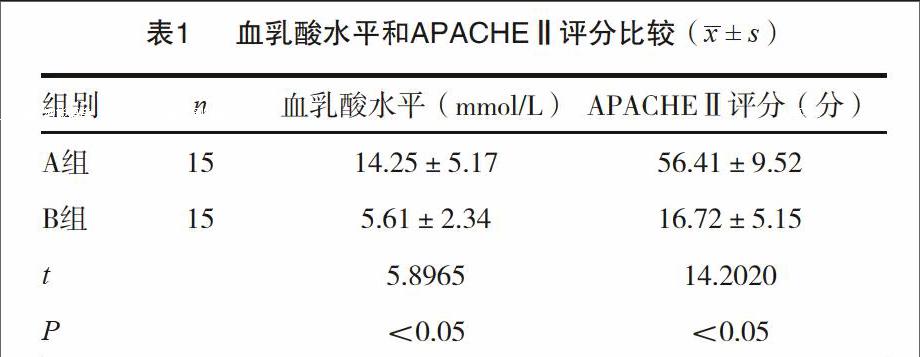
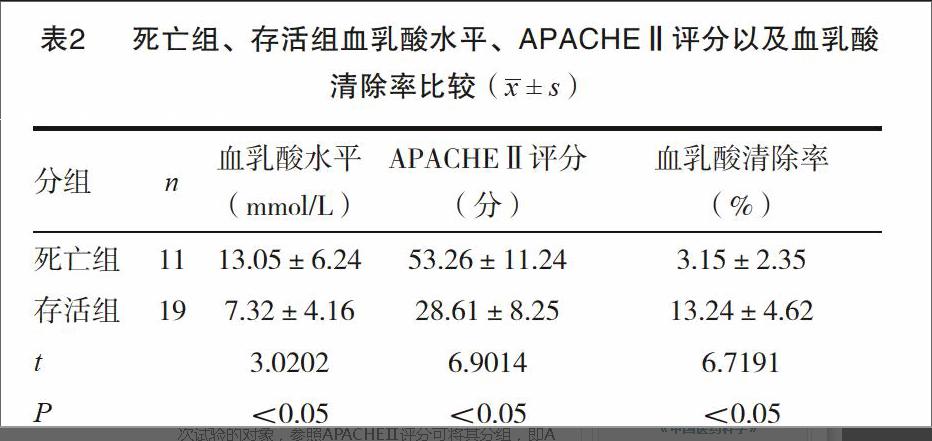
[摘要] 目的 探讨感染性休克患者的血乳酸清除率和APACHEⅡ评分的有关性。方法 全组筛选2014年6月~2016年12月本院收治的30例感染性休克患者作为本次试验的对象,参照APACHEⅡ评分可将其分组,即A组(评分不低于20分)、B组(评分低于20分)各15例,均对其行血乳酸浓度检查,评估血乳酸清除率和APACHEⅡ评分的相关性。结果 A组的APACHEⅡ评分、血乳酸水平较B组较高,P<0.05;且两者呈正相关;存活组的血乳酸清除率(除其他指标)显著高于死亡组,P<0.05;且血乳酸清除率和APACHEⅡ评分呈负相关。结论 对于感染性休克患者可将APACHEⅡ评分结合血乳酸清除率作为评估病情的重要指标,以能改善预后效果。
[关键词] 血乳酸清除率;APACHEⅡ评分;感染性休克;关联性
[中图分类号] R363 [文献标识码] A [文章编号] 2095-0616(2017)05-184-03
[Abstract] Objective To investigate the correlation of blood lactate clearance rate and APACHEⅡ score in patients with septic shock. Methods 30 patients with septic shock in our hospital from June 2014 to December 2016 were selected as subjects. According to the APACHEⅡscore, among them, 15 patients were divided into group A(score not less than 20) and group B(score less than 20). Results The score of APACHEⅡ and the level of blood lactate in group A were higher than those in group B(P<0.05). And both showed positive correlation. The blood lactate clearance rate of survival group was significantly higher than that of death group (P<0.05). And the blood lactate clearance rate and Apache score were negatively correlated. Conclusion The APACHEⅡ score combined with blood lactate clearance can be used as an important index to evaluate the condition of patients with septic shock, so as to improve the prognosis.
[Key words] Lactate clearance rate; APACHE II score; Septic shock; Relevance
感染性休克是因嚴重感染,特别是革兰阴性菌感染而造成的休克,极易引发组织出现缺血以及血氧降低表现[1],继而导致高乳酸血症,威胁到患者的生命安全。感染性休克是临床患病占比中较高的疾病,患病率呈逐年增长趋势增高,且其死亡率居高不下。经临床研究,对感染性休克患者给予液体补给、抗感染以及机械通气等治疗,可取得显效效果;但是预后效果不乐观。而实施有效的评估方法以及准确把握患者的病情,特别对高危患者给予对应的治疗策略,可极大地促进转归,降低死亡率。在临床中初步认为急性生理学和慢性健康病情评分评估(APACHEⅡ评分)能对此类患者做合理的评估,且认为该评分和血乳酸清除率具有一定的关联性。基于此,现对本院30例感染性休克者的临床资料开展分析,探讨血乳酸清除率和APACHEⅡ评分的有关性,现将结果阐述如下。
1 资料与方法
1.1 一般资料
选择2014年6月~2016年12月我院收治的30例感染性休克患者,本次研究均报经伦理委员会认可,入选对象参考APACHEⅡ评分分组,APACHEⅡ评分≥20分视为A组,APACHEⅡ评分<20分作为B组;……
登录APP查看全文