你阅读的方式
2018-04-16 15:32:12ByMichaelGrothaus
英语学习
2018年2期
By Michael Grothaus
Its no overstatement that digital mediums have taken over every aspect of our lives. We check what our friends are doing on the glowing screens in our hands, read books on dedicated e-readers, and communicate with customers and clients primarily through email. Yet for all the benefits digital mediums have provided us, there has been a growing body of evidence over the past several years that the brain prefers analog1 mediums.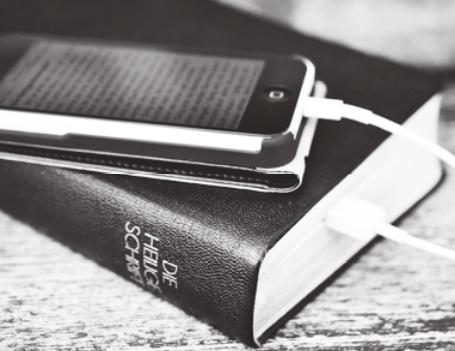
Studies have shown that taking notes by longhand2 will help you remember important meeting points better than tapping notes out on your laptop or smartphone. The reason for that could be that “writing stimulates an area of the brain called the RAS (reticular activating system), which filters and brings clarity to the fore the information were focusing on,”3 according to Maud Purcell, a psychotherapist and journaling expert. If thats the case, and the analog pen really is mightier than the phone, its no wonder some of my colleagues have ditched smartphones for paper planners.
But its not just recording our thoughts on an analog medium that appears to be better for us. Absorbing information from analog mediums now appear to be better for memory retention4, and thus, productivity. In a study conducted by Anne Mangen, PhD, a professor at the Reading Center at the University of Stavanger, Norway, the researcher gave participants the same 28-page mystery story to read either on an Amazon Kindle or in print format. After the participants read the story, they were asked a number of questions about the text.
“We found that those who had read the print pocketbook gave more correct responses to questions having to do with time, temporality, and chronology (e.g., when did something happen in the text? For how long did something last?) than those who had read on a Kindle,” Mangen says. “And when participants were asked to sort 14 events in the correct order, those who had read on paper were better at this than those who had read on the Kindle.”
While this event has yet to be fully investigated and understood by scientists, Mangen, who now chairs E-READ, a European research network of interdisciplinary5 scholars and scientists researching the effects and implications of digitization on reading, says one explanation for the benefit of reading analog books may come down to something called metacomprehension deficit. “Metacomprehension refers to how well we are ‘in touch with, literally speaking, our own comprehension while reading,” says Mangen. “For instance, how much time do you spend reading a text in order to understand it well enough to solve a task afterwards?”
One study revealed that people think they are better at comprehending information when they read it on a digital screen. This resulted in those readers reading the text much faster than those reading the text in paper format. Yet despite spending less time reading the text, the digital readers predicted they would perform better on a quiz about the text than the people who read the text on paper. Yet when the digital and paper groups were tested, the paper groups outperformed6 the digital groups on memory recall and comprehension of the text. They also were closer to their test result predictions than the digital group was.
You Dont Need to Print off Every Email You Get
Books are one thing, but does our brain absorb information better if we read from other physical mediums, like newspapers and magazines? Not necessarily.
“Length does indeed seem to be a central issue, and closely related to length are a number of other dimensions of a text, e.g., structure and layout. Is the content presented in such a way that it is required that you keep in mind several occurrences/text places at the same time?”says Mangen. In other words, she says, complexity and information density may play a role in the importance of the medium providing the text.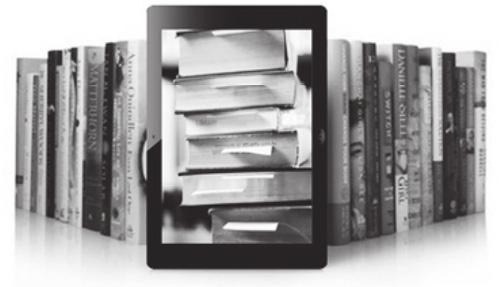
“It may be that for certain types of text or literary genres (for example, page turners7), medium does not matter much, whereas for other genres(cognitively and emotionally complex novels, for instance), medium may make a difference to comprehension or to the reading experience. But this remains to be tested empirically8.”
In other words, unless people are sending you novel-length emails (which they shouldnt be), you dont need to go rushing to the print button, as reading short snippets9 of information on a screen probably doesnt hinder memory retention or comprehension.
Print and Digital Can Coexist Peacefully
With all things regarding the brain and human cognition, Mangen also stresses that it wouldnt be correct to proclaim that information gleaned10 from print is always going to be just as good, if not better, for memory and comprehension than digital.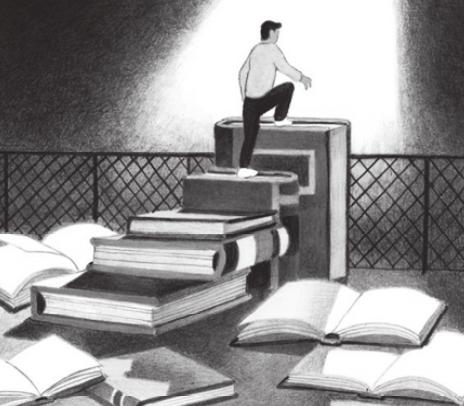
“It is not—and should not be—a question of either/or, but of using the most appropriate medium in a given situation, and for a given material/content and purpose of reading,” she says, and notes that a “good starting point is to keep in mind that all media/technologies (old as well as new) have distinct user interfaces, and that the user interface of paper in some circumstances and for some purposes may support key aspects of reading(retention of complex information) or of study (writing notes in the margins) better than digital devices do.”
But for other purposes of reading, for example, presentations with audiovisual material, Mangen concedes a digital device like a tablet is obviously far superior.11 “There is no one-format/medium-fits-all solution (not even with respect to emails), but it will depend on a number of factors pertaining12 to the content/text, the reader, the purpose of the reading, the situation, etc.,” she says.
Slow Down When You Read Digitally
If you cant bear to give up digital books, you arent out of luck. As the study cited above mentions, like other digital readers, you probably think you are absorbing the information better than you actually are, and thus move through the book faster.
A simple solution to this is to simply slow down and take more time reading the material, and you might absorb the information just as well as those who naturally take longer to read a paper book.
如果说数字媒体已经占据了我们生活的方方面面,这话绝对没有言过其实。我们通过手中发光的屏幕来查看朋友们的一举一动,在专门的电子阅读器上阅读书籍,而且主要通过电子邮件与顾客、客户联系。然而,尽管数字媒体为我们带来了各种好处,但过去几年来越来越多的证据表明大脑偏好实物媒体。
研究表明,相比在笔记本电脑或者智能手机上敲敲打打,手写笔记可以帮助你更好地记住重要的会议要点。其原因可能是“写作刺激了一个叫做RAS(网状激活系统)的大脑区域,这一区域将我们正在关注的信息过滤,并使这些信息更加清晰可懂”,心理治疗师、记录专家莫德·珀塞尔解释道。如果真是这样的话,那么实物笔确实比手机更加强大,难怪我的一些同事把智能手机丢在了一边,改用纸质计划本。
然而,还不仅仅是将想法记录在实物媒体上对我们而言似乎更好。从实物媒体吸收信息似乎更适合记忆的留存,从而有助于提高生产率。挪威斯塔万格大学阅读中心教授安妮·曼根博士进行了一项研究,研究人员让参与者通过亚马逊Kindle或是纸质书阅读同一本28页的侦探小说。参与者阅读完毕后,他们会被问到一些关于文本的问题。
“我们发现纸质口袋书阅读者在回答与发生时间、时间长短和前后顺序相关的问题(例如,某事在文本中何时发生?持续了多长时间?)时,相比Kindle阅读者正确率更高”,曼根称。“当参与者被要求以正確的顺序对14个事件进行排序时,纸质阅读参与者要比Kindle阅读参与者表现好。……
登录APP查看全文
猜你喜欢
英语文摘(2020年5期)2020-09-21 09:26:30
制造技术与机床(2019年10期)2019-10-26 02:48:08
趣味(语文)(2018年8期)2018-11-15 08:53:00
电子制作(2018年18期)2018-11-14 01:48:06
中华手工(2017年2期)2017-06-06 23:00:31
小学教学参考(2015年20期)2016-01-15 08:44:38
中外会展(2014年4期)2014-11-27 07:46:46
小说月刊(2014年4期)2014-04-23 08:52:21
语文知识(2014年1期)2014-02-28 21:59:13
祝您健康(1987年3期)1987-12-30 09:52:32